Where Code Meets Canvas
Discover 10 exciting ways code is transforming artistic expression. This list explores how coding fuels creativity, from generative art and interactive installations to AI-driven masterpieces and code poetry. Whether you're a tech enthusiast, artist, or simply curious, this listicle offers a glimpse into the innovative fusion of art and technology. Explore these examples to see how code empowers creative endeavors and expands artistic possibilities. For deeper exploration, check out Vibecoding VIP by @slhomme for curated resources bridging creative expression and digital development.
1. Generative Art
Generative art represents a fascinating intersection of art and technology, where algorithms take center stage in the creative process. Instead of directly manipulating brushes or pixels, artists write code that dictates the rules and parameters for creating visual or auditory experiences. The system then executes these instructions, often incorporating elements of randomness and emergence to produce the final output. This approach opens up a world of possibilities, allowing artists to explore complex patterns, intricate structures, and unexpected forms that would be incredibly challenging, if not impossible, to achieve manually. Learn more about Generative Art
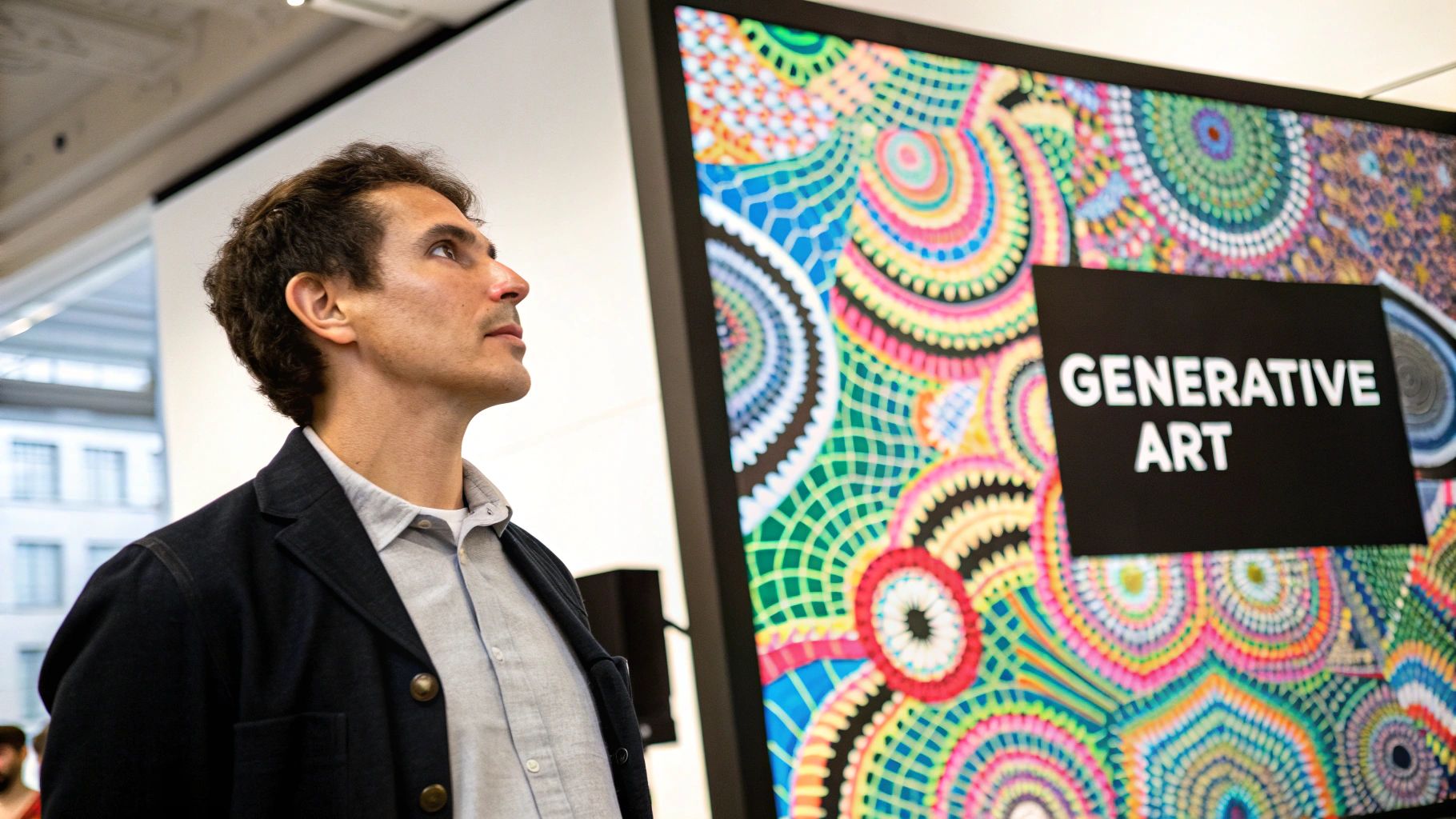
Generative art's unique appeal lies in its ability to blend mathematical precision with artistic expression. Algorithms provide the underlying structure, while the artist's choices regarding parameters, rules, and the incorporation of randomness inject the creative spark. This interplay between determinism and chance often leads to surprising and captivating results, with emergent properties arising from the interaction of simple rules. This approach is particularly valuable for creating works with infinite variations within defined parameters, offering a dynamic and ever-evolving artistic experience.
Examples of successful generative art range from the pioneering computer-generated art of Vera Molnár in the 1960s to contemporary works like Tyler Hobbs' 'Fidenza' series on the Art Blocks platform. Casey Reas' 'Process Compendium' and Manolo Gamboa Naon's generative landscapes further demonstrate the diverse applications of this method, spanning abstract patterns, geometric forms, and natural landscapes.
Why use generative art?
This approach is ideal for artists and developers who want to:
- Explore complex visuals and soundscapes beyond manual capabilities.
- Create art with infinite variations and emergent properties.
- Establish a unique relationship between artist, tool, and audience.
- Democratize art creation through coding skills.
Tips for creating generative art:
- Start Simple: Begin with basic algorithms and progressively increase complexity as you gain experience.
- Embrace Randomness: Introduce controlled randomness to inject organic and unpredictable elements into your work.
- Document Your Process: Keep track of your code, parameters, and iterations to understand your creative journey and allow for revisiting past stages.
- Combine Algorithms: Experiment with combining different algorithms to generate more complex and interesting outputs.
Pros:
- Enables creation of complex artworks that would be difficult to make manually.
- Allows for infinite variations from a single algorithm.
- Creates unique relationships between artist, tool, and audience.
- Democratizes art creation for those with coding skills.
Cons:
- Steep learning curve for artists without programming experience.
- Can sometimes produce work that feels mechanical or lacks emotional depth.
- Debates about authorship when algorithms create the final output.
- Technical limitations can constrain artistic vision.
Generative art deserves its place in any discussion of art and coding because it fundamentally alters the relationship between creator and creation. It empowers artists with new tools for expression, expands the boundaries of what's aesthetically possible, and invites contemplation on the role of technology in artistic practice. It offers a powerful pathway for aspiring vibe coders, experienced software developers, digital artists, and creative technologists to explore the dynamic interplay of code and creativity.
2. Interactive Installations
Interactive installations represent a compelling intersection of art, technology, and human experience. They utilize code to create dynamic environments that respond to audience participation, blurring the lines between observer and artwork. These installations transform physical spaces into immersive digital realms, inviting visitors to engage directly and shape the unfolding experience. This approach elevates art beyond passive observation, fostering memorable and meaningful encounters.
How They Work:
At the heart of interactive installations are responsive systems driven by code. These systems employ various input devices like sensors (motion, pressure, light), cameras, microphones, and even biometric trackers to detect and interpret audience actions. The collected data then influences the installation's output, which might manifest as changes in light, sound, visuals projected onto surfaces, or the movement of physical elements within the space. This real-time feedback loop creates a dynamic dialogue between the audience and the artwork, allowing participants to directly influence its form and evolution.
Examples of Successful Implementation:
Several artists have pioneered and popularized this medium. Rafael Lozano-Hemmer's Pulse Room, for example, uses flashing light bulbs synchronized to participants' heartbeats, creating a mesmerizing collective visualization of life. teamLab, a renowned art collective, creates breathtaking immersive digital art spaces that respond to visitors' movements, transforming environments into vibrant, reactive ecosystems. Camille Utterback's Text Rain projects falling letters onto a wall, allowing viewers to interact with and manipulate the text with their bodies. Daniel Rozin’s interactive mirrors use cameras and custom software to create reflections made from an array of unexpected materials, from small wooden blocks to plush toys. These examples showcase the diverse possibilities of interactive installations, from intimate explorations of the human body to large-scale, transformative environments. Learn more about Interactive Installations to see how various coding tools can be used to create these experiences.
Tips for Creating Interactive Installations:
- Extensive User Testing: Before exhibiting, test your installation rigorously with a diverse group of users to ensure intuitive interaction and identify potential technical issues.
- Intuitive Interaction Design: Prioritize clear, intuitive interactions that don't require lengthy instructions. The experience should be self-explanatory and accessible.
- Robust System Design: Build robust and reliable systems capable of continuous operation in exhibition settings. Consider redundancy and error handling to minimize downtime.
- Accessibility: Design with accessibility in mind, considering the needs of individuals with varying physical and cognitive abilities.
Pros and Cons:
Pros:
- Memorable and Participatory Experiences: Interactive installations create lasting impressions by engaging audiences directly and offering a sense of agency within the artwork.
- Enhanced Engagement: They offer a level of engagement beyond traditional art forms, fostering curiosity and exploration.
- Communicating Complex Ideas: The embodied interaction can facilitate a deeper understanding of complex themes and concepts.
- Accessibility: Intuitive interfaces can make these experiences accessible to diverse audiences, regardless of prior art knowledge.
Cons:
- Technical Complexity: Developing and maintaining these installations can be technically challenging, requiring specialized skills.
- Cost: Production and exhibition costs can be significant due to hardware, software, and space requirements.
- Obsolescence: Reliance on specific hardware can lead to obsolescence as technology evolves.
- Space Limitations: Physical space requirements can restrict exhibition options.
Why Interactive Installations Deserve Their Place on the List:
Interactive installations represent a significant evolution in art, leveraging technology to create dynamic, participatory experiences. They empower audiences, foster deeper engagement, and offer new avenues for creative expression. By blending physical and digital realms, these installations push the boundaries of artistic practice and offer a glimpse into the future of art in a technologically driven world. They are a powerful testament to the potential of code to transform how we experience and interact with art.
3. Creative Coding Education
Creative coding education offers a refreshing departure from traditional computer science pedagogy. Instead of focusing on abstract algorithms and data structures, it prioritizes artistic expression and visual output as the primary means of learning programming. This approach empowers artists, designers, and other creative practitioners to harness the power of code to bring their visions to life, fostering a more diverse and inclusive coding landscape. It emphasizes learning by doing, encouraging experimentation and playfulness while introducing core programming concepts in the context of artistic projects. This methodology makes coding more accessible and engaging for individuals who are visually oriented and driven by creative problem-solving.
Creative coding education distinguishes itself through several key features. It replaces dry technical exercises with engaging creative projects, allowing learners to see the immediate impact of their code. The emphasis on visual and interactive outcomes provides constant feedback and reinforces learning. Furthermore, programming concepts are introduced within the context of artistic goals, making the learning process more relevant and meaningful. Specialized tools designed for creative applications, such as Processing, p5.js, and openFrameworks, are often utilized, providing a more intuitive and accessible entry point to programming.
This approach offers several compelling advantages. It makes coding accessible to visually-oriented learners who might be intimidated by traditional computer science approaches. By appealing to arts-focused students, it increases diversity within the coding community. The immediately satisfying visual results produced through creative coding projects maintain engagement and motivation. Perhaps most importantly, creative coding education teaches not only technical skills but also crucial creative problem-solving abilities.
However, it's also important to acknowledge the potential drawbacks. Creative coding education may not cover computer science fundamentals as comprehensively as traditional programs. It can sometimes create a dependency on specific creative coding frameworks, potentially limiting flexibility. The emphasis on visual outcomes can occasionally overshadow the importance of code quality and best practices. Lastly, resources for creative coding education, while growing, are still less abundant than those available for mainstream programming education.
Several institutions and individuals have been instrumental in popularizing creative coding education. The School for Poetic Computation in New York, the Processing Foundation's education initiatives, NYU's Interactive Telecommunications Program (ITP), and Goldsmiths Computational Arts program are all prominent examples of successful implementation. Influential figures like Daniel Shiffman and his "Coding Train" YouTube channel, Casey Reas and Ben Fry (Processing creators), Zach Lieberman (openFrameworks co-creator), Lauren McCarthy (p5.js creator), and Jer Thorp (data artist and educator) have also played significant roles in shaping this field.
For those interested in exploring creative coding, several tips can be helpful. Begin with visual projects that provide immediate feedback to maintain motivation. Build a portfolio of creative coding projects to showcase your skills and progress. Join online communities like OpenProcessing to share your work, receive feedback, and connect with other creative coders. Finally, consider combining self-directed learning with structured courses to gain a well-rounded understanding. Learn more about Creative Coding Education
Creative coding education deserves its place on this list because it provides a powerful and accessible pathway into the world of programming for a wider audience. It bridges the gap between art and technology, empowering individuals to express themselves in new and exciting ways. Whether you're an aspiring vibe coder, an experienced software developer seeking new creative outlets, or a digital artist looking to expand your toolkit, creative coding offers a unique and rewarding learning experience.
4. Data Visualization Art
Data visualization art transforms complex datasets into visually compelling and insightful artistic experiences. It transcends the purely functional representation of data, prioritizing aesthetic qualities and emotional impact alongside revealing hidden patterns and insights within the information. These artistic creations often offer commentary on social, environmental, or cultural phenomena through the creative interpretation of data. Rather than simply charting numbers, data visualization art seeks to engage viewers emotionally and intellectually, sparking dialogue and understanding.
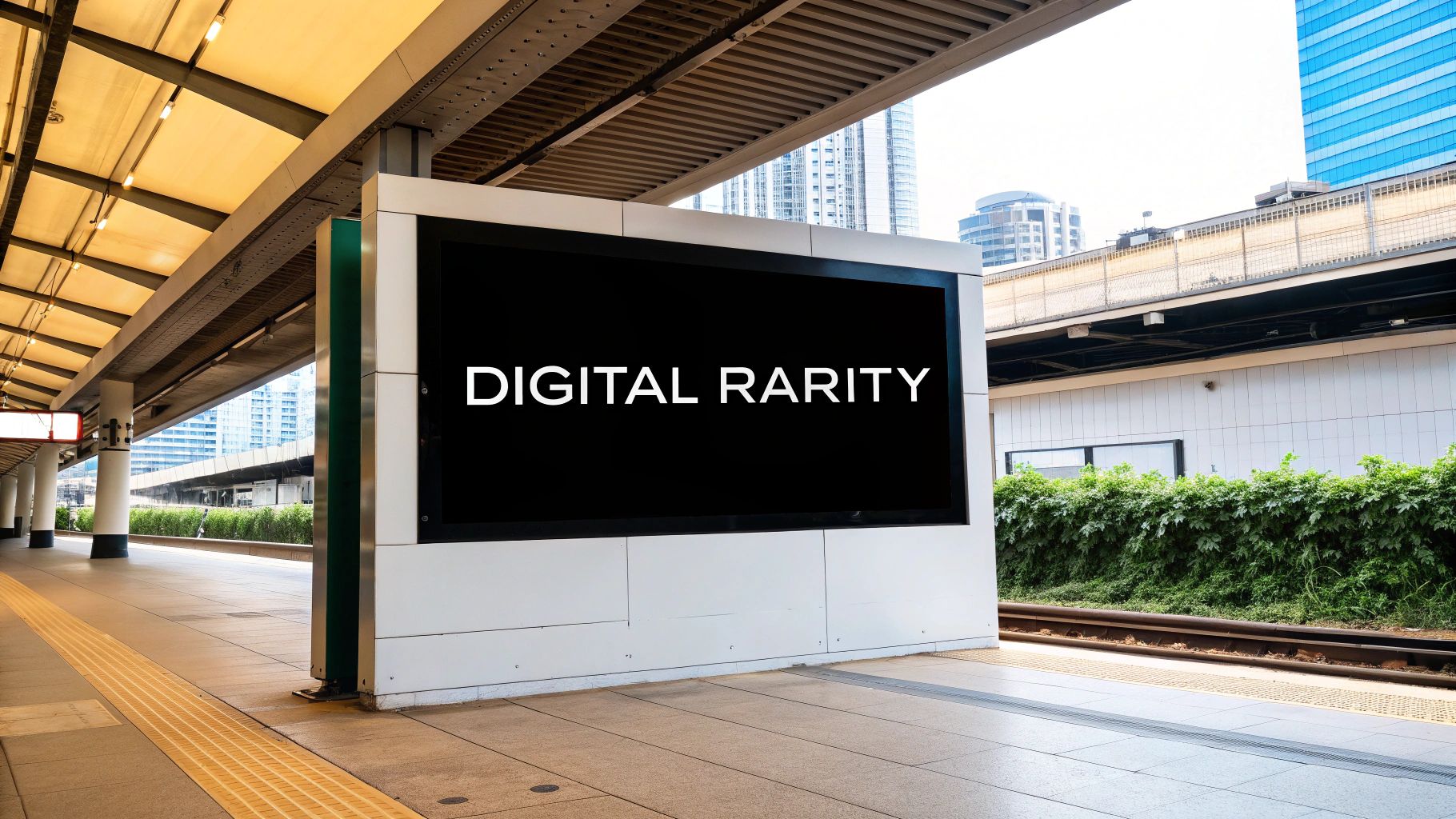
This approach bridges the gap between analytical thinking and artistic expression. It involves transforming abstract data into visual or even physical forms, carefully balancing information communication with aesthetic considerations. Data visualization art frequently grapples with complex social, political, or environmental issues, making intricate information more accessible and relatable to a broader audience. The medium can be static, like a printed infographic, interactive, inviting user exploration, or even time-based, evolving with changes in data or user input.
Examples of successful data visualization art abound. Nathalie Miebach translates weather data into intricate sculptures, weaving together scientific observation and artistic interpretation. Stefanie Posavec and Giorgia Lupi's 'Dear Data' project beautifully visualizes personal data exchanged through hand-drawn postcards. Aaron Koblin's 'Flight Patterns' offers a mesmerizing visualization of global air traffic, revealing the hidden structures within this complex system. Pitch Interactive's 'Out of Sight, Out of Mind' uses data visualization to depict the impact of drone strikes, bringing a critical issue into stark relief.
Tips for Creating Data Visualization Art:
- Start with personally meaningful datasets: A connection to the data will fuel your creativity and drive deeper exploration.
- Explore diverse representations: Experiment with various visual forms, from traditional charts and graphs to more abstract and artistic expressions.
- Balance accuracy and aesthetics: While visual impact is crucial, ensure the representation doesn't misrepresent the underlying data.
- Document your process: Transparency about your data sources and transformations builds credibility and allows others to understand your methods.
When and Why to Use Data Visualization Art:
Data visualization art is particularly effective when you want to:
- Make complex information emotionally resonant and accessible: It can transform dry data into a compelling narrative that resonates with a wider audience.
- Offer fresh perspectives on familiar datasets: By applying artistic principles, you can reveal hidden patterns and insights that traditional data visualizations might miss.
- Reach audiences not typically engaged with data: The artistic element can draw in individuals who might otherwise find data analysis intimidating or uninteresting.
- Combine analytical thinking with artistic expression: This approach provides a powerful outlet for those who appreciate both the logical and creative sides of problem-solving.
Pros:
- Makes complex information emotionally resonant and accessible
- Creates new perspectives on familiar datasets
- Combines analytical thinking with artistic expression
- Can reach audiences not typically engaged with data
Cons:
- Risk of misrepresenting data to prioritize aesthetics
- Requires both data analysis and artistic skills
- Can become outdated as data changes
- Sometimes sacrifices clarity for visual impact
Data Visualization Art deserves its place in this list because it exemplifies the powerful synergy of art and coding. It demonstrates how creative coding can be used not only to create aesthetically pleasing visuals, but also to communicate complex information, spark dialogue, and inspire change. It empowers artists and coders to leverage data as a medium for creative expression and social commentary, pushing the boundaries of both disciplines. This approach is particularly relevant for aspiring vibe coders, experienced software developers, digital artists, creative technologists, educators, students, and innovative entrepreneurs who are looking for ways to blend technical skills with artistic vision.
5. NFT Art and Blockchain Creative Works
NFT art represents a paradigm shift in the art world, fusing digital creativity with the decentralized and secure nature of blockchain technology. It allows artists to create unique, verifiable digital assets, opening up new creative avenues and economic models previously impossible in the digital realm. This innovative approach has rightfully earned its place on this list due to its transformative impact on art, technology, and the intersection of the two.
At its core, NFT art leverages blockchain to establish provable scarcity for digital works. Traditionally, digital files could be endlessly replicated, making it difficult to assign unique value to them. NFTs solve this problem by creating a permanent, tamper-proof record of ownership on a distributed ledger. Each NFT represents a specific digital asset, whether it's an image, video, audio file, or even a piece of code, and its ownership history is transparently tracked on the blockchain.
This technology opens a world of possibilities for artists working with code. Artists can use code to generate unique artwork, incorporate interactive elements, and even embed smart contracts that govern how the artwork behaves or distributes royalties. This allows for dynamic and evolving art forms that go beyond static images and embrace the computational nature of digital media.
Examples of Successful Implementation:
- Beeple's 'Everydays: The First 5000 Days': This collage of 5,000 digital images sold at Christie's for a staggering $69 million, catapulting NFT art into the mainstream. This sale demonstrated the potential market value of digital art authenticated through NFTs.
- Art Blocks: This platform allows collectors to purchase and mint unique generative artworks created by artists using code. The output is often unpredictable, adding an element of surprise and making each piece truly one-of-a-kind.
- Larva Labs' CryptoPunks: These 10,000 unique pixel art characters are considered some of the earliest examples of NFT collectibles and played a significant role in establishing the NFT art movement.
- Pak's 'Merge': This innovative project involved collectors purchasing "mass" units that combined to form larger and more complex artworks, blurring the lines between individual ownership and collective creation, ultimately raising $91.8 million.
Features and Benefits:
- Verifiable Digital Scarcity: Blockchain technology ensures that each NFT is unique and its ownership history is transparent and immutable.
- Smart Contracts: Artists can embed smart contracts into their NFTs, allowing for automated royalty payments on secondary sales, fractional ownership, and other innovative features.
- Generative and Interactive Art: NFTs empower artists to create dynamic and evolving digital art forms that leverage code for generative processes and interactive experiences.
- New Economic Models: NFTs provide artists with greater control over their work and allow them to directly connect with collectors, bypassing traditional intermediaries.
Pros:
- New economic model for digital artists: Provides a direct path to monetization and ongoing revenue streams.
- Establishes provenance and authenticity: Confirms the origin and ownership history of digital works.
- Enables royalties on secondary sales: Ensures artists benefit from the increasing value of their work.
- Creates a collectors market for digital and code-based art: Opens up new opportunities for artists and collectors alike.
Cons:
- Environmental concerns: The energy consumption of some blockchains used for NFTs raises environmental concerns.
- Market volatility: The NFT market is subject to significant price fluctuations and speculative bubbles.
- Technical barriers to entry: Navigating the technical aspects of NFTs can be challenging for both artists and collectors.
- Long-term sustainability: Questions remain about the long-term viability and stability of the NFT ecosystem.
Tips for Aspiring NFT Artists:
- Understand the technical aspects of blockchain: Familiarize yourself with the basics of how blockchain and NFTs work before diving in.
- Consider the environmental impact: Explore more energy-efficient blockchains like Tezos or Polygon.
- Focus on creating meaningful art: Prioritize artistic integrity over market trends and hype.
- Build community: Engage with other artists and collectors to cultivate a supportive network around your work.
NFT art offers an exciting new frontier for artistic expression and innovation. By understanding the technology, considering the ethical implications, and focusing on creative exploration, artists can leverage the power of NFTs to create meaningful and impactful digital art for a new generation of collectors and art enthusiasts.
6. Algorithmic Music and Sound Art
Algorithmic music and sound art represent a fascinating intersection of creativity and code, using algorithms to generate, compose, or manipulate sound and music. This approach moves beyond traditional musical notation and instrumentation, allowing artists to define rules, patterns, and mathematical relationships that produce sonic experiences. These systems can be fully autonomous, generating music without human intervention, or they can incorporate human input, allowing for interactive performances and compositions. This field encompasses a wide spectrum of creative applications, from generative ambient music designed for relaxation or focus to interactive sound installations that respond to audience participation, and from algorithmic compositions for traditional instruments to live coding performances where music is created in real-time by writing and executing code.
Algorithmic music deserves its place in this list because it fundamentally expands the possibilities of musical expression. It empowers artists to explore complex patterns, intricate structures, and sonic textures that might be difficult or impossible to achieve through traditional composition methods. This approach is particularly relevant in today’s digital age, reflecting the growing influence of technology on artistic creation.
Features and Benefits:
- Algorithmic Generation and Manipulation: The core of this method lies in its ability to generate or manipulate sound through algorithms. This can involve defining waveform characteristics, manipulating frequencies, creating rhythmic patterns, and much more.
- Autonomous or Interactive Systems: Systems can be designed to operate autonomously, creating ever-evolving musical pieces, or they can be designed for interaction, responding to real-time input from performers or the environment.
- Exploration of Mathematical Relationships: This approach often delves into the mathematical underpinnings of music, exploring concepts such as harmony, rhythm, and timbre through algorithms and data structures.
- Live Coding Performances: Live coding represents a particularly dynamic aspect of algorithmic music, where artists write and execute code in real-time to create and manipulate sound live on stage.
Pros:
- Expanded Creative Possibilities: Algorithmic music opens up a world of musical possibilities beyond the constraints of traditional instruments and notation.
- Complex Patterns and Structures: It enables the exploration and creation of intricate musical patterns and structures that would be challenging to achieve otherwise.
- Endless Variation: Algorithmic systems can generate endless variations on musical themes, providing a constant source of new material.
- New Performance Paradigms: Live coding offers exciting new performance possibilities, blurring the lines between composition and performance.
Cons:
- Emotional Expressivity: Some argue that algorithmically generated music can lack the emotional depth and nuance of human-performed music.
- Technical Barriers: The technical knowledge required for coding can be a barrier for musicians without programming experience.
- Conceptual Focus: There's a risk that the conceptual framework behind the algorithm can sometimes overshadow the listener's experience.
- Steep Learning Curves: Specialized tools and programming languages often come with steep learning curves.
Examples:
- Brian Eno's generative music applications: Eno is a pioneer in generative music, creating software applications that produce evolving soundscapes.
- Algoraves: These events feature live coding performances, where artists create and manipulate music in real-time using code.
- Holly Herndon's AI-assisted album 'PROTO': Herndon uses artificial intelligence to create unique vocal harmonies and textures.
- Tero Parviainen's 'Musical Experiments with Machine Learning': Parviainen explores the use of machine learning for music generation and analysis.
Tips for Getting Started:
- Start with accessible tools: Begin with music programming languages designed for beginners, such as SuperCollider or Sonic Pi. These languages provide a supportive environment for learning the fundamentals of algorithmic music creation.
- Explore simple algorithms: Experiment with straightforward algorithms like Markov chains for generating melodies. This will help you grasp the basic principles of algorithmic composition before moving on to more complex techniques.
- Combine algorithmic and human elements: Don't feel limited to purely algorithmic music. Combine algorithmic elements with traditional instruments or human performance for a richer and more nuanced sonic palette.
- Iterative refinement: Continuously iterate between coding and listening. Refine your algorithms based on the sounds they produce, developing a feedback loop between your creative vision and the technical implementation.
Popularized By: Brian Eno, Aphex Twin (Richard D. James), Holly Herndon, Daito Manabe, Alex McLean (founder of Algorave)
This approach is particularly valuable for aspiring vibe coders, experienced software developers, digital artists, creative technologists, educators, students in tech fields, innovative entrepreneurs, and hobbyists looking to explore the creative potential of code in the realm of sound and music.
7. AI Art and Creative Machine Learning
AI art represents a fascinating intersection of technology and creativity, leveraging machine learning algorithms, especially deep learning and neural networks, to generate and assist in the creation of visual art, music, literature, and other artistic mediums. This innovative approach allows artists to train models on vast datasets of existing works, then utilize these systems either as autonomous creators or as collaborative tools, pushing the boundaries of human and machine creativity.
This process typically involves feeding the AI system a massive dataset of images, text, or music. The AI then analyzes the data, identifying patterns and structures. Depending on the specific algorithm used, the AI can then generate new content based on these learned patterns. For example, a neural network trained on thousands of portraits can create new, unique portrait images that possess characteristics gleaned from the training data.
Several types of neural networks excel at creative output. Generative Adversarial Networks (GANs) consist of two networks: a generator that creates new data instances and a discriminator that evaluates their authenticity. This adversarial process leads to increasingly realistic generated content. Variational Autoencoders (VAEs) learn compressed representations of the input data and can generate new variations. Transformers, initially designed for natural language processing, are increasingly used for image and music generation due to their ability to handle sequential data.
Examples of AI art's impact on the creative landscape are numerous and varied. Refik Anadol's data sculptures and AI-generated installations transform data into mesmerizing visual experiences. Mario Klingemann's neural network artworks explore the subconscious of machines. Obvious Art's 'Portrait of Edmond de Belamy', sold at Christie's, ignited widespread discussion about AI's role in the art world. Sofia Crespo's 'Neural Zoo' project utilizes AI to create imaginative artificial life forms.
Why AI Art Belongs on this List: AI art is a transformative force in creative coding, offering new avenues for artistic expression and challenging traditional notions of authorship and the creative process. Its inclusion in this list highlights the growing importance of computational tools in shaping the future of art.
Features and Benefits:
- Neural Network Power: Leverages the power of GANs, VAEs, and transformers for creative output.
- Novel Content Generation: Creates new content based on learned patterns from training data.
- Human-AI Collaboration: Fosters new forms of creative collaboration between humans and machines.
- Exploration of Creativity: Offers a unique lens through which to explore the nature of creativity itself.
Pros:
- Unexpected Results: Generates surprising and inspiring outputs that can lead to new artistic directions.
- Synthesis of Styles: Creates works that blend characteristics from thousands of training examples.
- Collaborative Potential: Enables artists to work with AI as a creative partner.
- Conceptual Challenge: Prompts critical discussions about authorship and the definition of art.
Cons:
- Ethical Concerns: Raises ethical questions about copyright and the use of artists' work without consent.
- Bias Replication: Can replicate and amplify biases present in the training data.
- Originality Debates: Sparks debates about the originality and creative contribution of AI-generated art.
- Technical Complexity: Requires technical expertise and significant computational resources.
Tips for Aspiring AI Artists:
- Define Your Intention: Develop a clear artistic intention before applying AI techniques.
- Ethical Data Sourcing: Consider the ethical implications of your training data sources.
- Embrace Collaboration: Focus on collaborating with AI rather than seeking pure automation.
- Develop a Unique Style: Experiment with fine-tuning models to cultivate a distinctive artistic style.
The transformative potential of AI isn't limited to the art world. Its applications are rapidly expanding across various sectors, including digital marketing. AI's impact on fields like affiliate marketing is becoming increasingly significant, reshaping strategies and opening up new possibilities. For a deeper dive into this topic, explore this article on the growing role of artificial intelligence in affiliate marketing.
Popularized By: Refik Anadol, Mario Klingemann, Helena Sarin, Sofia Crespo, Anna Ridler
8. Code as Performance Art
Code as performance art elevates programming from a purely technical activity to a dynamic, live spectacle. It reframes the act of writing and executing code as a performance, often presented in front of an audience. This genre encompasses a wide range of expressions, from live coding of music (algoraves) and visuals, to conceptual performances where the process of coding itself becomes the central artistic medium. These performances highlight the creative potential inherent in programming while creating ephemeral, unique experiences.
Instead of simply presenting the end product of a program, code as performance art exposes the creative process behind it. The audience witnesses the programmer's decisions, improvisations, and even errors unfold in real-time, often with the code itself projected onto a screen. This transparency demystifies the coding process for non-technical audiences, making it accessible and engaging in a way that traditional software development often isn't. It also showcases the performer's technical skill and performative presence, blurring the lines between programmer, artist, and musician.
Examples of Successful Implementation:
- Algoraves: These events combine live coding with electronic dance music, creating an immersive audiovisual experience where the music is generated and manipulated live on stage.
- Livecodelab: This browser-based platform allows users to experiment with live coding, making it an accessible entry point for beginners interested in exploring this art form. (While a specific URL wasn't provided, searching for "Livecodelab" should yield relevant results.)
- TOPLAP (The Organisation for the Proliferation of Live Algorithm Programming): This organization fosters the live coding community, promoting events, workshops, and resources for live coders worldwide. (While a specific URL wasn't provided, searching for "TOPLAP" should yield relevant results.)
- CODELive events at digital arts festivals: Numerous digital arts festivals now feature live coding performances, showcasing the growing recognition of this art form within the broader creative technology landscape.
Tips for Aspiring Code Performers:
- Practice under pressure: Simulate the live environment by setting time limits and coding challenges for yourself. This will help you develop the ability to think on your feet and improvise.
- Develop a persona: Just like any performing artist, consider developing a stage persona or style that reflects your unique approach to live coding.
- Prepare code snippets: Create reusable code templates or snippets that you can quickly incorporate into your performance, freeing you up to focus on the creative aspects.
- Consider visual aesthetics: Think about how your code looks on screen. Experiment with syntax highlighting, code formatting, and even custom visualizers to enhance the visual aspect of your performance.
Pros and Cons:
Pros:
- Visibility: Presents coding as a creative practice, challenging the perception of programming as purely technical work.
- Uniqueness: Creates improvisational performances that are inherently unique and cannot be replicated.
- Accessibility: Demystifies programming for non-technical audiences.
- Interdisciplinary: Combines technical skill with performance art, expanding the possibilities of both.
Cons:
- Inaccessibility: Can be challenging for audiences unfamiliar with code to fully grasp.
- Technical risks: Live performances are susceptible to technical failures that can disrupt the flow.
- Skill requirements: Demands both strong programming skills and performance abilities.
- Limited audience: May reach a smaller audience compared to more traditional performing art forms.
Why Code as Performance Art Deserves its Place on This List:
Code as performance art bridges the gap between technology and art, demonstrating the creative power of code. It offers a fresh perspective on programming, showcasing its potential for dynamic, expressive performances. By making coding visible and engaging, it expands the understanding and appreciation of this powerful medium for both technical and non-technical audiences alike. It is a testament to the fact that code can be more than just functional; it can be beautiful, moving, and even profound.
Popularized By:
Pioneers like Alex McLean (founder of Algorave), Shelly Knotts, Olivia Jack (creator of Hydra), Joanne Armitage, and Thor Magnusson have been instrumental in popularizing and advancing the art of live coding. They have helped to establish it as a recognized art form and have inspired a growing community of practitioners worldwide.
9. Physical Computing and Creative Electronics
Physical computing represents a powerful intersection of the digital and physical realms, empowering artists and creators to build interactive experiences that transcend the screen. By merging code with electronic components, sensors, and actuators, this approach allows for the creation of dynamic installations, responsive environments, and tangible interfaces that blur the lines between the virtual and the real.
At its core, physical computing involves using a microcontroller (like an Arduino) or a single-board computer (like a Raspberry Pi) as the "brain" of a project. This brain is then connected to various sensors that gather information from the physical world, such as light levels, temperature, pressure, or movement. Based on the sensor input, the microcontroller executes code that controls actuators, which are physical components that act upon the environment. Actuators can include motors, lights, speakers, solenoids, and more. This allows for the creation of systems where physical interaction triggers digital responses and vice versa, resulting in a feedback loop between the tangible and the computational.
Examples of Successful Implementation:
- Theo Jansen's Strandbeests: These magnificent wind-powered kinetic sculptures utilize programmable mechanical movements to walk along beaches, showcasing the potential of code to control complex physical systems.
- ART+COM's 'Kinetic Rain': This mesmerizing installation at Singapore Changi Airport features hundreds of individually controlled bronze droplets that move in choreographed patterns, creating a dynamic and captivating display.
- Moritz Waldemeyer's Wearable LED Fashion: Waldemeyer's work exemplifies the integration of technology into fashion, using programmable LEDs embedded in clothing to create stunning visual effects for performers.
- Random International's 'Rain Room': This interactive installation uses motion sensors to create a field of falling water that stops wherever a person walks, offering a unique and immersive experience.
Tips for Getting Started:
- Start Small: Begin with simple circuits and basic sensors like buttons, LEDs, and potentiometers. Gradually increase complexity as you gain experience.
- Test Thoroughly: Test your creations extensively in conditions similar to the final installation environment to identify and address potential issues.
- Document Everything: Keep detailed records of your circuit diagrams, code, and construction process. This will be invaluable for troubleshooting and future development.
- Design for Maintenance: Physical installations are subject to wear and tear. Consider accessibility and ease of repair when designing your project.
When and Why to Use Physical Computing:
Physical computing is particularly well-suited for projects that aim to:
- Create more intuitive and natural interactions: Tangible interfaces can often feel more engaging and less abstract than traditional screen-based interactions.
- Enable art that responds to environmental conditions or physical presence: This approach allows for the creation of dynamic and responsive works that adapt to their surroundings.
- Combine multiple disciplines: Physical computing projects often integrate programming, electronics, design, sculpture, and other fields.
- Make computing accessible through tactile and spatial experiences: Physical interfaces can provide a more concrete and understandable way to interact with technology.
Pros:
- Creates more intuitive and natural interactions than screen-based interfaces.
- Enables art that responds to environmental conditions or physical presence.
- Combines multiple disciplines: programming, electronics, design, sculpture.
- Makes computing accessible through tactile and spatial experiences.
Cons:
- Hardware costs can be significant compared to purely digital work.
- Requires knowledge of electronics and physical fabrication.
- Maintenance challenges with physical components.
- Scale and installation complexities.
Physical computing deserves its place on this list because it expands the possibilities of artistic expression and human-computer interaction. It allows creators to bridge the gap between the digital and physical, bringing code to life in tangible and engaging ways. This approach empowers artists, designers, and technologists to explore new forms of creativity and build experiences that are both innovative and impactful.
10. Code Poetry and Software Art
Code poetry and software art represent a fascinating intersection of technology and artistic expression, using code itself as the primary medium. This approach treats programming languages not just as tools for building software, but as rich linguistic and aesthetic systems capable of conveying meaning, emotion, and complex ideas. These works exist on multiple planes simultaneously: they can function as executable software, be read as text, and operate as conceptual art exploring the very nature of algorithms and computation. This multi-layered approach blurs the lines between form and function, making the medium itself an integral part of the message.
How it Works:
Code poetry and software art leverage the inherent properties of programming languages to create artistic works. This can involve:
- Exploiting linguistic features: Artists might use the syntax, keywords, and structure of a language to create rhythmic patterns, evocative imagery, or even tell stories.
- Visual formatting: The visual layout of the code, including indentation, line breaks, and comments, becomes a crucial element of the artistic composition.
- Conceptual frameworks: The underlying logic, algorithms, and data structures can be used to explore abstract concepts or generate dynamic, evolving artworks.
- Wordplay and puns: The specialized vocabulary of programming can be used for playful and often ironic effect, creating a layer of meaning accessible to those familiar with the technical jargon.
Examples of Successful Implementation:
- Pall Thayer's Microcodes series: These minimalist artworks use concise code snippets to create visual patterns and explore the essence of computational processes.
- Nick Montfort's Taroko Gorge: This generative poetry project uses algorithms to create poems based on the landscape of Taroko Gorge National Park in Taiwan.
- Mez Breeze's mezangelle: This hybrid language blends code and poetry, pushing the boundaries of digital literature and challenging traditional notions of authorship.
- *Ramsey Nasser's قلب (Alb):* This Arabic programming language challenges the dominance of English in the coding world, exploring the cultural and political implications of language and technology.
Tips for Creating Code Poetry and Software Art:
- Study both programming languages and literary techniques: A strong understanding of both domains is essential for crafting compelling works.
- Consider how your code reads to both humans and machines: Think about the dual nature of your work as both executable code and readable text.
- Explore the unique properties of different programming languages: Each language offers distinct possibilities for artistic expression, from the terse elegance of Python to the symbolic richness of Lisp.
- Document and present your work in ways accessible to diverse audiences: Provide context and explanations to help both technical and non-technical audiences appreciate your work.
When and Why to Use This Approach:
Code poetry and software art are particularly well-suited for:
- Exploring the intersection of art, technology, and culture: This approach offers a unique lens through which to examine the impact of code on our lives.
- Challenging conventional notions of art and literature: Code poetry and software art push the boundaries of traditional artistic mediums.
- Expressing complex ideas in a new and engaging way: The combination of logic and aesthetics allows for the creation of intellectually stimulating and visually captivating works.
Pros:
- Creates multi-layered works open to diverse interpretations.
- Bridges the gap between technical and artistic practices.
- Explores the cultural and philosophical implications of code.
- Can be appreciated by both technical and non-technical audiences (to varying degrees).
Cons:
- Often requires programming knowledge for full appreciation.
- Limited audience familiar with both code and poetic/artistic traditions.
- Challenges in preservation and exhibition due to the dynamic nature of software.
- Potential tension between maintaining executable functionality and artistic expression.
Code poetry and software art deserve a place on this list because they represent a cutting-edge form of artistic expression that is uniquely suited to the digital age. By embracing the creative potential of code, these artists are not only expanding the boundaries of art but also prompting us to reconsider our relationship with technology. They demonstrate how code can be more than just a functional tool – it can be a powerful medium for exploring the human condition and expressing the complexities of our world.
10-Point Comparison: Art & Code Techniques
| Technique | 🔄 Implementation Complexity | ⚡ Resource Requirements | 📊 Expected Outcomes | 💡 Ideal Use Cases | ⭐ Key Advantages |
|---|---|---|---|---|---|
| Generative Art | Moderate to high; steep learning curve for non-programmers | Medium; relies on coding libraries and compute power | Produces complex, emergent, and infinite visual/audio variations | Digital art projects, algorithm explorations, experimental design | Blends math and art; endless variations; democratizes art creation |
| Interactive Installations | High; integrates sensors, hardware, and interactivity | High; requires expensive hardware and ongoing maintenance | Yields immersive, responsive, participatory experiences | Museum exhibits, public art, live events | Engaging interactivity; dynamic environments; enhances audience participation |
| Creative Coding Education | Low to moderate; beginner-friendly with visual feedback | Low; often utilizes free/web-based tools or platforms | Immediate, visually gratifying projects that teach coding fundamentals | Workshops, art schools, self-learning environments | Increases accessibility; blends creativity with technical skills; quick visual results |
| Data Visualization Art | Moderate; demands data analysis and aesthetic integration | Medium; depends on dataset handling and visualization software | Transforms abstract data into visually compelling, insightful art | Editorial work, exhibitions, social or cultural commentary artworks | Merges analytics with aesthetics; broadens perspectives; makes data emotionally accessible |
| NFT Art and Blockchain Creative Works | Moderate to high; involves blockchain and smart contracts | High; dependent on blockchain networks and digital platforms | Creates verifiable, collectible digital artworks with provenance | Digital marketplaces, collector communities, new economic models | Establishes authenticity; enables royalties; explores innovative economic paradigms |
| Algorithmic Music and Sound Art | Moderate; requires specialized audio coding and algorithms | Medium; utilizes dedicated audio programming environments | Generates unique sonic patterns and live performance capabilities | Concerts, sound installations, experimental live performances | Expands musical expression; offers endless sonic variations; supports live coding formats |
| AI Art and Creative Machine Learning | High; involves machine learning model training and complex algorithms | High; needs substantial computational power and quality datasets | Delivers novel and unexpected art through human-AI collaboration | Galleries, experimental labs, large-scale installations | Pushes creative boundaries; fosters innovative collaborations; produces inspiring, unique outputs |
| Code as Performance Art | Moderate; live coding demands both programming and performative skill | Low; minimal digital setup with live coding tools | Produces ephemeral, dynamic performances that showcase the creative process | Live digital art festivals, educational demonstrations, performance art shows | Demystifies coding; blends technical practice with performance; offers authentic live creative experiences |
| Physical Computing and Creative Electronics | High; combines coding with electronics, circuitry, and fabrication | High; significant investment in hardware, sensors, and materials | Results in tangible, interactive installations that engage the physical realm | Public installations, interactive exhibits, maker spaces | Bridges digital and physical worlds; fosters intuitive interaction; multidisciplinary approach |
| Code Poetry and Software Art | Moderate; focuses on the aesthetics and conceptual aspects of coding | Low; mostly text- and concept-based with minimal tools | Creates multi-layered works that merge functionality with literary art | Digital exhibitions, academic projects, niche cultural showcases | Challenges conventional art forms; fuses technical and poetic approaches; offers versatile interpretations |
The Future of Art is Code
From generative art that breathes and evolves to interactive installations that blur the lines between the physical and digital, the fusion of art and coding has unlocked a universe of creative expression. This article explored ten key areas where code is transforming the artistic landscape, from data visualization that reveals hidden patterns to the revolutionary potential of NFTs and blockchain in creative works. We've seen how algorithmic music and sound art are composing new sonic experiences, how AI is becoming a collaborative partner in creation, and how even the act of coding itself can be a performance. The diverse approaches, spanning creative coding education to the tangible artistry of physical computing and the literary elegance of code poetry, underscore the boundless potential of this intersection.
The key takeaway is this: code is no longer just a functional tool; it's a powerful medium for artistic exploration and innovation. Mastering these concepts and approaches empowers you to not only create captivating art but also to push the boundaries of what's possible. Whether you're a seasoned developer, a budding artist, or simply curious about the creative potential of technology, understanding these intersections opens doors to new forms of expression, collaboration, and even entrepreneurship. Platforms like Vibecoding VIP are crucial for fostering this growth by connecting artists and coders, providing valuable resources, and nurturing a vibrant community.
The ability to weave code into the fabric of art is transforming how we create, experience, and interact with the world around us. The future of art is being written in code, and it's an invitation for everyone – artists, coders, and everyone in between – to join in shaping this exciting new era of creative possibility. Embrace the power of code, and help write the next chapter of art history.