Understanding Augmented Reality Painting Fundamentals
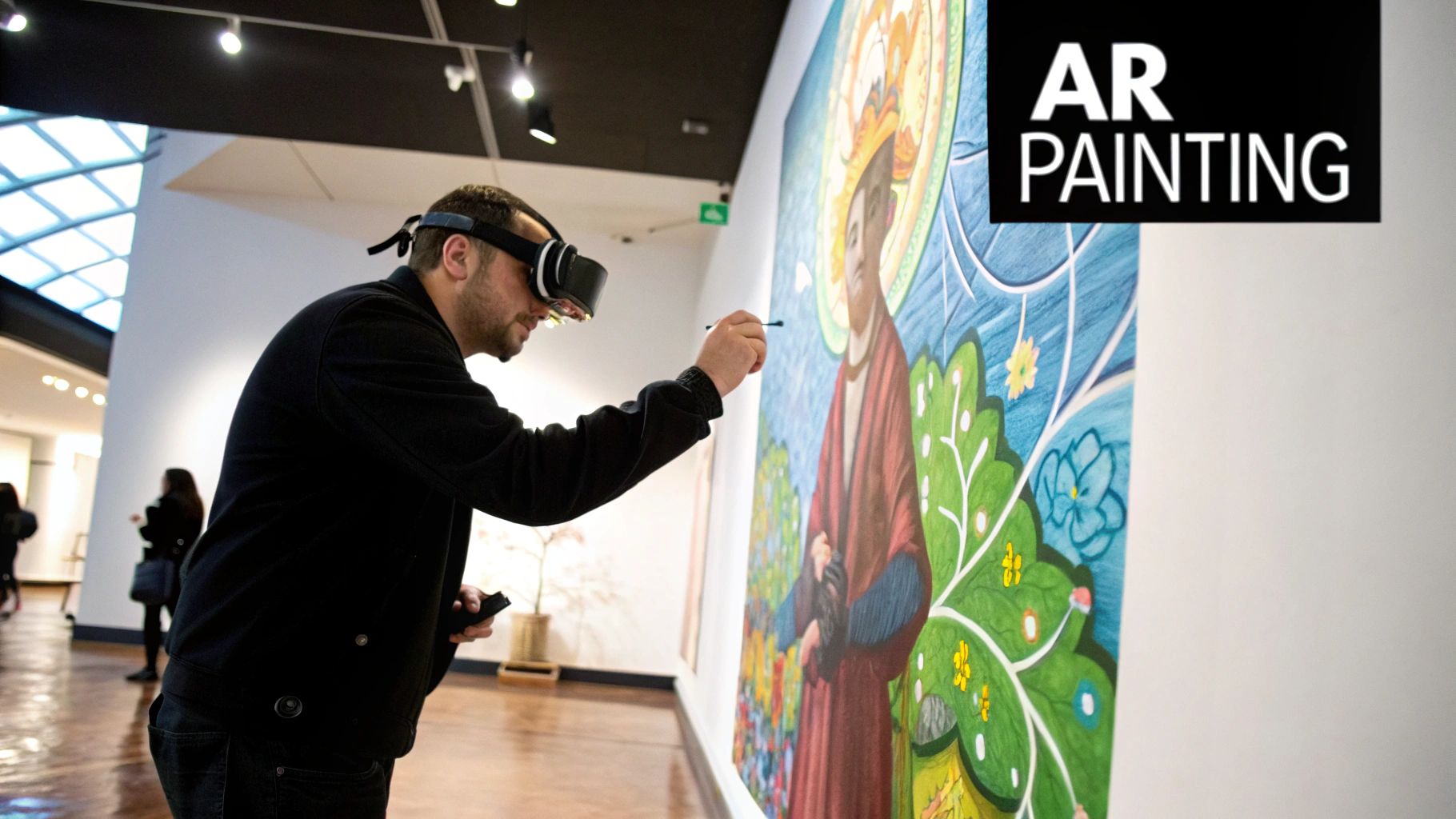
Augmented reality (AR) painting blends the physical and digital worlds, offering artists exciting new ways to express their creativity. Unlike traditional art, AR painting isn't limited by canvas or pigment. Instead, it lets artists create dynamic, interactive works that respond to the surrounding environment. This innovative medium uses technology to merge virtual components with the real world, creating immersive experiences for both artist and viewer. What are the core principles driving this exciting new medium?
Core Technologies Powering AR Painting
Several key technologies make AR painting possible. Spatial tracking systems, for example, help software understand the physical world, accurately placing digital paint strokes within it. This allows virtual paint to interact with real-world objects, like sticking to walls or wrapping around furniture. Imagine painting a mural directly onto a building without using a physical brush!
Gesture recognition technology translates hand movements into virtual brushstrokes, letting artists paint with their hands in the air. This provides a more intuitive and natural experience than traditional digital painting with a stylus. Artists can use gestures similar to those used with physical media, blurring the lines between traditional and digital art practices.
Computer vision is another vital component. It lets the software recognize real-world objects and surfaces. This allows digital paint to realistically interact with the environment, making virtual creations appear as part of the physical world.
Real-World Applications of AR Painting
AR painting has diverse and growing applications. Artists use it to create interactive murals that respond to viewer presence, turning static artwork into dynamic experiences. An AR mural might change colors or patterns as a viewer approaches, creating a personalized and interactive art encounter.
AR painting also creates dynamic sculptures that evolve over time. These virtual sculptures can be placed in physical locations and viewed through AR devices, changing shape, color, or even interacting with the environment in response to different stimuli. This allows artists to explore themes of change and impermanence.
AR painting is not limited to two or three dimensions. Artists are creating immersive installations that blend the boundaries of reality. These installations combine virtual elements with physical spaces. Imagine stepping into a room where walls become animated canvases, or where virtual creatures interact with you as you move through the space. This kind of immersive experience can transport viewers to other worlds.
The global augmented reality (AR) market, including AR painting, has grown significantly. By 2025, the AR market is projected to reach $198 billion, a significant increase from its $3.48 billion value in 2017. Learn more here. This expanding market highlights the growing interest in AR and its potential to transform how we interact with the world, including how art is created and experienced.
Choosing The Right AR Painting Tools And Software
Augmented reality (AR) painting merges artistic expression with cutting-edge technology. Choosing the right software and hardware is essential for a smooth and inspiring creative process. Whether you're a beginner or an experienced artist, understanding the available tools is the first step towards bringing your AR art to life.
AR Painting Software: Exploring Your Options
The AR painting software landscape offers a diverse range of tools, each with its own strengths and weaknesses. Tilt Brush, known for its user-friendly interface and wide selection of brushes, is a great choice for beginners. It allows artists to paint in 3D space with virtual brushes, producing captivating visual effects. For more advanced projects, Gravity Sketch offers powerful 3D modeling tools in addition to painting features, making it a good fit for artists interested in sculpting and design. Adobe Aero is another powerful option specializing in creating immersive AR experiences by seamlessly blending 2D and 3D assets, animations, and interactive elements. For a broader look at creative coding tools, check out our guide on various vibe coding tools.
Hardware Considerations for AR Painting
Choosing the appropriate hardware is just as important as the software. While high-end AR headsets like the Microsoft HoloLens offer the most immersive experience, their cost can be prohibitive. Smartphones and tablets offer a more accessible entry point into AR painting, making them ideal for artists beginning their exploration.
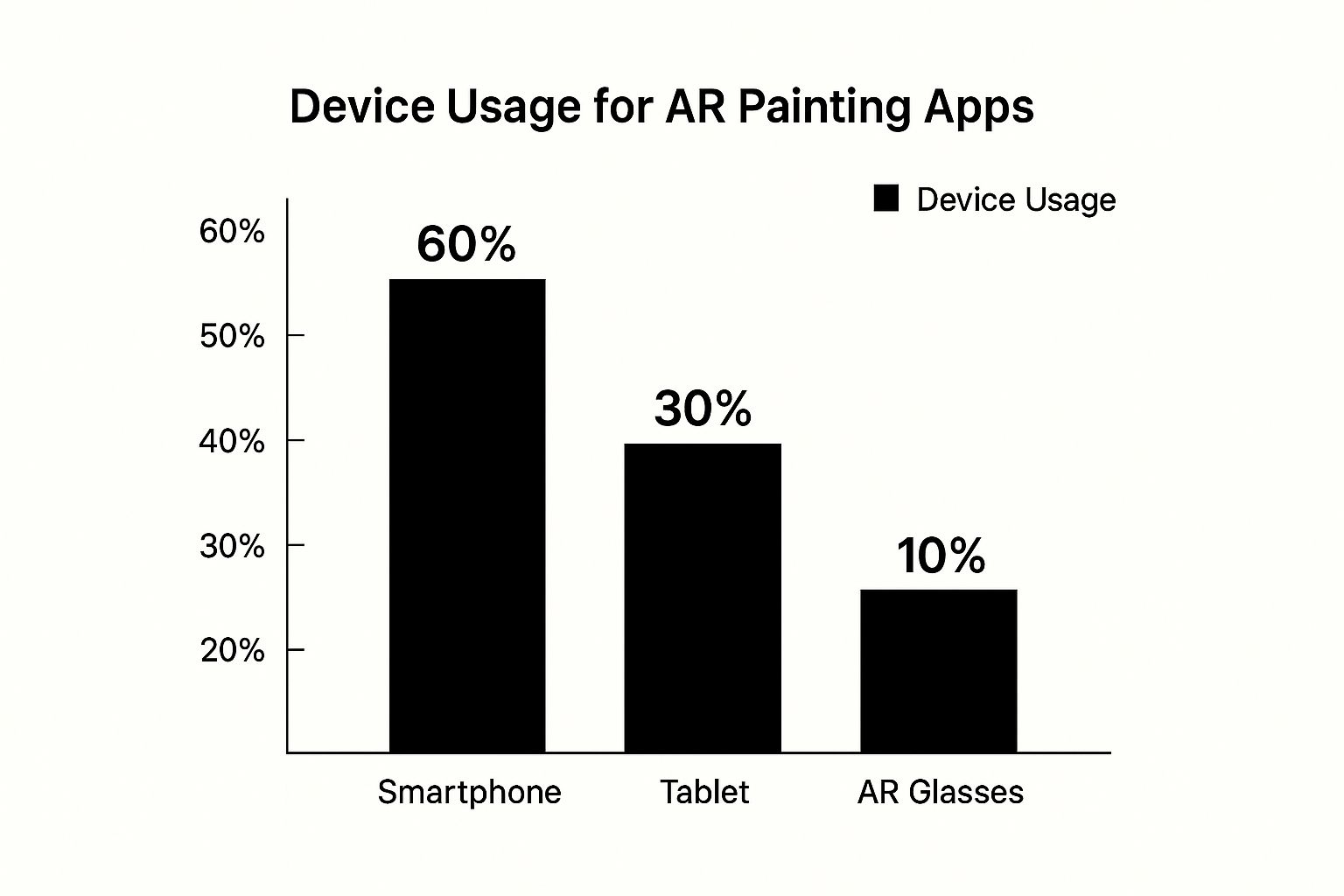
The infographic above illustrates device usage for AR painting apps. Smartphones currently dominate, representing 60% of usage due to their convenience and accessibility. Tablets come in second at 30%, offering a larger digital canvas. Dedicated AR/VR glasses account for 10%, reflecting their specialized use and higher price point.
To help you compare available software options, we've compiled the following table:
AR Painting Software Comparison: Detailed comparison of popular AR painting applications including features, platforms, pricing, and user ratings.
| Software | Platform | Key Features | Price | Best For |
|---|---|---|---|---|
| Tilt Brush | PC, VR Headsets | Intuitive interface, wide range of brushes, Google integration | Free | Beginners, casual creators |
| Gravity Sketch | VR Headsets, iPad | Advanced 3D modeling, collaborative features, professional design tools | Subscription / One-time purchase | Professional artists, designers |
| Adobe Aero | iOS, Android, Desktop | Immersive AR experiences, integration with other Adobe Creative Cloud apps, robust animation tools | Free (Starter), Subscription (Pro) | Creating interactive AR experiences, integrating 2D/3D assets |
This table provides a quick overview of some popular AR painting software, highlighting key differences in platform compatibility, features, and target users.
Evaluating Your Artistic Needs
The "best" AR tools depend on your individual artistic goals. For quick sketches and experimenting with brushes, a smartphone and Tilt Brush are a great combination. For large-scale installations or intricate 3D models, a dedicated AR headset and software like Gravity Sketch or Adobe Aero are more suitable. You can find more insights and resources on AR.
Pricing and Accessibility
Cost is another important factor. Many AR painting applications offer both subscriptions and one-time purchases. The right pricing model depends on how often you plan to use the software and your budget. Free trials offer a chance to experiment before committing to a purchase, helping you find the right balance between features, accessibility, and cost.
Creating Your First AR Painting Masterpiece
So, you’re intrigued by augmented reality (AR) painting and ready to dive in. Transforming from a beginner to a confident AR artist is achievable with a structured approach. This guide takes you through the entire journey, from initial concept to displaying your finished AR masterpiece.
From Concept to Creation: A Step-by-Step Guide
Every masterpiece starts with an idea. Begin by sketching your concept, even if it's on traditional paper. Think about how digital elements will interact with the real world and enhance the viewer’s experience. This initial groundwork forms the foundation of your AR painting.
Next, select your AR painting software. Options like Tilt Brush are known for their user-friendliness and are great for beginners. For more complex projects, Gravity Sketch offers robust 3D modeling capabilities. Explore various platforms to find what suits your artistic style and technical skills. You might be interested in exploring different examples of vibe coding: exploring different examples of vibe coding.
Mastering Spatial Awareness and Gesture Control
Spatial awareness, understanding the 3D space around you, is essential for AR painting. Practice moving your hand in the air, visualizing your virtual brush strokes in the augmented environment. This is similar to a sculptor understanding the form they’re shaping before touching the clay.
Gesture control is your virtual brush. Experiment with hand movements to control the size, shape, and direction of your strokes. Like learning choreography, mastering gesture control requires practice but unlocks creative possibilities.
Practical Exercises for 3D Brush Techniques
Let’s apply these skills. Start with simple shapes, experimenting with 3D brush techniques. Try creating virtual spheres, cubes, and then progress to more complex organic forms. Imagine sculpting with light, layering and shaping your creation in mid-air.
Next, explore color blending in the virtual space. Practice layering hues and adjusting their opacity to achieve the desired effect. This digital palette offers countless possibilities, limited only by your imagination.
Setting Up Your AR Workspace
Your physical workspace is important for your AR painting success. Ensure adequate lighting for optimal tracking accuracy. This is much like a photographer setting up a studio – lighting impacts how the software perceives your movements and interacts with your environment.
Also, remove any physical obstacles that could interfere with your hand movements. This allows for free, expressive gestures and prevents interruptions during your creative process.
Troubleshooting Common Issues
AR painting has its challenges. Tracking loss, where the software loses its connection with your physical space, is a common issue. Troubleshooting includes recalibrating your device or adjusting the lighting.
Another challenge is adapting to the 3D canvas. This shift in perspective is like transitioning from a flat canvas to a spherical one. Practice and patience are key.
Furthermore, while specific statistics on AR painting are limited, the broader AR market trends are promising. The AR market is seeing significant investment, especially in gaming and education. For example, the global AR gaming market was valued at $14.2 billion in 2024. Learn more about AR market trends here. This growing interest in AR technology suggests exciting possibilities for the future of AR painting. By grasping these foundational aspects of AR painting, you’re well on your way to creating your first masterpiece.
Advanced AR Painting Techniques That Set You Apart
Stepping beyond the fundamentals of augmented reality painting unlocks a realm of artistic expression. It's here that artists can truly distinguish their work and cultivate a unique style. This section delves into advanced techniques that push the boundaries of AR art, transforming creations from static images into captivating interactive experiences.
Integrating Particle Systems for Dynamic Effects
Particle systems offer a powerful way to infuse your AR artwork with depth and movement. Imagine them as digital simulations of elements like fireworks, smoke, or shimmering glitter. These systems generate and animate a multitude of tiny particles within your piece, producing mesmerizing visual effects. For instance, imagine painting a virtual campfire onto a real log and then using particle systems to add flickering embers. This brings the artwork to life in a whole new dimension.
You could also use particle systems to simulate falling leaves in an autumn-themed AR landscape, or create trails of light that follow a virtual brushstroke. The possibilities are vast, allowing you to transform static AR paintings into dynamic, ever-evolving pieces.
Designing Interactive Environments
Elevating interaction involves creating responsive environments where your virtual creations react to the physical world. Picture an AR painting of a pond where virtual fish scatter as the viewer approaches, or a virtual flower that blooms when touched. This level of interactivity transforms the viewer into a participant, blurring the lines between artwork and experience, and significantly deepening engagement.
Layering Animations for Complex Visuals
Similar to traditional animation, AR artists can utilize layering to create depth and movement within their pieces. This technique involves creating multiple animated elements that interact with each other and the real world. Imagine layering animations of rippling water, swimming fish, and swaying reeds to build a realistic, interactive AR pond scene. This allows for richer, more engaging visual narratives within your artwork. For artists exploring interactive art and animation, Vibecoding VIP offers valuable resources and tools.
Workflow Optimization for Professional Projects
Professional AR artists employ workflow optimization strategies to efficiently manage complex projects. This typically involves breaking down projects into manageable phases, establishing clear communication with clients, and utilizing project management tools to track progress and maintain accountability. These strategies ensure that the creative vision aligns with technical execution and that projects are completed on time and within budget.
Collaborative Techniques for Shared Virtual Spaces
Collaboration plays a significant role in professional AR art. Multiple artists can work concurrently within shared virtual spaces, much like musicians in a jam session. This collaborative environment sparks new creative possibilities and enables the efficient completion of large-scale projects.
Innovative Applications in Diverse Fields
The application of these advanced AR painting techniques extends far beyond individual art pieces. They are being utilized in advertising campaigns to craft interactive brand experiences, in entertainment venues to offer immersive attractions, and even in therapeutic settings to create calming virtual environments. By mastering these techniques, artists not only elevate their creative expression but also position themselves for exciting opportunities within the expanding AR field. For those looking to stay current in this dynamic creative field, Vibecoding VIP provides valuable ongoing resources.
Building Your AR Art Portfolio and Professional Brand
Transitioning from creating AR paintings to building a professional career requires a strategic approach. You need to showcase your work effectively and establish a strong brand. This involves understanding the unique challenges of presenting interactive, three-dimensional art in traditional formats and using digital platforms for maximum impact.
Documenting and Presenting Your AR Artwork
Documenting AR art presents unique challenges. Since the medium is interactive and three-dimensional, capturing its essence in static images or videos requires careful planning. High-quality videos are essential for showcasing the interactive elements. Supplement these videos with still images that highlight key visual details, much like photographing a sculpture from multiple angles to convey its complete form.
Written descriptions are also crucial. Clearly explain the concept and interactive elements of each piece, filling in the gaps that static media cannot capture. Just like describing a performance, you need words to convey the actions and emotions that visuals alone cannot.
Building a Strong Online Presence
A strong online presence is crucial for any artist, especially AR artists. Create a professional website showcasing your portfolio, artist statement, and contact information. Visual platforms like Instagram are powerful tools for sharing your work and engaging a wider audience.
Consider sharing behind-the-scenes glimpses into your creative process, not just finished pieces. This allows viewers to appreciate your work on a deeper level and builds a personal connection. It's similar to a chef sharing recipes, helping others understand the craft and appreciate the final dish. Learn more about resources for AR artists in our article: Various Resources for AR Artists.
Pricing Your Creative Work
Pricing AR artwork can be complex due to its relative novelty. Consider factors like the piece's complexity, the time invested, and the client's intended use. Researching industry standards and consulting with other AR artists can provide valuable insights. A simple AR filter for social media, for example, will likely have a different price point than a complex installation for a corporate client.
Networking and Building Client Relationships
Networking is vital in the AR art world. Attending industry events, connecting with other artists online, and directly contacting potential clients can open doors to new opportunities. Building genuine client relationships is also crucial. Clear communication, meeting deadlines, and exceeding expectations build a strong reputation and encourage repeat business.
Identifying Emerging Opportunities in the AR Market
The AR market is constantly evolving, presenting both challenges and opportunities. Stay informed about technological advancements and explore emerging applications of AR painting in advertising, entertainment, and education. Imagine the potential for creating interactive AR experiences for museums, educational apps, or theme parks.
Exhibition Possibilities for AR Art
Traditional galleries and museums are adapting to showcase AR art, and new exhibition formats are emerging. Online exhibitions, AR art festivals, and even virtual reality galleries offer exciting possibilities for reaching wider audiences and experimenting with innovative display methods.
Staying Current and Building Sustainable Income Streams
Technology's fast-paced nature requires continuous learning. Engage with online communities, attend workshops, and experiment with new software and hardware to stay at the forefront of the field. Building multiple income streams can also create a sustainable career. Consider offering workshops, creating commissioned pieces, and selling digital assets.
You could offer online tutorials on AR painting techniques, create custom AR filters for brands, or sell your 3D models to other artists. This diversification provides financial stability, expands your reach, and strengthens your professional brand within the AR art world. 
Future Opportunities In AR Painting Markets
Augmented reality painting isn't just a passing fad; it's a rapidly expanding market brimming with potential. This exciting blend of art and technology is set for significant growth, fueled by advancements in hardware and software, and its increasing accessibility. Understanding these emerging trends is essential for both artists and businesses looking to harness the power of AR painting.
Technological Advancements Shaping the Future
Advancements in AR hardware, such as lighter, more powerful headsets and improved tracking systems, will make AR painting a more immersive and accessible experience. Just like the early days of computers, when they were bulky and expensive, AR headsets are becoming smaller, more affordable, and user-friendly. This will open up AR painting to a wider audience, increasing its appeal to artists and viewers alike.
AI integration will also play a crucial role. AI algorithms can assist with brushstroke refinement, color mixing, and even content creation, expanding the creative toolkit for AR artists. This means that even beginners can create impressive AR artwork, while experienced artists can explore new creative frontiers. AI can also personalize the art experience, tailoring the visuals and interactions to individual viewer preferences.
Cloud computing enables seamless collaboration and the creation of large-scale, persistent AR artworks accessible to anyone with a compatible device. Imagine collaborating with artists from around the globe on a virtual mural, all working together in the same AR space. This opens up exciting new possibilities for collaborative global art projects.
Emerging Markets and Revenue Potential
AR painting has applications that extend far beyond the art world. In healthcare, it can be used therapeutically, creating calming environments for patients and aiding in rehabilitation exercises. In tourism, AR painting can enhance historical sites and museums, offering visitors immersive interactive experiences. Imagine walking through ancient ruins and witnessing them brought to life through virtual reconstructions and interactive exhibits. These diverse applications highlight the significant revenue potential across various industries.
To further illustrate the market opportunities, let's take a look at the following table:
AR Painting Market Opportunities: Overview of growing market segments and revenue potential for AR painting applications across different industries
| Industry | Application | Market Size | Growth Rate | Key Players |
|---|---|---|---|---|
| Healthcare | Therapeutic environments, rehabilitation | $X million | X% | Hospital systems, therapy centers, tech companies |
| Tourism | Interactive museum exhibits, historical site enhancements | $Y million | Y% | Museums, historical sites, tourism companies, AR/VR developers |
| Art & Design | Creative expression, digital art creation | $Z million | Z% | Individual artists, art galleries, design firms, software developers |
| Education | Interactive learning experiences, virtual field trips | $A million | A% | Schools, educational institutions, EdTech companies |
This table provides a snapshot of the potential market size and growth rates within several key industries. As the technology matures and adoption increases, these numbers are expected to grow substantially.
Blockchain and VR: Expanding the Creative Landscape
Blockchain technology provides a solution for art authentication and ownership, enabling artists to securely register and track their AR creations. This will become increasingly crucial as the value of digital art continues to rise. VR (Virtual Reality) can be integrated with AR painting to create hybrid experiences, further blurring the lines between the physical and digital worlds. Imagine painting in VR and then experiencing those creations in AR, seamlessly transitioning between the two realms. This could lead to entirely new avenues of artistic expression.
Overcoming Challenges and Expanding Accessibility
Accessibility remains a key challenge. The cost of AR hardware and software can be a barrier for some artists and viewers. However, the increasing prevalence of smartphone-based AR experiences is making augmented reality painting more accessible.
New business models, such as subscription services and collaborative platforms, are reshaping how AR art is created, distributed, and monetized. These platforms provide artists with innovative ways to connect with audiences and generate income, further propelling the growth of the AR painting market.
Key Takeaways For AR Painting Success
Augmented reality painting blends artistic expression with technological innovation. Success in this field requires more than just creativity; it demands a strategic approach to learning, practicing, and showcasing your work. These key takeaways offer a roadmap for navigating the exciting world of AR painting.
Balancing Creativity and Technical Proficiency
AR painting requires a balance of artistic vision and technical skill. AR artists must understand both the creative possibilities of the medium and the technical tools that bring those visions to life, much like a musician mastering both their instrument and music theory. This means dedicating time to learning software like Tilt Brush, Gravity Sketch, or Adobe Aero and practicing techniques like spatial awareness and gesture control. Staying current with new technologies and software updates is also crucial.
Building a Strong Foundation Through Practice
Mastering AR painting, as with any art form, requires practice. Begin with simple exercises, focusing on fundamental skills like 3D brush techniques and color blending in a virtual environment. Gradually increase the complexity of your projects, experimenting with advanced techniques like particle systems and interactive environment design. This progressive approach helps build confidence and develop your unique artistic style within AR.
Showcasing Your Work and Building Your Brand
Presenting AR artwork effectively is vital for career advancement. Because of the interactive and three-dimensional nature of the medium, documenting it for traditional platforms requires strategy. Use high-quality videos to demonstrate the interactive elements of your work. Supplement these with still images and written descriptions to provide context and meaning. A robust online presence, including a professional website and active social media, is also essential for connecting with clients and collaborators.
Embracing the Evolving Nature of AR
The AR landscape is constantly evolving, with new technologies, platforms, and market opportunities emerging regularly. Embrace this dynamic environment by engaging with the AR community, staying informed about industry trends, and exploring new tools and techniques. Platforms like Vibecoding VIP offer curated resources, examples, and community connections to support your development.
Maintaining Momentum and Motivation
The path of an AR artist can be both rewarding and challenging. Maintaining motivation is key for long-term success. Set achievable goals, celebrate your accomplishments, and connect with other artists for support and inspiration. Treat each project as a learning experience, and view challenges as opportunities for growth. By embracing these key takeaways, you can navigate the world of AR painting with confidence and purpose. For additional resources, see Vibecoding VIP's curated resources for AR artists.