Unleash Your Inner Artist with Code
Want to create stunning visuals, interactive art, or generative designs? This list of 8 top creative coding courses will help you transform code into art. Whether you're a beginner or an experienced developer, you'll find a creative coding course here to match your skills and interests. These courses provide the tools and knowledge to overcome technical hurdles and bring your artistic visions to life. From p5.js and JavaScript to Unity and TouchDesigner, explore diverse platforms and languages. Jump in and start creating!
1. Creative Coding with p5.js by Kadenze
If you're looking for a comprehensive creative coding course, the "Creative Coding with p5.js" offering on Kadenze is an excellent starting point. This course provides a deep dive into the world of p5.js, a JavaScript library specifically designed for creative expression through code. It's ideal for a wide range of individuals, from aspiring "vibe coders" and digital artists to experienced software developers looking to add creative coding to their skillset, educators, and even innovative entrepreneurs looking to explore new mediums. The curriculum focuses on building a strong foundation in programming interactive graphics, animations, and web-based creative applications. This allows you to translate your artistic vision into reality using code, opening up a world of possibilities for interactive art, data visualization, generative design, and more.
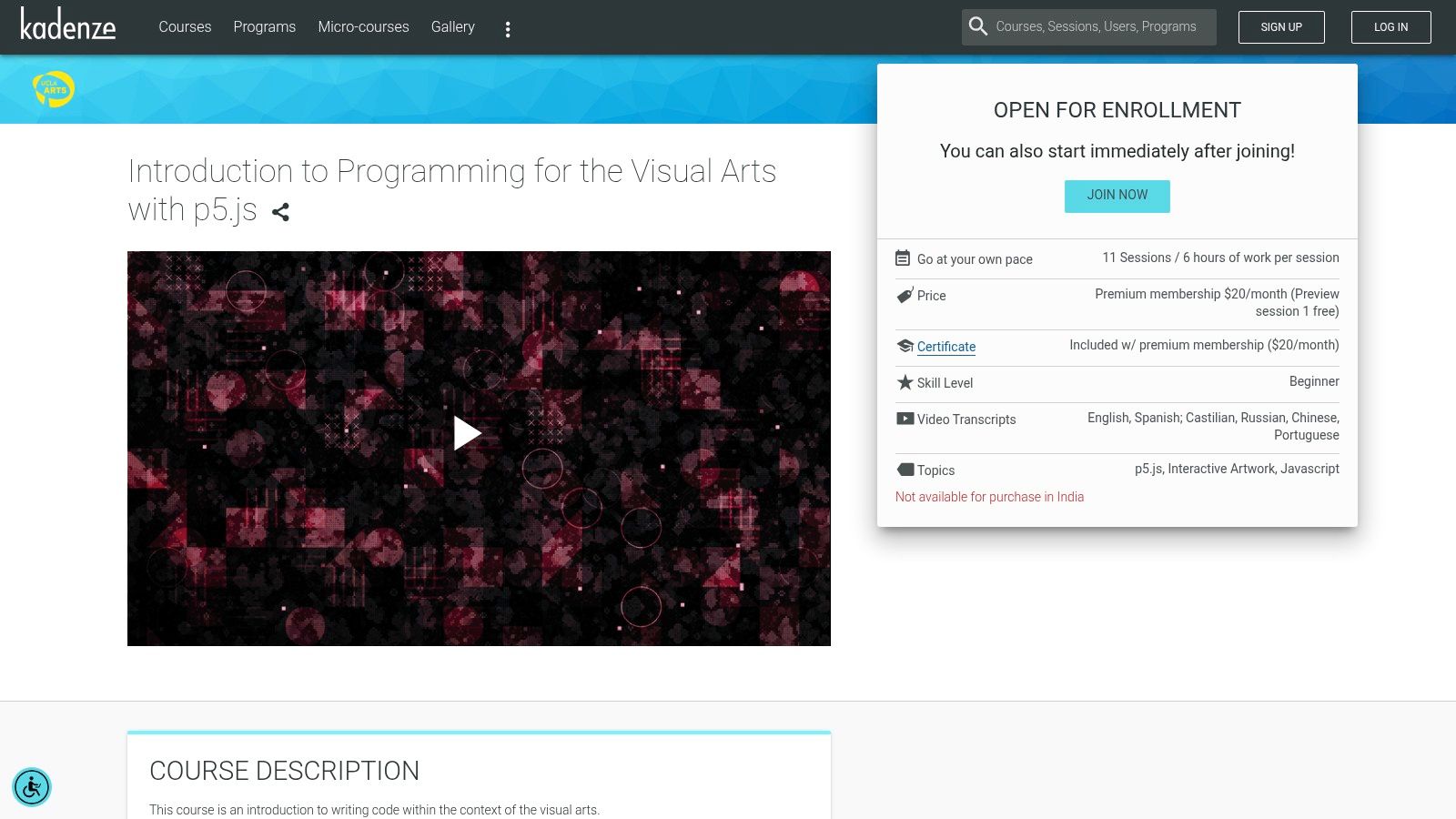
What sets this creative coding course apart is its pedigree. It's taught by none other than Lauren McCarthy, the creator of p5.js, and Casey Reas, co-founder of Processing (the language p5.js is based on). Learning directly from the source provides invaluable insights into the library's philosophy and best practices. The seven sessions cover everything from p5.js fundamentals to more advanced topics, enabling you to progress from basic shapes and colors to complex interactive projects. The project-based curriculum encourages hands-on learning, and the incorporated peer feedback system fosters a collaborative learning environment. Furthermore, access to a vibrant creative coding community allows you to connect with fellow learners, share your work, and find inspiration.
For those seeking formal recognition, a Premium Certificate of completion is available upon successfully finishing the course. This requires a paid Kadenze membership, which costs around $20 per month. While the course is structured effectively, absolute beginners with zero programming experience might find the pace challenging. The curriculum primarily focuses on p5.js and doesn't delve extensively into other creative coding frameworks like OpenFrameworks or Cinder. However, the strong foundation you build in p5.js will make it easier to explore other frameworks later.
Pros:
- Taught by industry experts and the creators of p5.js, ensuring high-quality instruction.
- Well-structured curriculum covering basic to advanced concepts, facilitating a smooth learning curve.
- Effectively combines technical programming skills with artistic principles, fostering creative expression.
- Provides access to an active community for feedback, support, and inspiration.
Cons:
- Premium certification requires a paid Kadenze subscription.
- May progress too rapidly for complete beginners with no prior programming knowledge.
- Primarily focuses on p5.js with limited exposure to other creative coding frameworks.
Website: https://www.kadenze.com/courses/introduction-to-programming-for-the-visual-arts-with-p5-js/info
This Kadenze course deserves its place on this list because it offers a structured and in-depth exploration of p5.js, taught by the very people who created it. It's a fantastic choice for anyone serious about diving into the world of creative coding and using code to bring their artistic visions to life.
2. Creative Coding: Making Visuals with JavaScript by Domestika
This Domestika course, "Creative Coding: Making Visuals with JavaScript," offers a compelling entry point into the world of web-based visual artistry. Taught by Bruno Imbrizi, a seasoned creative coder, the course emphasizes practical application, guiding students through the process of building visually stunning animations and effects using JavaScript and WebGL. If you're a designer, artist, or developer looking to bridge the gap between code and creativity, this creative coding course could be an excellent fit. It's ideal for creating interactive web experiences, generative art, and dynamic visual content. Think interactive art installations, responsive website elements, or even data visualizations brought to life with vibrant motion.
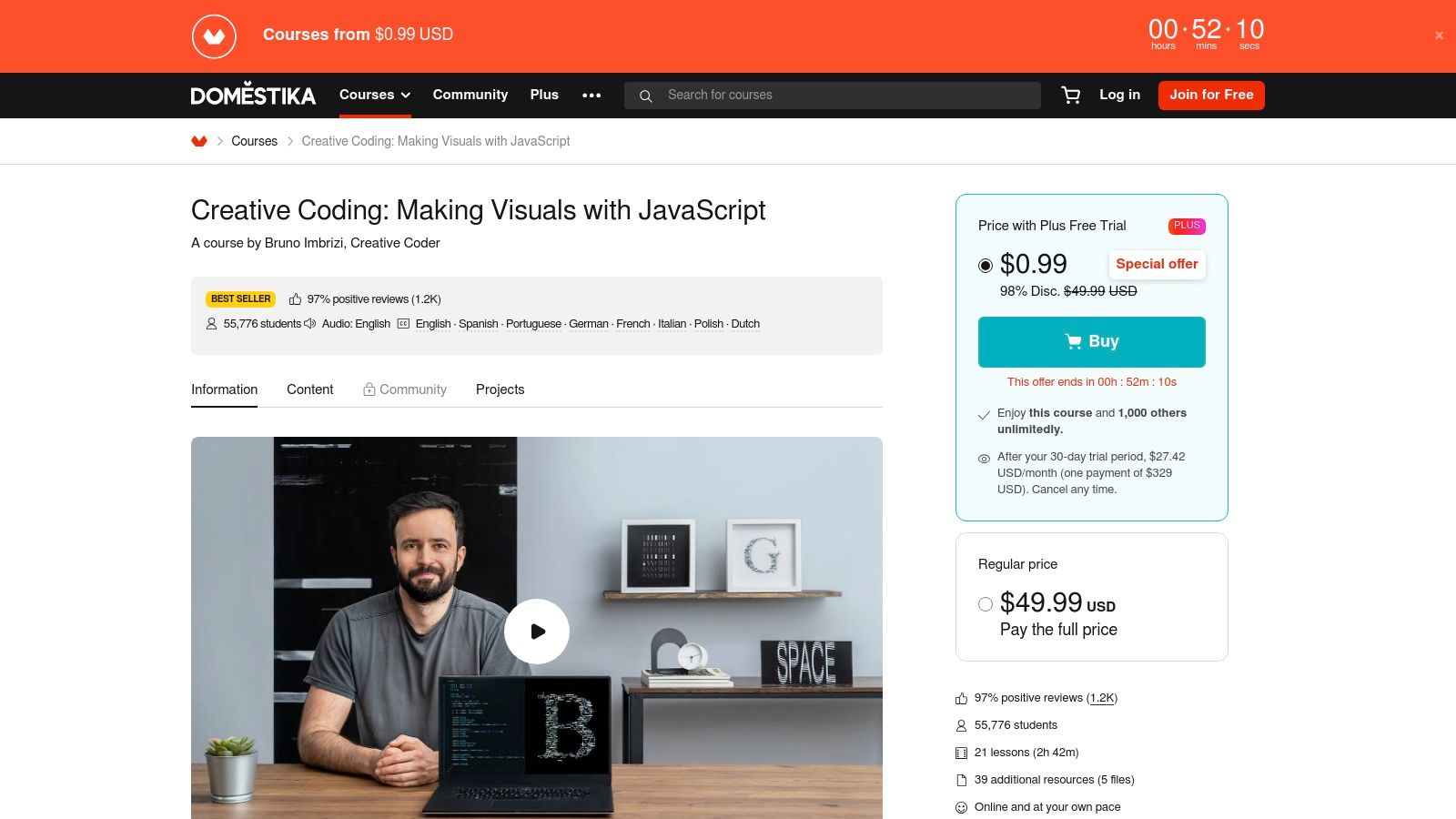
The course is structured around 15 lessons, starting with JavaScript fundamentals and progressing into the intricacies of WebGL. This structured approach makes it suitable even for those with limited prior programming experience. You'll learn by doing, working step-by-step on a visual web project, applying animation principles, and experimenting with various visual effects. The course also includes downloadable resources and code samples to facilitate learning and experimentation. One of the biggest advantages is the lifetime access granted for a one-time purchase, often available for around $10-$15 during sales. This makes it a cost-effective way to delve into creative coding. Learn more about Creative Coding: Making Visuals with JavaScript by Domestika to understand how this course can help with GSAP animation, a powerful JavaScript library for creating complex animations. This connection can enhance your understanding of advanced animation techniques.
While the course focuses on practical implementation, offering a distinct advantage over purely theoretical approaches, its scope isn't as comprehensive as a university-level program. This means that while you'll gain valuable skills, it may not cover the same breadth of theoretical computer science principles. Additionally, the platform's community interaction is less robust than some other learning platforms. While this might not be a significant drawback for self-directed learners, those who thrive in collaborative learning environments might find this aspect limiting. Finally, some of the more advanced WebGL concepts might pose a challenge for absolute beginners, requiring extra effort and exploration. However, the structured learning path and provided resources aim to mitigate this challenge.
Overall, Domestika's "Creative Coding: Making Visuals with JavaScript" provides a focused, practical, and affordable pathway to explore the exciting possibilities of creative coding. It empowers you with the tools and knowledge to transform your creative visions into dynamic, interactive web experiences. Its concise format and emphasis on visual results make it a valuable resource for both aspiring and experienced creatives eager to add coding to their toolkit. The lifetime access further sweetens the deal, allowing you to revisit the material and continue building your skills long after completing the course.
3. Creative Programming for Digital Media & Mobile Apps by University of London
If you're seeking a structured, academic approach to creative coding, the "Creative Programming for Digital Media & Mobile Apps" course from the University of London, offered through Coursera, might be the perfect fit. This creative coding course provides a solid foundation in programming concepts using the Processing language, specifically geared towards digital media applications. It bridges the gap between desktop and mobile platforms, empowering you to create interactive art, expressive visuals, and even mobile apps. This course stands out for its blend of theoretical underpinnings and practical application, making it suitable for a wide range of aspiring creative coders.
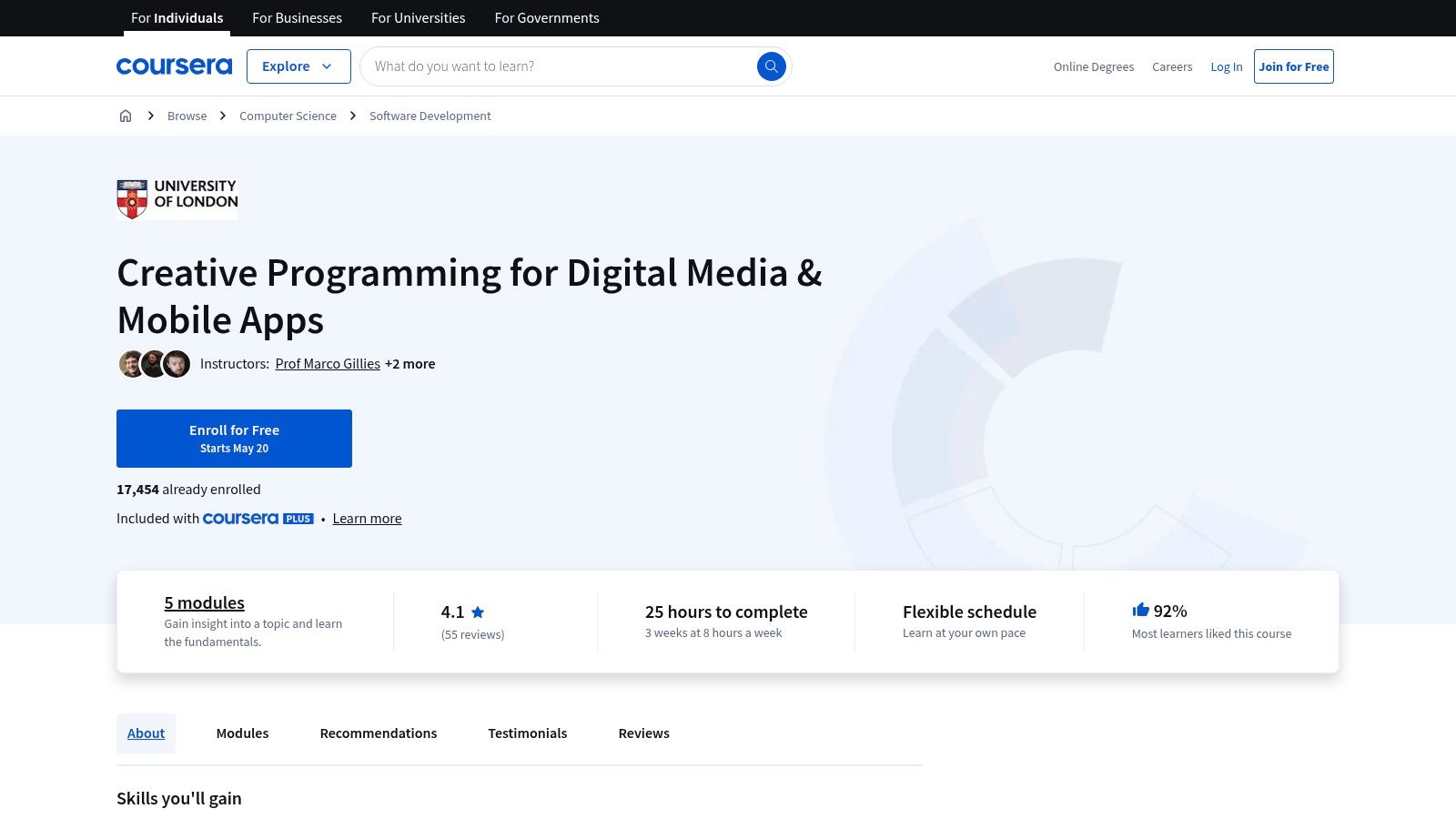
This six-week creative coding course covers Processing fundamentals, guiding you through the basics of programming within a visually-oriented environment. You'll learn how to manipulate images, generate graphics, and create interactive experiences. The curriculum also delves into mobile app development concepts, integrating Processing sketches into mobile applications. This cross-platform approach offers a broader skillset applicable to both desktop and mobile creative projects. Assignments are focused on creative digital media projects, encouraging practical application of the learned concepts. The course is taught by professors from Goldsmiths, University of London, lending it academic credibility. Upon completion, you can obtain a university-backed certificate, enhancing your portfolio and demonstrating your commitment to creative coding.
For experienced software developers, this course can be a valuable pathway to exploring the creative potential of coding beyond traditional software development. Digital artists and creative technologists can leverage the Processing environment to bring their artistic visions to life through code. Educators and students in tech fields can utilize this structured curriculum to incorporate creative coding into their learning journeys. Even innovative entrepreneurs and hobbyists can benefit from this course to develop prototypes and explore innovative ideas.
One of the most attractive aspects of this creative coding course is its affordability. You can audit the entire course for free to explore the content and determine if it aligns with your goals. If you wish to receive a certificate, the paid option is a reasonably priced $49. This flexible pricing model makes the course accessible to a broader audience.
While the academic rigor is a strength, it's worth noting that the course may be less focused on cutting-edge visual techniques commonly used in industry settings. As mobile platforms continuously evolve, some of the mobile development content may become outdated over time. The course's emphasis on theoretical foundations also means it's more academically oriented and less industry-focused than some alternatives.
Key Features & Benefits:
- Processing Fundamentals: Develop a strong understanding of the Processing language and environment.
- Mobile App Integration: Learn how to integrate Processing sketches into mobile applications.
- Creative Projects: Engage in hands-on projects focused on digital media and creative expression.
- University-Backed Certificate: Obtain a recognized credential upon successful completion.
- Affordable Pricing: Audit for free or obtain a certificate for $49.
Pros:
- Academic approach with solid theoretical foundations
- Covers both desktop and mobile applications
- Free to audit or affordable certificate option
- Structured university-level curriculum
Cons:
- Less focused on cutting-edge visual techniques
- Some mobile content may become outdated
- More academic and less industry-oriented
Website: https://www.coursera.org/learn/digitalmedia
4. The Nature of Code by Daniel Shiffman
If you're looking to dive into the world of creative coding and simulate the beauty and complexity of the natural world, "The Nature of Code" by Daniel Shiffman is an invaluable resource. This creative coding course, based on Shiffman's popular book of the same name, offers a unique approach to generating organic, nature-inspired art and simulations using code. It leverages the Processing programming environment, a beginner-friendly language perfect for visual arts, to teach core concepts applicable to a wider range of programming languages. This allows students to create everything from realistic simulations of flocking birds to mesmerizing fractal patterns and evolving artificial life forms, making it an excellent choice for a creative coding course.
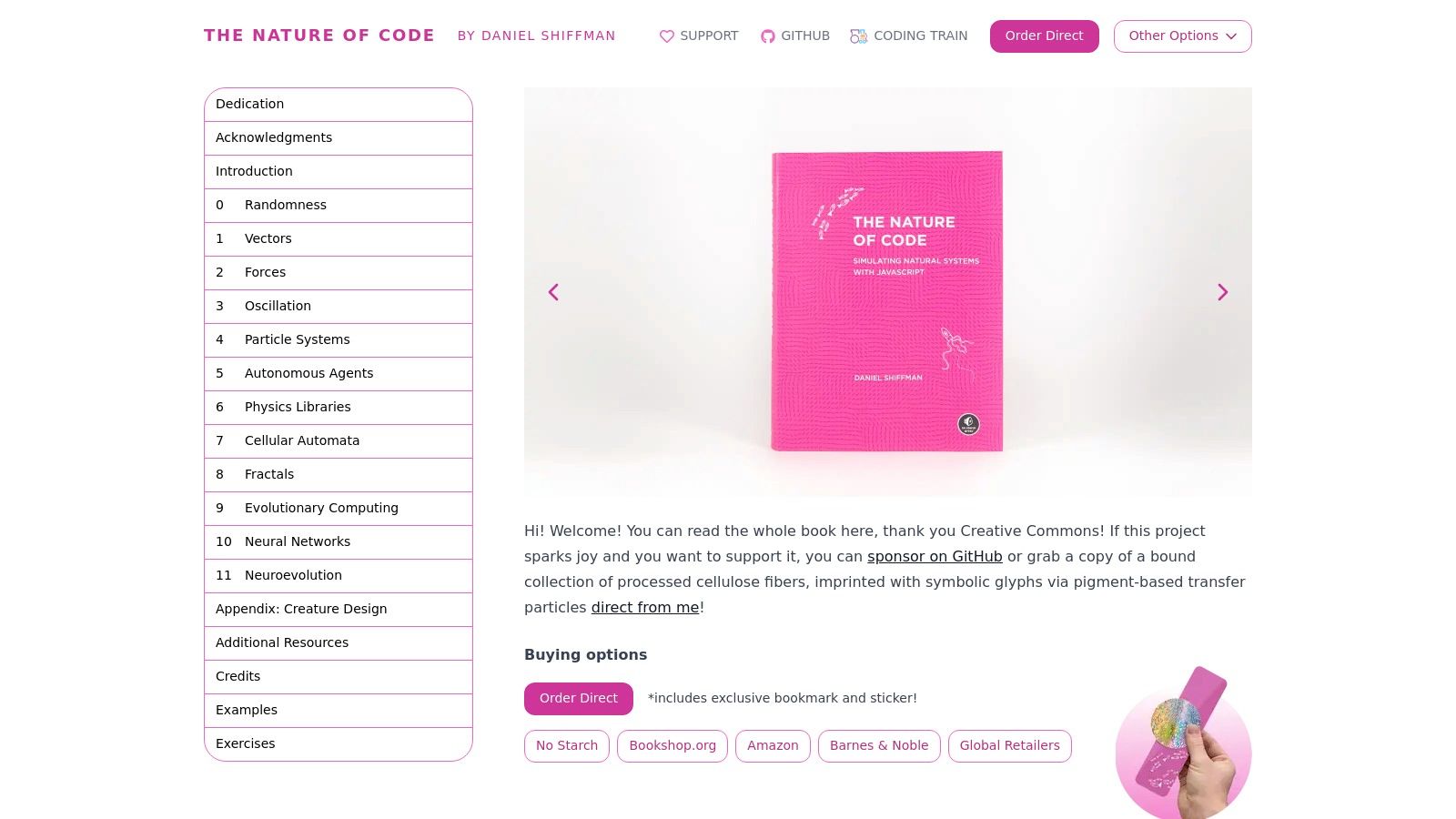
The course explores fundamental concepts in physics, fractals, cellular automata, and genetic algorithms. Imagine creating a digital ecosystem where virtual plants grow and compete for resources, or designing a generative art piece based on the intricate patterns of snowflakes. These are just a few examples of the practical applications you'll be able to tackle. Shiffman’s clear and engaging teaching style makes these complex topics accessible even to those with limited coding experience. Whether you’re an aspiring vibe coder, an experienced software developer branching into creative coding, a digital artist looking for new tools, or simply a curious learner, this course offers a powerful entry point into algorithmic art and simulation. Learn more about The Nature of Code by Daniel Shiffman for added context and supplemental learning.
A significant advantage of this creative coding course is its accessibility. Many resources, including the book itself and accompanying video tutorials on YouTube, are available for free. The course also offers examples in both Processing and p5.js, a JavaScript library based on Processing, broadening its applicability to web-based projects. This open-source approach fosters a vibrant and supportive community, providing ample opportunities for collaboration and learning. You can find help through forums and engage with the source code on GitHub.
While "The Nature of Code" provides a wealth of resources, it's important to be aware of its less structured format compared to formal, instructor-led courses. This requires self-motivation and discipline to work through the materials effectively. Additionally, the focus on physics and algorithmic thinking may present a challenge for learners who prefer a less math-intensive approach to creative coding. However, Shiffman’s clear explanations and practical examples help bridge the gap for those less comfortable with mathematical concepts. There is no official pricing for the core materials as they are freely available, making it a highly accessible option for anyone interested in exploring this fascinating area of creative coding. The technical requirements are minimal, primarily involving installing Processing or setting up a p5.js environment, both of which are straightforward processes. This low barrier to entry makes "The Nature of Code" an excellent choice for beginners and experienced coders alike who wish to explore the exciting possibilities of simulating natural systems in code.
5. Creative Coding in Unity by School of Game Design
This creative coding course distinguishes itself by leveraging the industry-standard Unity game engine, opening doors to a world beyond game development. If you're an aspiring visual coder, experienced software developer, digital artist, or simply a creative technologist seeking a powerful tool for your projects, this course offers a compelling pathway. It's equally valuable for educators and students in tech fields, as well as innovative entrepreneurs and hobbyists looking to build interactive experiences. Instead of limiting you to browser-based coding, this course empowers you to create interactive installations, digital art, data visualizations, and even mixed reality (VR/AR) experiences, all within the robust Unity environment.
Unlike some creative coding courses that primarily focus on artistic applications or web-based tools, the School of Game Design's curriculum delves into the practical aspects of building interactive 2D and 3D projects using C# within Unity. This makes it a particularly strong choice for individuals interested in leveraging a professional-grade platform used extensively in the games industry and beyond. Imagine crafting responsive environments, generative art pieces, or immersive VR experiences – this course provides the foundation to realize such ambitious projects.
Key Features and Benefits:
- Over 50 hours of video content: This comprehensive approach ensures you gain a deep understanding of Unity’s capabilities for creative coding.
- C# programming fundamentals in Unity context: Even if you're new to C#, the course integrates programming instruction directly within the Unity environment, making the learning process more practical and relevant.
- Interactive 3D and 2D project development: You’ll learn to build both 2D and 3D interactive experiences, broadening your creative possibilities.
- VR/AR integration for creative applications: Explore the exciting realm of mixed reality and develop immersive experiences.
- Lifetime access with regular updates: Benefit from ongoing course updates and new content additions, ensuring your skills remain relevant.
- One-time payment for lifetime access: At $99, this represents exceptional value considering the depth of content and lifetime access.
Pros:
- Focus on industry-standard Unity platform: Learn a highly sought-after skill applicable across various industries.
- Comprehensive coverage of both 2D and 3D interactive content: Expand your creative toolkit and tackle diverse project types.
- Affordable one-time payment for lifetime access: An economical investment in your creative coding journey.
- Practical focus on complete projects rather than just theory: Gain hands-on experience by building real projects from start to finish.
Cons:
- Steeper learning curve than web-based creative coding: Unity's power comes with increased complexity, requiring more dedication to master.
- Requires more powerful hardware than browser-based alternatives: Be prepared to use a computer that meets Unity's system requirements.
- Less focused on purely artistic applications than some courses: While suitable for artistic expression, the course emphasizes broader interactive development within Unity.
Implementation Tips:
- Ensure your hardware meets Unity’s system requirements: Check the School of Game Design website and the official Unity website for specifications.
- Dedicate consistent time to learning: Unity and C# require focused effort. Schedule regular learning sessions for optimal progress.
- Join the School of Game Design community: Engage with other students and instructors for support and collaboration.
For those seeking a powerful, industry-relevant platform for creative coding, this Unity-based course offers a compelling alternative to browser-based solutions. While it demands more commitment and potentially more powerful hardware, the payoff is the ability to create sophisticated interactive experiences across various mediums. Visit the School of Game Design website (https://schoolofgamedesign.com/curriculum/) for more details and to enroll in this creative coding course.
6. Creative Coding with Canvas & WebGL by Frontend Masters
For those seeking a deep dive into the technical aspects of creative coding using JavaScript, Frontend Masters' "Creative Coding with Canvas & WebGL" offers a comprehensive workshop-style learning experience. Led by renowned web animation expert Matt DesLauriers, this creative coding course emphasizes building visually stunning art, interactive animations, and dynamic data visualizations directly within the browser. It bridges the gap between web development principles and artistic expression, equipping you with modern techniques used by professional creative coders today. This course is particularly relevant for those looking to create complex generative art, interactive installations, or data-driven visuals for the web. Think anything from dynamic backgrounds on websites to interactive art pieces displayed in a browser.
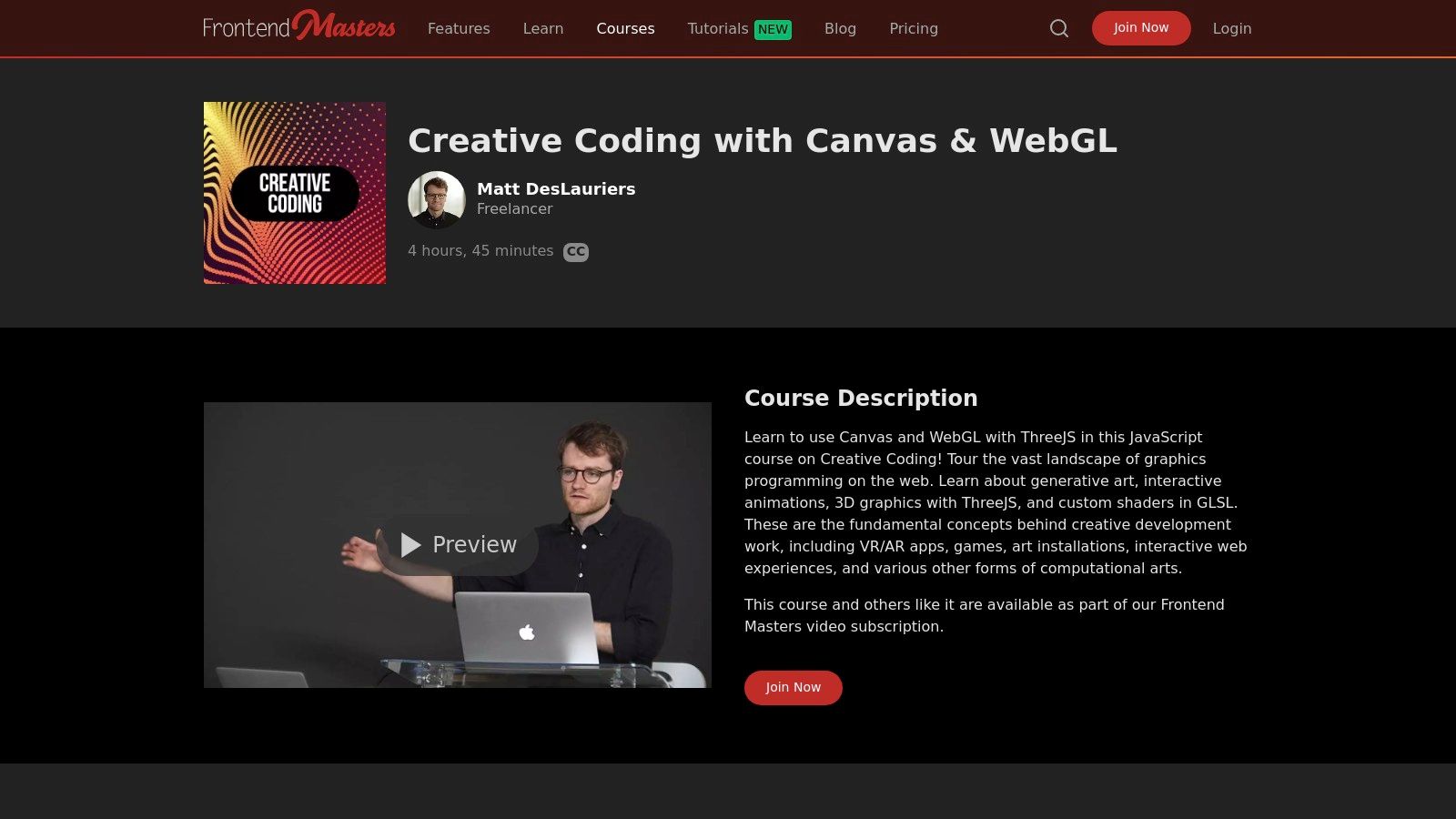
This creative coding course distinguishes itself through its dual focus on both 2D Canvas and 3D WebGL. You'll gain a practical understanding of how to manipulate pixels with Canvas for 2D graphics and then delve into the world of 3D graphics with WebGL, allowing you to create more immersive and complex visuals. The curriculum prioritizes modern JavaScript techniques, ensuring you're learning cutting-edge methods applicable to contemporary web development. Real-time coding demonstrations by Matt DesLauriers provide invaluable insights into his workflow and problem-solving approach. Plus, you gain access to all the code examples and resources, allowing you to experiment and build upon the concepts learned. Learn more about Creative Coding with Canvas & WebGL by Frontend Masters as a powerful 3D JavaScript library that can complement the knowledge you gain from this course.
A significant advantage of this creative coding course is the expertise of its instructor. Matt DesLauriers is a recognized figure in the generative art community, bringing his practical experience and deep understanding to the forefront. The course is also part of the broader Frontend Masters platform, giving you access to a wealth of complementary courses on web development if you choose to explore further. The high production quality and focus on practical, usable techniques make the learning process both engaging and effective.
However, it's important to note that this creative coding course requires a subscription to Frontend Masters, which costs $39/month. Additionally, a foundational understanding of JavaScript is assumed, so it might not be the best starting point for complete beginners. While the course delves deep into technical implementation, it places less emphasis on artistic principles and design theory. This makes it ideal for developers looking to enhance their creative coding skills but perhaps less suited for artists seeking to learn coding from scratch. If you already have a grasp of JavaScript and want a technically rigorous exploration of Canvas and WebGL for creative coding, this course provides excellent value and practical skills applicable to a wide range of projects.
7. Generative Art and Computational Creativity by Kadenze
For those seeking a deep dive into the world of algorithmic art, Kadenze's "Generative Art and Computational Creativity" stands out as a robust creative coding course. This isn't your average introductory tutorial; it's a university-level exploration of the philosophical and technical underpinnings of art created through code. Led by Dr. Philippe Pasquier of Simon Fraser University, the course delves into complex concepts like chaos theory, cellular automata, evolutionary systems, and even the application of machine learning in creative pursuits. This makes it an ideal creative coding course for experienced programmers and artists looking to expand their theoretical and practical knowledge.
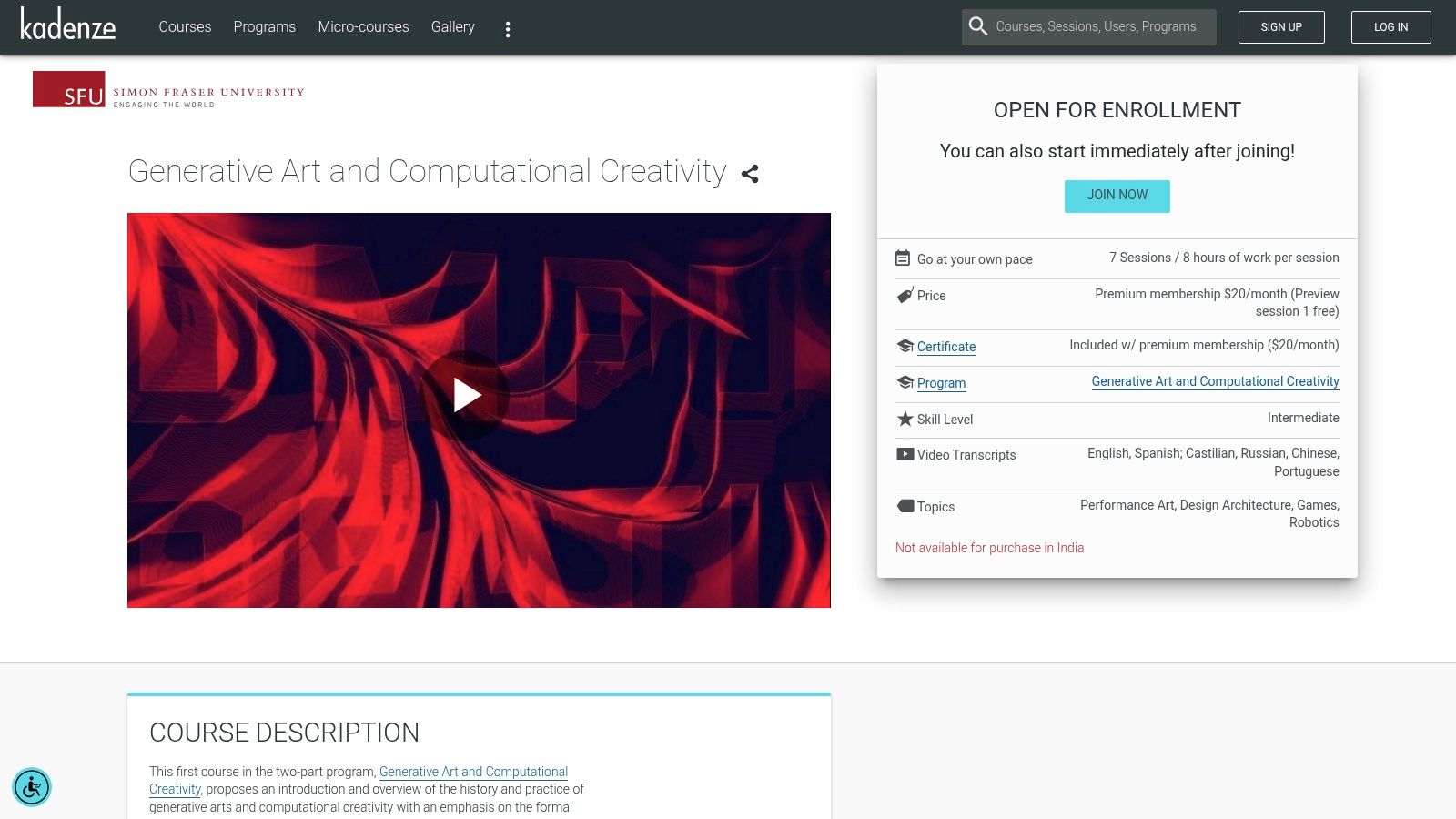
This creative coding course’s six-session curriculum provides a comprehensive overview of various algorithmic art techniques. While the course details don't specify particular programming environments, its advanced nature suggests familiarity with languages commonly used in generative art, such as Processing (Java-based), Python (with libraries like Pycairo and Pillow), or JavaScript (with libraries like p5.js). The focus extends beyond mere technical implementation, emphasizing the artistic theory and historical context behind these methods. This blend of technical skills and artistic tradition allows participants to develop a more holistic understanding of generative art. The integration of AI and machine learning opens up further possibilities for creative applications, pushing the boundaries of traditional art forms.
Practical applications of the knowledge gained in this creative coding course are numerous. Imagine creating unique visual patterns for textiles, generating evolving soundscapes for interactive installations, or developing algorithms that produce novel 3D-printed sculptures. For digital artists and creative technologists, this course offers the tools and theoretical framework to explore uncharted artistic territories. Experienced software developers can leverage this knowledge to incorporate generative elements into their projects, adding a layer of dynamic and personalized user experience. Even educators and students in tech fields can benefit from the course's academic rigor and practical insights.
While the course's depth is a significant advantage, it also means that it's not suitable for complete beginners. A solid foundation in programming is a prerequisite. Furthermore, while auditing the course material is free, obtaining a verified certificate requires a Kadenze Premium Membership, which costs around $20/month. Finally, it's worth noting that the course leans more towards theoretical exploration than some practical, project-based alternatives. However, for those looking to delve into the "why" behind the "how" of generative art, the rich theoretical foundation offered by this creative coding course is invaluable.
Pros:
- Deep exploration of the philosophy behind algorithmic art.
- Covers advanced topics not found in most introductory courses.
- Academic rigor with practical applications.
- Connects technical skills with artistic traditions.
Cons:
- Not suitable for beginners without programming experience.
- Premium certificate requires a paid subscription ($20/month).
- More theoretical than some practical, project-based courses.
Website: https://www.kadenze.com/courses/generative-art-and-computational-creativity/info
8. Creative Coding with TouchDesigner by TRYPIX
For those seeking a powerful tool to craft stunning real-time visuals, TRYPIX's Creative Coding with TouchDesigner course offers a deep dive into this industry-standard platform. This specialized creative coding course focuses on the node-based visual programming environment of TouchDesigner, making it a compelling choice for visual artists, VJs, interactive designers, and anyone interested in creating immersive experiences. This course empowers students to build interactive visual experiences using a node-based programming paradigm, opening doors to applications in live events, art installations, and multimedia performances. Whether you're an aspiring VJ, a seasoned software developer, or a digital artist exploring new mediums, this course offers a pathway to harnessing TouchDesigner's capabilities.
This creative coding course distinguishes itself through its focus on practical application. The curriculum covers over 15 hours of video instruction, walking students through the intricacies of node-based visual programming. The integration of audio, MIDI, and sensor inputs allows for the creation of truly dynamic and responsive installations. The emphasis on real-time performance makes this course particularly relevant for VJs and those working in live event production. Project files and resources are included, providing a valuable starting point for building your own creations. You'll learn to manipulate generative visuals, create interactive projections, and synchronize your work with music and external inputs, making it an ideal creative coding course for those interested in these fields.
This emphasis on real-world application, using a platform favored by industry professionals, justifies its place on this list. Unlike more general creative coding courses, this focused approach allows students to develop specialized skills highly sought after in fields like live performance and interactive installations. While other courses might offer broader coding knowledge, TRYPIX’s focus on TouchDesigner allows for a deeper understanding of this powerful tool.
Features and Benefits:
- Node-based Visual Programming: This approach makes complex programming concepts more accessible, even for those without traditional coding backgrounds.
- Real-time Performance Focus: Learn techniques specific to creating visuals for live events and interactive installations.
- Integration with External Devices: Explore how to incorporate audio, MIDI, and sensors to create dynamic and responsive experiences.
- Project Files and Resources: Get a head start with provided templates and resources, accelerating your learning process.
Pros:
- Industry-Standard Software: Learn a tool used by professional VJs and installation artists worldwide.
- Visual Approach: Accessible to individuals without extensive coding experience.
- Practical Application: Directly applicable to real-world projects in live performance and installation art.
- Real-world Examples: Learn by working with practical project examples and templates.
Cons:
- Platform-Specific: The focus on TouchDesigner limits the transfer of general programming knowledge.
- Cost: The course is relatively expensive at $299.
- Software Learning Curve: TouchDesigner itself has a learning curve separate from coding concepts.
Implementation/Setup Tips:
- Download and install the free non-commercial version of TouchDesigner to familiarize yourself with the interface before starting the course.
- Allocate dedicated time for practice and experimentation to solidify your understanding of TouchDesigner's functionalities.
- Join online communities and forums to connect with other TouchDesigner users and share knowledge.
Website: https://trypix.com/courses/
This creative coding course offers a valuable opportunity to delve into the dynamic world of real-time visual creation with TouchDesigner. While it's a specialized investment, the focus on industry-standard software and practical application makes it a compelling choice for aspiring and experienced creative coders alike.
Creative Coding Course Comparison Matrix
| Course Title | Core Features & Focus | User Experience ★ | Value Proposition 💰 | Target Audience 👥 | Unique Selling Points ✨ |
|---|---|---|---|---|---|
| Creative Coding with p5.js by Kadenze | 7 sessions, p5.js fundamentals & projects | ★★★★☆ Structured, community feedback | $20/month for certificate 💰 | Designers, artists, developers 👥 | Taught by p5.js & Processing creators 🏆 |
| Creative Coding: Making Visuals with JavaScript | 15 lessons, JS + WebGL visuals | ★★★★☆ High quality videos, practical | One-time $10-$15 sale 💰 | Designers & developers 👥 | Lifetime access, focus on visual effects ✨ |
| Creative Programming for Digital Media (UoL) | 6-week Processing + mobile apps | ★★★★☆ Academic, university-backed | Free audit, $49 cert option 💰 | Students, academics 👥 | University certificate, mobile focus 🏆 |
| The Nature of Code by Daniel Shiffman | Natural simulations, Processing & p5.js | ★★★★☆ Free, engaging, community supported | Mostly free, open resources 💰 | Self-learners, coders 👥 | Renowned author, algorithmic focus ✨ |
| Creative Coding in Unity by School of Game Design | 50+ hrs, Unity C#, 2D/3D, VR/AR | ★★★★☆ Comprehensive, project-based | One-time $99 💰 | Game devs & interactive artists 👥 | Industry-standard Unity, VR/AR support 🏆 |
| Creative Coding with Canvas & WebGL (Frontend Masters) | 8 hrs, Canvas & WebGL, modern JS | ★★★★☆ Pro-level, workshop style | $39/month subscription 💰 | Intermediate JS coders 👥 | Advanced web graphics, generative art ✨ |
| Generative Art and Computational Creativity | 6 sessions, algorithmic art, AI & ML | ★★★★☆ Academic, deep theoretical focus | $20/month subscription 💰 | Advanced coders, academics 👥 | AI/ML integration, advanced theory 🏆 |
| Creative Coding with TouchDesigner by TRYPIX | 15+ hrs, node-based, real-time media | ★★★★☆ Specialized, practical | $299 one-time 💰 | Visual artists, VJs, designers 👥 | TouchDesigner focus, real-time performance ✨ |
Elevate Your Creative Coding Journey
This exploration of creative coding courses has provided a diverse toolkit for various skill levels and interests. Whether you're drawn to the web-based simplicity of p5.js and JavaScript, the immersive world of Unity and TouchDesigner, or the theoretical foundations explored in "The Nature of Code," there's a perfect starting point for your creative coding journey. Key takeaways include the importance of understanding core programming concepts, embracing experimentation, and utilizing the right tools for your specific creative vision.
Choosing the right creative coding course hinges on your existing skills, preferred medium, and desired learning outcomes. For beginners, platforms like Kadenze and Domestika offer accessible introductions to JavaScript and visual programming. Experienced developers looking to expand their creative toolset might find Frontend Masters' Canvas and WebGL course or the University of London's program beneficial. Those interested in generative art and computational creativity will find dedicated courses on Kadenze, while game developers and those interested in interactive installations can explore courses focused on Unity and TouchDesigner.
As you build your skills and create increasingly complex projects, remember that clear and well-maintained code is crucial. For those eager to dive deeper into code documentation, exploring established best practices for documenting code and utilizing available developer tools can significantly enhance your coding journey. This resource, "How to Document Code: Best Practices and Tools for Developers" from DocuWriter.ai, offers valuable insights to help you maintain organized and understandable code.
Important implementation factors include consistent practice, engaging with online communities, and actively seeking feedback on your work. Don't be afraid to experiment, iterate, and push the boundaries of your creative expression. The world of creative coding is constantly evolving, so embracing continuous learning is essential for growth and innovation.
With the right creative coding course and dedication to your craft, you can transform your artistic vision into reality. So, dive in, explore the endless possibilities, and unleash your unique creative voice through the power of code.