Decoding What Creative Coding Jobs Really Look Like
So, you're curious about creative coding jobs. But what's the day-to-day really like? Forget those vague job descriptions; let's get real. I've talked to hiring managers at places like Netflix and Spotify, plus some exciting startups, to get the inside scoop on roles like Creative Technologist and Interactive Developer.
These companies are searching for people who can make stunning visuals and write solid code. This infographic gives you a visual snapshot of some key data: projected job growth, average salary, and industry breakdown. 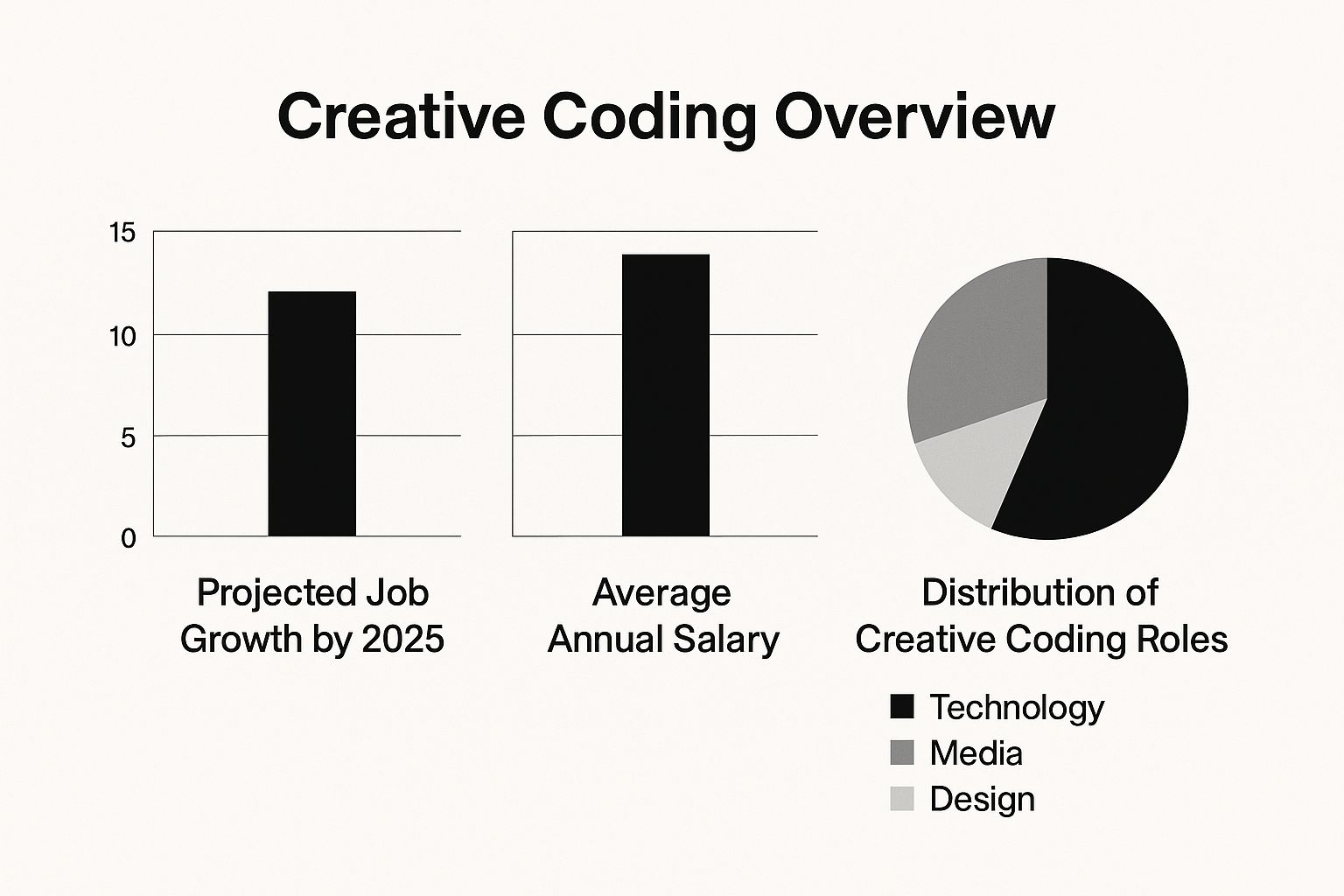 As you can see, demand is high, the pay is good, and the opportunities span a bunch of growing industries. This translates to a bright future for anyone entering the field.
Beyond the Buzzwords: Real Job Requirements
One thing that surprised me? The focus on problem-solving. It's not enough to make things look pretty. Companies need people who can use code to solve actual business problems. Think interactive installations that boost brand engagement or data visualizations that uncover hidden trends.
Also, the line between "creative" and "technical" is getting blurry. Employers want T-shaped people: deep skills in one area (like coding) and a broad understanding of design, UX, and even marketing.
This Glassdoor screenshot shows salary info for creative developers. Salaries depend on experience and location, of course, but the overall trend is upward, reflecting that growing need for skilled creative coders.
The Expanding Universe of Creative Coding
Creative coding's reach is constantly growing, driven by the rising demand for software and coding skills everywhere. The global developer population, including creative coding roles, hit 47.2 million in 2025. Within that, nearly 14 million focused on software products and services. This shows the creative potential within these jobs – developers aren't stuck in traditional tech anymore; they're needed across all sorts of industries going through digital shifts. You can find more details about the global developer population here.
To give you a clearer picture of the job landscape, I've put together this table:
Creative Coding Job Categories and Industries
This table breaks down different creative coding roles across various industries, giving you a sense of salary ranges and growth potential.
| Job Category | Primary Industries | Average Salary Range | Growth Rate |
|---|---|---|---|
| Creative Technologist | Advertising, Marketing, Entertainment | $70,000 – $150,000+ | High |
| Interactive Developer | Web Development, Game Development, UX/UI Design | $60,000 – $130,000+ | Medium |
| Data Artist | Data Science, Research, Journalism | $65,000 – $140,000+ | High |
| Generative Designer | Architecture, Product Design, Fashion | $55,000 – $120,000+ | Medium |
| VFX Artist | Film, Television, Animation | $60,000 – $150,000+ | Medium |
As you can see, the options are diverse! The creative coding field is broad, offering opportunities across a range of industries and salary expectations. So, are you ready to build your portfolio, connect with people in the field, and land that dream creative coding job? Let's do this!
Finding Opportunities Before They Hit Job Boards
While job boards can be helpful, they’re like the crowded marketplace for creative coding jobs. Everyone’s there, fighting for the same few spots. To really shine, you need to explore the less-traveled paths, the places where opportunities pop up before they’re officially announced. That’s where networking, community involvement, and a bit of proactive research become invaluable.
The Power of Networking: Building Relationships, Not Just Contacts
Networking isn’t about amassing a huge LinkedIn network. It’s about forging real connections with people who share your love for creative coding. Think about it: creative tech meetups, online forums like the Processing Foundation, or even Discord servers where industry pros hang out.
I remember meeting a lead developer at a local VR meetup. We just chatted casually, and they mentioned their studio was planning to expand. That random conversation led to a coffee, a portfolio review, and eventually, a job offer! These organic connections can open doors to unadvertised positions and give you a head start.
Spotting Hidden Gems: Monitoring the Creative Tech Landscape
This screenshot from the World Economic Forum's Future of Jobs Report shows the projected growth in tech roles. The need for specialized tech skills is booming, which means there’s huge potential for creative coding jobs in emerging areas like AI and data science.
Also, pay attention to companies pushing the boundaries of creative technology. Follow their product launches, funding announcements, and social media. These are often signs they're about to expand their creative teams. We've seen substantial growth in creative coding roles recently, particularly in AI and machine learning. Want to learn more? Discover more insights into the future of jobs here.
Your Opportunity Radar: Building a Proactive Approach
So, how do you build this “opportunity radar”? Here's a practical approach:
-
Engage authentically in online communities: Contribute meaningfully to discussions, offer helpful advice, and share your work when it’s relevant.
-
Attend niche events and workshops: Zero in on events aligned with your specific interests, whether that’s generative art, interactive installations, or game development.
-
Follow key players on social media: Stay updated on industry trends and company news that could hint at upcoming opportunities.
-
Build a personalized list of target companies: Research companies doing exciting work in your field and look for ways to connect with their teams.
Finding the perfect creative coding job often comes down to being proactive, nurturing relationships, and staying in tune with the industry. It's a much more effective strategy than passively browsing job boards. This allows you to uncover hidden gems and put yourself ahead of the competition.
Portfolios That Make Hiring Managers Stop Scrolling
Forget the generic stuff. Let's talk portfolios that actually get you hired as a creative coder. I've seen what works (and what doesn't) at top tech companies, and trust me, it's not just about showing off your flashiest projects. It's about telling a story.
Context Over Complexity: Showcasing Solutions, Not Just Code
Think of your portfolio as a collection of problem-solving narratives. Instead of just throwing some visuals and code snippets together, explain the why behind each project. What problem were you tackling? What challenges did you run into? This shows how you think, which is way more interesting to a hiring manager than just seeing your technical skills. Want some inspiration? Check out these coding examples.
For example, let's say you created a generative art piece. Don't just show the final product. Talk about the algorithms you used, what inspired the aesthetic, and the technical hurdles you overcame. Suddenly, it's not just a pretty picture; it's a showcase of your skills and vision. Even simple projects become way more compelling with a clear narrative.
The Creative Process: Engaging, Not Exhausting
Showing your creative process is key, but don't bore reviewers with endless technical details. Focus on the important decisions, the iterations, and how your ideas evolved. Think visually: sketches, wireframes, or even quick videos can really bring your journey to life.
This GitHub screenshot highlights the importance of good documentation and version control. So many creative coders use GitHub, and by being organized and documenting your process, you come across as professional and methodical. Reviewers will appreciate that you take the time to do things right.
Platform Power: Choosing the Right Showcase
Where you present your work matters. A personal website is essential for interactive web experiences. For data visualizations, platforms like Observable can be a great choice. And if you're into game development, showcasing demos on Itch.io makes a lot of sense. Tailor your platform to the specific jobs you're after.
Collaboration and Confidentiality: Navigating Sensitive Projects
Teamwork and confidential projects are a big part of many creative coding roles. When showcasing collaborative work, focus on your contributions while respecting any NDAs. Keep descriptions general, highlight your specific role, and emphasize the collaborative process itself.
Finally, sweat the small stuff. A well-written project description, clear navigation, and a polished presentation can make all the difference. These little details show professionalism and attention to detail, which are valuable in any creative coding role. Your portfolio isn't just a collection of projects; it's a reflection of you. Make it count.
Nailing Interviews Where Art Meets Algorithm
Creative coding interviews are a different beast. Think of them as performance art, but your medium is JavaScript, Python, or your coding language of choice. You need to showcase both your technical skills and your artistic flair, all while under pressure. So, how do you navigate this interesting intersection of art and algorithms?
Mastering Live Coding Challenges With Creative Solutions
Live coding challenges are a common part of many creative coding interviews. It’s not about memorizing algorithms; it’s about showing how you think creatively in real-time. You could be asked to create a visual pattern, work with a 3D object, or even build a simple interactive game. The trick is to approach these challenges with a playful attitude and be open to different solutions.
For instance, generating a particle system is a common prompt. There’s no single "right" answer. Maybe you create a fireworks effect, a flowing stream, or even a simulation of a flock of birds. The interviewers are looking at your clean, efficient code and how you translate a creative vision into functioning code. They also want to see how you deal with unexpected bugs or roadblocks that come up.

This LeetCode screenshot gives you a feel for the types of coding challenges you might encounter, but often with a creative spin for these types of interviews. Often, the focus isn't solely on optimized solutions; it's more about how you creatively approach the problem with code. And remember, talk through your reasoning as you code! Communication is key.
Communicating Your Design Decisions
Be prepared to talk about your design choices. Why that color palette? How did you land on that animation style? Explaining your design rationale shows you have a deeper understanding of the creative process. Even something seemingly small, like your choice of an easing function, can say a lot about your creative thinking. These details allow you to highlight the “why” behind the “what” of your work.
Turning Portfolio Presentations Into Conversations
Your portfolio is your story. Don't just walk interviewers through your projects; bring them into a conversation about your process. Be ready to dive into technical details, but don't get lost in the weeds. Focus on the creative aspects: the inspiration, the hurdles you overcame, and what you learned. This shifts a typical presentation into a dynamic discussion about your work and what drives you.
Staying Calm and Collected Under Pressure
Interviews can be stressful. To help stay calm, practice your live coding skills on platforms like CodePen or openFrameworks. Prepare answers to frequently asked interview questions about your process and portfolio. Remember, interviewers want to see your best work. So, take a deep breath, be yourself, and let your creativity shine through. Showing your passion for creative coding is just as important as your technical abilities. That enthusiasm can make all the difference. Good luck landing that dream creative coding job!
Getting Paid What Your Creative Code Is Worth
Creative coding jobs. They're this awesome blend of art and tech, but sometimes, traditional HR departments just don't know how to value them. It can be a weird gray area when it comes to compensation. So, how do you figure out what your skills are actually worth, whether you're looking for a full-time role at a tech company or freelancing with a creative agency?
Researching and Negotiating: Knowing Your Value
First off, research is your best friend. Sites like Glassdoor can give you a decent starting point. They provide salary ranges based on job title and location, which can be helpful for creative coding roles. Remember though, those are just averages. Your actual earning potential depends on your unique skills and experience.
Talking to other creative coders is invaluable. Online communities, forums, even just chatting with people at meetups can give you a real feel for industry standards. Don't hesitate to ask about rates and salaries. This kind of informal research can be surprisingly insightful. While we're on the subject of helpful resources, I've compiled a list of tools I use often – you might find them useful too: check out these tools.
Contracts and Creative Freedom: Spotting Red Flags
When you're reviewing contracts, be super careful about anything that limits your creative freedom or ownership of your work. For instance, I've seen contracts that give the company all the rights to anything you create, even stuff outside the project scope. Others might restrict you from showcasing your work in your portfolio. These are big red flags. Negotiate terms that protect both your creative vision and your finances.
The rise of AI in coding is another factor. In 2024, AI generated a whopping 256 billion lines of code, which is 41% of all code produced. This shift underscores how crucial it is to specialize in areas that are uniquely human, like creative problem-solving and innovative design thinking. That's where we shine as creative coders. This article has some more interesting insights about AI-generated code statistics.
Building a Sustainable Career: Balancing Art and Finances
Let's be honest, building a sustainable career in creative coding requires a balancing act between artistic ambitions and, well, paying the bills. Don't sell yourself short. Know your worth and be prepared to walk away from deals that don't feel right. Understanding your value, researching industry standards, and negotiating effectively – these are the keys to a fulfilling career that's both creatively satisfying and financially sound.
To help visualize the potential earnings in this field, take a look at this table I put together:
Creative Coding Salary Ranges by Experience Level
Comparison of compensation packages for creative coding roles across different experience levels and company types
| Experience Level | Freelance Rate Range | Full-time Salary Range | Benefits & Perks |
|---|---|---|---|
| Junior (0-2 years) | $50-$100/hour | $60,000-$90,000/year | Health insurance, paid time off, professional development budget |
| Mid-Level (3-5 years) | $80-$150/hour | $90,000-$130,000/year | Health insurance, paid time off, retirement plan, stock options |
| Senior (6+ years) | $120-$200+/hour | $130,000-$200,000+/year | Comprehensive benefits package, flexible work arrangements, leadership opportunities |
As you can see, experience significantly impacts earning potential. Freelancers generally earn more per hour, but full-time roles offer valuable benefits and perks. Keep in mind these are estimates, and your actual earnings will depend on your location, specific skills, and the type of work you do.
Building Genuine Connections in Creative Tech
Landing a creative coding gig isn't just about your technical chops. It's about immersing yourself in the vibrant creative tech community. Networking in this world isn't about awkwardly swapping business cards. It's about forging real connections, fueled by a shared love for tech and art. Think less corporate ladder-climbing, more collaborative jam session.
Contributing Meaningfully: Giving Back to the Community
A fantastic way to connect is by contributing to online communities like the Processing Foundation forums. Don’t just lurk! Answer questions, share helpful insights, and showcase your own work (when it makes sense). This not only demonstrates your expertise, but also establishes you as someone genuinely invested in the field. For example, if you see someone wrestling with a tricky coding problem, sharing your solution not only helps them, but also subtly shows potential employers – who might be hanging out in those same forums – your problem-solving skills.

This Meetup.com screenshot gives you a glimpse of the wide variety of tech-focused groups out there. Meetup can be a goldmine for discovering local creative coding communities. Whether it’s generative art meetups or WebGL workshops, these events are perfect for meeting like-minded people and uncovering potential creative coding jobs in your area.
Open-source projects are another powerful avenue. Contributing to codebases you admire not only sharpens your skills, but also connects you with other developers working on similar projects. It’s a brilliant way to expand your network and learn from seasoned professionals in a collaborative setting. These contributions speak volumes about your passion and dedication.
The Art of the Follow-Up: Nurturing Your Network
Attending events is a great start, but the real magic happens afterwards. Follow up with the people you connect with. A personalized email referencing a specific conversation point shows you were genuinely engaged. Something like, “It was great chatting about WebGL at last night's meetup. I checked out that article you mentioned on shaders – super helpful!” This keeps the conversation flowing and strengthens the connection.
You might also find it useful to explore additional resources for creative coding. These resources can be valuable tools for expanding your network and staying on top of industry trends.
Authenticity Above All Else: Building Real Relationships
Authenticity is paramount. Don't try to be someone you’re not. Be genuinely interested in what others are working on, offer help without expecting anything in return, and focus on building relationships, not just collecting contacts. This creates a supportive network and opens doors to unexpected opportunities. Think of it this way: the more you give to the community, the more the community invests in you. In creative tech, your network is truly your net worth.
Your Creative Coding Career Game Plan
So, we've covered a lot! Now, how do we put it all together into a plan that actually works for you? Let's map out a roadmap that helps you build skills, create a killer portfolio, and land a creative coding job you’ll love. It’s not about just getting any job; it’s about finding the right fit. This means your plan needs to be sustainable and tailored to your specific goals and circumstances.
Building Your Roadmap: Milestones and Timelines
Look, this isn't a sprint, it's a marathon. Setting realistic milestones is key. Instead of saying, "I'm going to finish my portfolio," (which can feel HUGE and overwhelming), break it down. Think smaller chunks. Something like, "I'll add one new project to my portfolio every month." Give yourself deadlines, sure, but be flexible. Things come up! The real trick is to keep making progress, even if it’s baby steps.
Here’s a possible timeline to get your brain juices flowing:
-
Month 1-2: Skill-building time! Pick one or two areas you want to get better at (maybe WebGL or shaders) and really dive in.
-
Month 3-4: Start building (or polishing) that portfolio. Ideally, aim for at least three solid projects that show off your skills and what makes your work unique.
-
Month 5-6: Network, network, network! Go to meetups (when those are happening again), get active in online communities, and start connecting with people in the field.
-
Month 7-8: Time to start applying for jobs! Seriously tailor your resume and cover letter to each role – don’t just blast out the same generic one.
Remember, this is just an example. You might already have a great portfolio and be ready to jump into networking and applying. Awesome! This is your game plan, so adjust as needed.
Adapting to the Market: Staying Flexible
The job market is always changing. Be open to new directions and be prepared to adjust your strategy. Maybe you were focused on game development, but then discover you're really into data visualization. Totally fine! Careers rarely follow a straight line. Embrace the detours – they might lead you somewhere even more exciting.
Maintaining Momentum: Overcoming Challenges
Changing careers (or even just looking for a new job) can be tough. There will be moments of self-doubt, rejection, and frustration. That's completely normal. The most important thing is to keep learning, keep creating, and connect with people who inspire you. Find your support network. This could be online forums, local meetups, or even just a few friends who get what you’re going through. Celebrate the small victories, learn from the setbacks, and remember why you started down this path in the first place. Your passion for creative coding is a powerful thing. Let it fuel your journey and keep you moving forward.