Understanding What Makes Creative Teams Different
Managing creative projects often feels different from typical ones. This is because creative work is naturally unpredictable and subjective, so rigid, traditional management methods can be restrictive. Effective creative project management acknowledges these unique aspects from the outset.
Why Traditional Blueprints Don't Fit Creative Designs
Traditional project management often uses predictable, sequential tasks and objective outcomes—think of fixed building blueprints. Creative projects, however, are more like sculpting; the form evolves with ongoing refinement.
For instance, work-in-progress needs are distinct. Creative fields require ongoing reviews and direct collaboration on developing assets, not just status updates. Imagine a design team getting feedback directly on a logo draft. This means carefully tracking content changes through multiple versions, a depth often beyond typical project tools.
Creative workflows are rarely straightforward. A team might revisit early stages multiple times, derailing a strictly sequential plan. Adaptability for nonlinear processes is key. Rigid methods can curb exploration, so flexible creative project management is vital.
The Delicate Dance: Structure Meets Creative Freedom
This flexibility doesn't mean abandoning structure; it calls for a different kind. Successful creative teams balance structure with creative freedom, providing guidelines that direct without confining. This involves clear objectives but fluid paths to reach them.
Managing subjective feedback is another major distinction. Creative work is judged on aesthetics or brand fit—qualities open to interpretation, unlike projects with quantifiable outcomes. An effective project manager facilitates constructive feedback, translating diverse opinions into actionable revisions. Clear creative briefs are essential here, and their consistent use can lead to a 30% reduction in revision cycles by ensuring a shared understanding from the start.
This leads to the importance of iterative workflows. Creative output rarely emerges perfectly formed on the first try. Instead, it's shaped through cycles of creation, review, and refinement:
- Initial Concept: Starting with brainstorming and early versions.
- Feedback Integration: Gathering input from stakeholders and the team.
- Revision Rounds: Making changes based on the feedback received.
- Near-Final Review: Polishing the final details.
These cycles are not signs of inefficiency but are integral to achieving high-quality results.
Redefining "Done": Success in Creative Environments
Success metrics in creative project management also expand beyond traditional ones. While on-time and on-budget delivery matter, the quality and impact of the creative output often take center stage. Did the campaign resonate? Did the design communicate the brand’s message effectively? Stakeholder satisfaction and user engagement become key indicators.
Frameworks and tools for creative work's unpredictable nature are vital. They often aid visual collaboration, version control, and specific approval paths. Using such specialized methods improves team productivity and fosters innovation with accountability. This understanding is key to effective creative project management, ensuring ideas are well-executed.
Building Teams That Actually Work Together
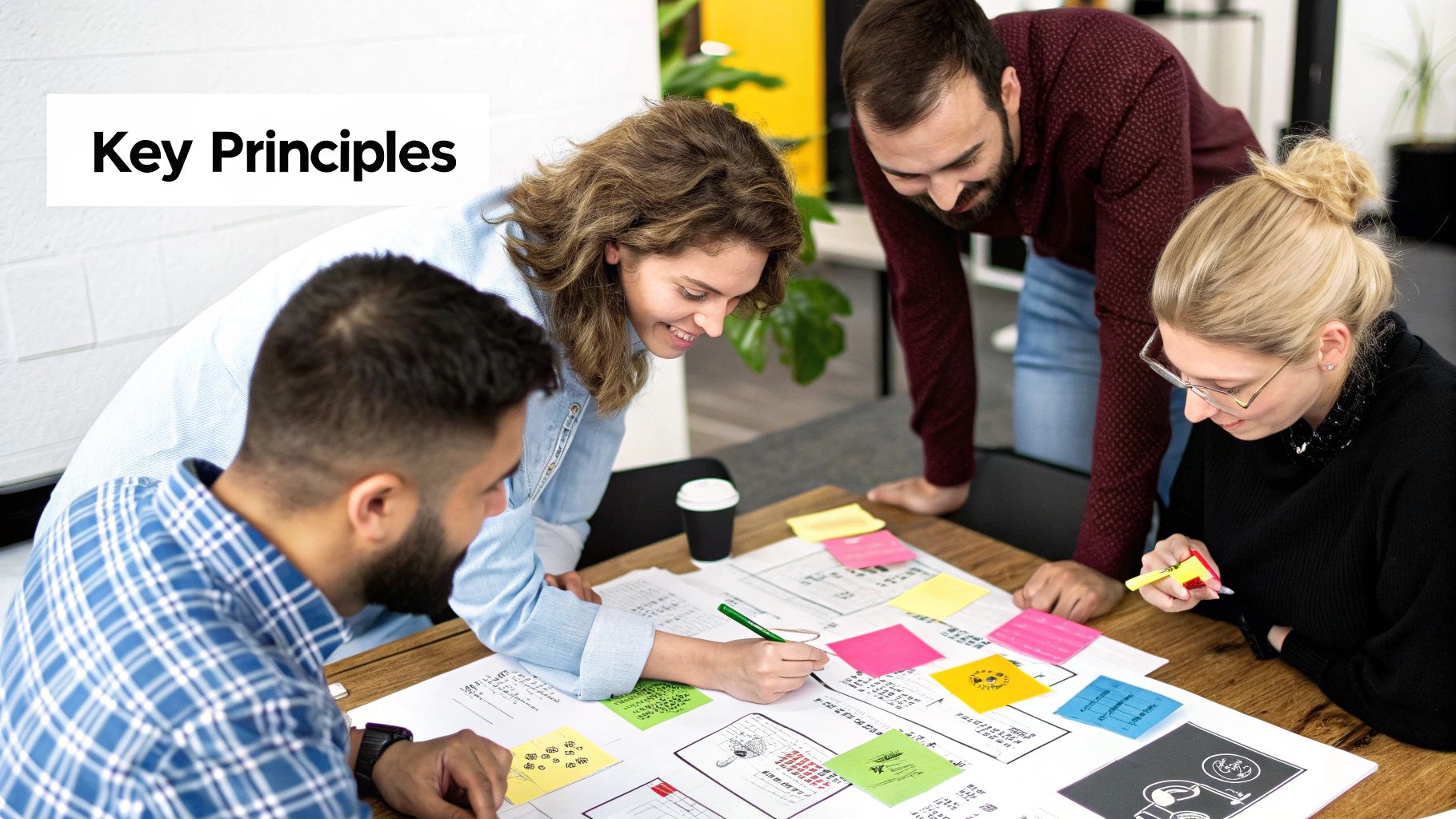
Having a solid grasp of creative workflows is certainly important, but the real success in creative project management often boils down to the team itself. Bringing together skilled individuals is just the starting point; the greater task is nurturing an atmosphere where their varied talents and personalities merge to create outstanding work.
The Psychology of Creative Collaboration
Productive teamwork in creative fields doesn't just happen by chance; it's carefully developed. Leading agencies and studios understand that a blend of personalities—like focused introverted designers and outgoing strategists who shine in group discussions—can be a significant advantage. The trick is to set up ways of interacting that let everyone contribute their best.
For instance, using quiet brainstorming time before open talks can help introverts share ideas, while organized debates can guide the energy of extroverts in a useful way. This method accepts that creativity isn't a uniform process. Building a team that functions well means understanding these different work styles and offering adaptable structures. Studies show that teams where members feel their input is understood and valued report higher levels of engagement and innovation. This mutual respect is vital for navigating the often demanding creative journey.
Crafting Constructive Creative Reviews
One of the most significant interactions within creative project management is the creative review. If handled poorly, these meetings can lower team spirit and kill good ideas. But when done constructively, they become strong drivers for improvement. The aim should always be to inspire, not to criticize. This often means focusing comments on the work itself, connecting it back to the project’s goals and the creative brief, rather than making it personal.
Managing different creative views without damaging morale calls for careful guidance. Instead of labeling one idea as "right" and another as "wrong," good leaders help the team see the value in various viewpoints. Clear communication rules are also essential. Setting up specific times for check-ins and feedback, rather than allowing constant interruptions, can protect the creative flow state, which is so important for focused work. This might involve using specific channels for feedback or regular meeting schedules.
Assembling Your Creative Dream Team
Recognizing and combining complementary skill sets is a distinct skill. It’s not merely about having a talented designer and a clever copywriter; it’s about how well their abilities and methods work together. For example, a person who thinks in broad concepts might be teamed up with someone who focuses on details to make sure ideas are both fresh and perfectly executed.
A key element of high-achieving creative teams is psychological safety. This is the common understanding that team members can take social risks, like suggesting unusual ideas or admitting errors, without fearing bad outcomes. When people feel safe, they're more inclined to try new things and stretch creative limits, which is vital for producing original results. Teams with strong psychological safety often show up to 25% higher performance in complex, original tasks.
Keeping the team's energy up, particularly during tough project stages or when deadlines are tight, relies heavily on this safe environment. Regularly noting progress, celebrating small victories, and communicating openly about challenges can maintain positive morale. Good creative project management includes clearly outlining roles and responsibilities, making sure everyone knows how their part fits into the overall plan.
To better organize these roles and ensure everyone understands their part, a clear breakdown is helpful. The following matrix details common positions within a creative team, outlining their main duties and how they interact.
Creative Team Roles and Responsibilities Matrix
A comprehensive breakdown of key creative team positions, their primary responsibilities, and collaboration touchpoints.
| Role | Core Responsibilities | Key Collaborations | Success Metrics |
|---|---|---|---|
| Creative Director | Overall creative vision, strategic direction, final quality assurance, team leadership. | Clients, Account Managers, Art Directors, Senior Copywriters, PMs. | Campaign effectiveness, brand consistency, client satisfaction, team innovation. |
| Art Director | Visual style and tone, design execution, guiding visual designers, concept development. | Creative Director, Designers, Copywriters, Project Managers, Developers. | Visual impact, adherence to brief, design quality, on-time asset delivery. |
| Senior Designer | Executing complex design tasks, mentoring junior designers, asset production. | Art Director, Junior Designers, Project Managers, Content Creators. | Quality of deliverables, innovation in execution, efficiency, meeting deadlines. |
| Copywriter | Developing concepts, writing compelling and on-brand copy for various platforms. | Creative Director, Art Directors, Designers, SEO Specialists, PMs. | Message clarity, audience engagement, conversion rates, brand voice consistency. |
| Creative Project Manager | Planning, scheduling, resource allocation, communication hub, risk mitigation. | Entire creative team, Clients, Account Managers, External Vendors. | On-time/on-budget delivery, stakeholder satisfaction, process efficiency. |
This matrix shows how different roles contribute unique skills and need to work together. Clearly defined responsibilities help prevent overlap and ensure all aspects of a project are covered effectively.
By encouraging an appreciation of individual strengths, promoting open yet respectful dialogue, and ensuring clarity in roles, creative leaders can build teams that not only cooperate but also flourish. This allows them to consistently produce imaginative and effective results, which is a central part of successful creative project management.
Choosing Tools That Actually Help Creative Work
Having a skilled creative team is a great start, but they need the proper instruments to truly shine in creative project management. Standard project management software often falls short for creative tasks because it's not built for the dynamic and iterative nature of creative work. Such tools can create more administrative work than they eliminate.
This is why platforms specifically designed for creative project management are becoming the go-to choice. These tools understand the creative flow and provide features that foster, not block, imagination. The market reflects this need; the global creative project management software sector is seeing strong growth and is expected to keep a notable compound annual growth rate (CAGR) for the next decade. This trend is in line with the broader project management software market, which is predicted to reach $7.24 billion by 2025 and then climb to $12.02 billion by 2030. These figures show how important these specialized tools are for making creative processes more efficient. Discover more insights about project management market statistics.
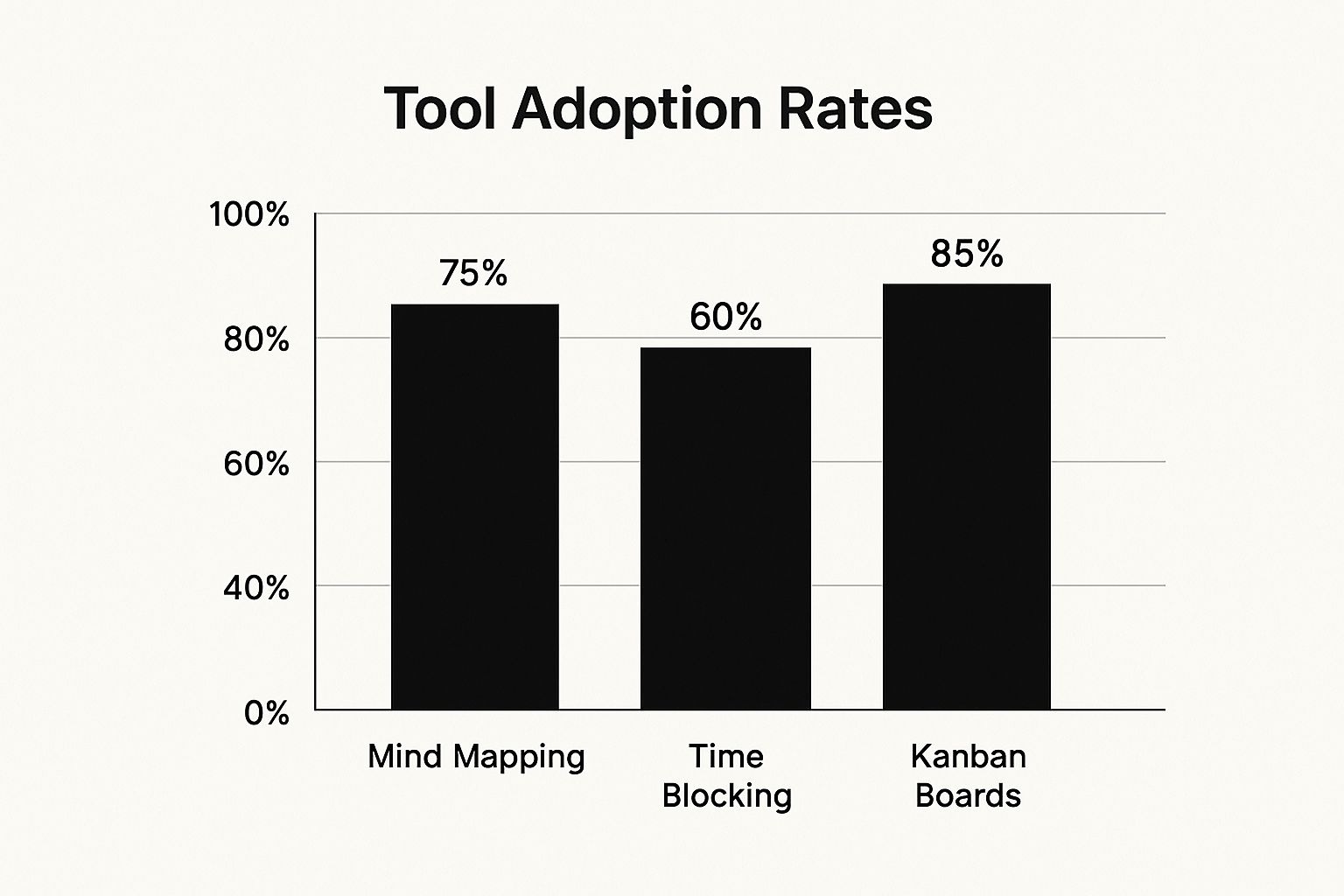
To get a clearer idea of what's popular with creative teams, the bar chart below shows the usage rates for three common creative project management methods: Mind Mapping, Time Blocking, and Kanban Boards. It's titled 'Tool Adoption Rates'.
The data reveals that creative teams lean heavily towards visual organization techniques like Kanban Boards (85% usage) and idea-generation tools such as Mind Mapping (75% usage). Time Blocking also sees considerable use at 60%. This underscores the demand for tools that accommodate these fluid workflows.
Non-Negotiable Features for Creative Workflows
When picking software, top creative teams look for functions that meet their specific operational methods. For any serious creative project management tool, some features are essential:
- Robust Asset Management: Creative projects involve many file types and versions. A solid system should make it easy to organize, preview, and find digital assets, from early concepts to final products.
- Comprehensive Version Control: The creative journey is full of revisions. The ability to track changes, compare different versions, and easily go back to earlier ones is key for handling edits and keeping everyone on the same page.
- Integrated Collaborative Review Processes: Feedback is a constant in creative work. Tools that let stakeholders comment directly on assets, mark up visuals, and give approvals within the platform greatly reduce email clutter and misunderstandings. This is a vital part of effective creative project management.
To help you navigate the options, here's a comparison of some leading creative project management software:
Creative Project Management Software Comparison
Side-by-side comparison of top creative project management platforms, their key features, pricing, and best use cases
| Software | Key Features | Best For | Pricing Model | Integration Options |
|---|---|---|---|---|
| Monday.com | Visual boards (Kanban, Gantt), customizable workflows, dashboards, workload management, basic asset proofing. | Versatile teams needing customizable project views and collaboration. | Tiered, per user/month | Design (Adobe CC), Communication (Slack, Teams), Storage (Dropbox, Google Drive) |
| Asana | Task management, project timelines, portfolios, workflow automation, proofing & annotations. | Teams focusing on task-driven projects and process management. | Tiered, per user/month | Design (Figma, Adobe CC), Communication (Slack, Gmail), File Sharing (Google Drive) |
| Adobe Workfront | Enterprise project management, resource management, DAM, review & approval workflows, advanced reporting. | Large creative agencies and enterprise marketing departments. | Custom quote, typically higher-tier | Deep Adobe Creative Cloud integration, financial systems, other enterprise software. |
| ClickUp | All-in-one: tasks, docs, chat, goals, whiteboards, multiple views (list, board, calendar, Gantt). | Teams wanting a highly configurable tool to consolidate various apps. | Tiered, per user/month, free plan | Design (Figma), Development (GitHub), Communication (Slack, Zoom), Cloud Storage |
This table offers a snapshot of what each platform brings to the table. Consider your team's specific needs for features, collaboration style, and existing toolset when evaluating these options. Ultimately, the best choice will align closely with your unique creative workflows and team size.
Measuring the Real Return
Beyond checking off features, the real value of a tool lies in its effect on productivity and the quality of work produced. Agencies that adopt suitable creative project management software often see a clear Return on Investment (ROI). This ROI isn't just about saving time or sticking to a budget.
It's also about improving the quality of creative output, boosting team morale by reducing work-related stress, and making client communication smoother. Finding a platform that combines these key elements can greatly enhance your team's performance. If you're looking for more options, you might find it helpful Exploring a Curated List of Creative Tools. The most effective tools are those that empower creativity, not just manage tasks.
Creating Workflows That Flow With Creative Rhythms
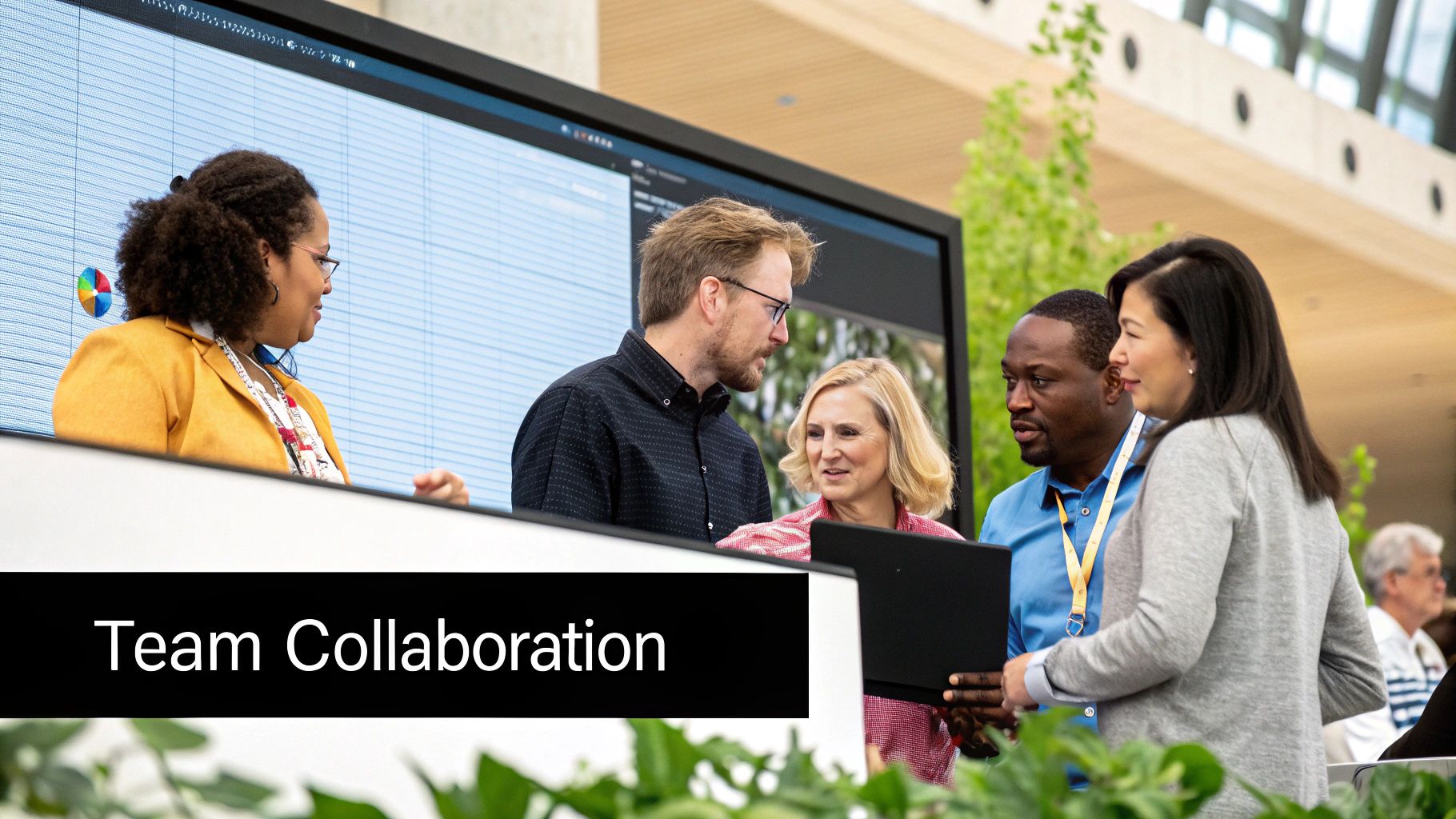
Once you have the right tools, the next step in effective creative project management involves shaping workflows that truly align with how creative work happens. Creative processes aren't like straightforward logistical tasks; they need room for change and refinement. The goal is to guide a project from its first idea to the finished piece without cramping the creative spirit. Successful workflows understand that great ideas often come in flashes and demand times of intense concentration.
Laying the Foundation: From Idea to Actionable Plan
Every great creative project starts with a clear picture. Before diving in, it's crucial to clearly define the project scope, its main objectives, and what the key deliverables will be. This groundwork, often established through a thorough project intake, paves the way for all subsequent steps. It involves asking important questions like: What exactly are we making? Who is the intended audience? And what does a successful outcome look like?
A detailed creative brief serves as the guiding document for the project. Teams that regularly use thorough briefs can reduce their revision cycles by up to 30%. This is because everyone begins on the same page. Based on this brief, the project is then divided into manageable stages or milestones. Usually, having 8-12 milestones provides a good framework for monitoring progress without making things too complex. Each milestone is then broken down further into a sequence of specific tasks, giving the team a clear path forward.
Navigating the Twists and Turns: Revisions and Approvals
Creative work naturally involves going back and forth, making the management of multiple revision rounds a core part of creative project management. This phase doesn't need to be a headache. By setting up structured feedback loops, teams can handle revisions smoothly. This means being clear about when and how feedback should be given, and even establishing specific deadlines for initial drafts, feedback gathering, and further edits.
Having defined approval processes is just as critical. Clearly identifying who has the authority to approve work at each step, and perhaps restricting the number of people involved in early reviews, helps avoid the "too many cooks in the kitchen" scenario that can weaken a creative idea. Such organized methods, often aided by collaborative software, help protect the project's creative core and keep team spirits up, even when multiple changes are needed.
Keeping Assets Accessible and Processes Scalable
Creative projects produce a lot of digital assets like designs, text documents, and video files. A frequent challenge in creative project management is making sure these assets are well-organized and easy to find. Setting up practical systems for asset organization is vital. Key practices include:
- Using consistent naming conventions for all files and folders.
- Establishing a centralized storage system, such as a dedicated Digital Asset Management (DAM) solution or organized cloud storage.
- Employing dependable version control systems to monitor changes and avoid losing work.
Workflows also need to be built for future growth. When projects get bigger or teams grow, your methods must be able to adjust. This could mean segmenting creative work into separate, side-by-side workflows for major campaigns to maintain clarity and smooth operation. Design teams, for instance, often find tools like Figma that connect directly with their design software very helpful. For more on specific integrations, you might find it useful to read about How Figma is Used in Creative Project Management to see how design workflows can be improved.
Optimizing for Flow: Real-World Impact
In the end, strong creative project management creates workflows that act as helpful guides rather than strict rules. When workflows are properly refined, teams often see much shorter project completion times and fewer hold-ups. This isn't only about working faster; it also leads to happier teams and, crucially, better quality creative work.
Achieving this smooth operational state comes from ongoing, proactive monitoring and being ready to change processes when necessary, instead of just sticking to the original plan no matter what. The main goal is to build a setting where creative drive is well-supported, enabling teams to produce their finest work consistently.
Managing Clients Without Losing Your Creative Soul

In creative project management, keeping workflows running smoothly is a primary goal. However, interacting with clients can bring its own set of hurdles. Balancing subjective opinions with strict deadlines can disrupt even the best creative systems, making strong client partnership skills essential for successful projects and a happy team.
Setting the Stage: Clear Expectations from Day One
A fruitful client relationship starts with a comprehensive project kickoff. This initial meeting is the time to clearly define the scope, deliverables, and timelines, and also to explain your team's creative process. Confirming objectives upfront ensures that everyone is aligned and aiming for the same outcome from the very beginning.
This early alignment is typically cemented with a detailed creative brief. Research suggests that teams using well-defined briefs can reduce revision cycles by up to 30%, simply because expectations are clearly set from the outset. This document acts as a reliable guide for both your team and the client throughout the project's duration.
Guiding the Conversation: Educating Clients on the Creative Journey
Many clients may not be fully aware of the iterative steps involved in creative work. Explaining why several revisions might be needed or how feedback is woven into the project isn't being patronizing; it actually builds transparency and trust. This helps them recognize the value in each phase of the creative project management process.
When clients understand the "why" behind your team’s methods—such as the necessity for focused work blocks or structured feedback rounds—they often become more engaged and supportive partners. This shared understanding promotes better collaboration, which is crucial for working through creative differences and producing superior results.
Presenting Work and Navigating Feedback with Grace
Effectively showcasing creative work goes beyond merely displaying the final product; it involves narrating its development and connecting design choices back to the client's brief and objectives. This approach builds their confidence by demonstrating the strategic thought behind the creative output.
Managing feedback is a fundamental aspect of creative project management, requiring a delicate balance between upholding creative integrity and addressing client needs. A practical strategy is limiting the number of stakeholders in early review stages. This helps prevent conflicting opinions that can weaken strong concepts and lead to unnecessary confusion.
Furthermore, it's vital to communicate clearly how feedback will be handled. Acknowledge all comments, specify which suggestions will be implemented, and thoughtfully explain why others might not fit the project's goals. This approach keeps the project on course and manages expectations effectively.
Addressing the Inevitable: Difficult Conversations and Scope Creep
Even with meticulous planning, scope creep—where clients request work that extends beyond the initial agreement—is a frequent occurrence in creative project management. Tackling this requires a proactive approach and often a change management plan. Such a plan provides a clear system for assessing new requests and their potential impact on resources and project timelines.
Discussions about changes in scope or potential delays should always be geared towards finding solutions. By presenting various options, clearly detailing the implications of each, and working with the client to determine the best course of action, you can maintain a positive working relationship even when dealing with challenging subjects.
Establishing Healthy Boundaries for Sustainable Creativity
Experienced creative project managers recognize that healthy boundaries are vital for their teams. This means protecting the team’s time from an overwhelming number of revisions or unrealistic expectations, ensuring they have the dedicated space required for deep, focused creative work.
These boundaries are not intended to create distance but to support lasting creativity and foster mutual respect. When clients understand and respect these limits, it often results in stronger collaborative partnerships, outstanding work, and valuable repeat business, all while preserving your team's creative enthusiasm.
Measuring Success Beyond Just On-Time Delivery
While meeting client expectations and making workflows efficient are important, the true sign of success in creative project management goes much further than just delivering work on schedule. Creative results possess a certain subjectivity and strategic weight that standard metrics often don't capture, meaning we need a wider lens to see what "well done" really looks like.
Blending Quantitative and Qualitative Insights
Traditional Key Performance Indicators (KPIs) such as budget adherence and schedule compliance are fundamental. They confirm that operations are disciplined, which is vital for any project. However, depending only on these can mean the core value and special character of creative work are overlooked.
This is where qualitative measures provide a more complete understanding. For example, creative quality can be judged through expert reviews, its alignment with the initial strategic plan, or how well it connects with the intended audience. Team satisfaction and morale can be monitored through internal surveys or regular, informal conversations, recognizing that a committed and positive team often produces more imaginative and effective work.
Similarly, the long-term health of client relationships is a key indicator of success in creative project management. High client retention and positive testimonials frequently say more about the overall project journey and its perceived worth than simply hitting an isolated deadline.
Effective Feedback and Retrospectives for Growth
Consistently gathering meaningful feedback is crucial for understanding these qualitative aspects. This involves more than just a survey after the project; it means setting up ongoing, secure ways for both team members and clients to share their thoughts throughout the project's duration. For instance, using brief "pulse checks" during a project can help identify and deal with concerns early, preventing small issues from growing.
After a project concludes, project retrospectives serve as valuable learning opportunities, not just procedural steps. Instead of merely asking "what went wrong," effective retrospectives explore constructive questions like: "What new approaches should we start to improve?", "What current methods are not working and should be stopped?", and "What are we doing well that we should continue?". The main objective is to discover actionable improvements for future projects, encouraging a proactive rather than reactive mindset within the team.
Demonstrating Creative Value to Stakeholders
To communicate the success of creative projects to stakeholders, it's necessary to tell a clear story about the project's overall effect. This includes translating creative accomplishments into terms that connect with business goals, such as how a new brand design changed market perception, how a digital campaign led to measurable engagement, or how a video resonated with its viewers.
To systematically monitor this wider array of outcomes, many leading creative organizations use a balanced method, looking at metrics across various dimensions. This might involve:
- Operational Efficiency: Time taken for key project phases, how resources are utilized, and sticking to updated timelines.
- Client Impact: Client satisfaction ratings (like Net Promoter Score – NPS), the rate of repeat business, the quality of testimonials, or direct referrals.
- Creative Output Quality: Evaluation against the creative brief, the degree of innovation shown, internal peer feedback, or even industry awards if applicable.
- Team Development & Well-being: Noticeable skill improvement within the team, employee engagement levels, and general team morale.
Adopting such a broad view of success is vital for building a culture of continuous improvement. This forward-looking approach not only refines working methods but also consistently raises the quality of creative output and overall operational effectiveness in creative project management. You can explore practical examples of these principles in action.
Key Takeaways
Improving your approach to creative project management is an ongoing journey, not a one-time solution. It requires continuous refinement.
This section offers essential, actionable insights drawn from successes and setbacks. It serves as a practical guide to boost your team's performance.
These points are ready for immediate use, helping you build momentum and see tangible results quickly.
Your Immediate Action Plan for Better Creative Workflows
To create a more productive setting for creative project management, taking a few key steps can bring about noticeable benefits quickly. Think about these direct actions to make your workflows smoother:
- Standardize Project Intake: Create a thorough creative brief template. Making sure all vital information is collected from the start significantly cuts down on confusion and the need for revisions later. A well-defined brief, for example, helps establish clear expectations for your team and any involved stakeholders.
- Clarify Roles and Responsibilities: Employ a matrix or straightforward documentation so each team member knows their exact duties and their role in the project's overall success. This level of clarity reduces duplicated efforts and ensures no tasks are overlooked.
- Establish Structured Feedback Loops: Clearly outline when and how feedback will be gathered and handled. Consistent, scheduled review periods, possibly incorporated into your chosen project management tools, can stop feedback from slowing things down.
- Implement Version Control for Assets: Put in place a reliable system for naming conventions and file storage. This practice guarantees that everyone uses the most current file version, which saves a lot of time and reduces irritation, particularly when dealing with many revisions of creative assets.
Tracking Progress: Realistic Benchmarks for Improvement
To understand the effects of changes in your creative project management methods, you need to look at more than just meeting deadlines. Concentrate on achievable benchmarks that show real advancement and give you reasons to acknowledge important achievements:
- Reduction in Revision Cycles: This is a primary sign of improved communication and more effective initial briefs. Striving to lower the average revisions per project by 10-15% within the initial months is an attainable target.
- Improved Team Morale and Feedback: Consistently ask for anonymous feedback from your team about their workflows and how much work they have. An increase in satisfaction scores is a positive signal that your new methods are effective.
- Client Satisfaction Scores: If your work involves clients, keep an eye on measures like Net Promoter Score (NPS) or direct feedback. Better client retention rates or more favorable testimonials can indicate a better project experience for them.
- Time-to-Completion for Key Phases: Observe the duration of particular project stages, such as from the initial idea to the first completed draft. Steady decreases in these times point to growing efficiency.
Make sure to openly celebrate these advancements with your team. This helps reinforce the positive adjustments and keeps everyone motivated.
Red Flags: Is Your Creative Project Management Failing?
It's important to identify when your existing creative project management methods are actually hindering progress rather than helping. Be alert for these tell-tale signs:
- Consistently Missed Deadlines: While occasional delays can occur, frequently missing deadlines suggests deeper, systemic issues with planning, how resources are assigned, or how project scope is managed.
- High Team Burnout or Turnover: If your creative team members consistently appear stressed, overloaded with work, or unengaged, your current processes could be fostering an unhealthy work atmosphere. This often manifests as high team burnout.
- Frequent and Uncontrolled Scope Creep: Some changes during a project are normal, but continuous, unmanaged additions to the project's scope point to a flawed initial agreement or ineffective methods for controlling changes.
- Declining Quality of Creative Output: If the actual quality of the creative work is diminishing, or if dissatisfaction from clients or stakeholders becomes frequent, it’s a definite indication that your management style requires a significant review.
- Communication Breakdowns: The presence of information silos, frequent misunderstandings, and a general lack of clear communication are all symptoms of an inefficient creative project management system.
Smooth Transitions: Overcoming Resistance to New Processes
Introducing new operational methods, particularly in creative project management, can often encounter resistance. Creative professionals usually appreciate their independence and might be cautious about procedures they feel could limit them. Here’s how to handle these situations effectively:
- Communicate the "Why": Explain the advantages of the new processes clearly. Focus on how these changes will ease existing difficulties, such as cutting down on rework, fostering a better work-life balance, or freeing up more time for actual creative work. Communicate the "why" effectively.
- Involve the Team: Bring team members into the process of designing or modifying new workflows. When individuals have a voice in developing changes, their willingness to accept and use them increases. Involve the team from the outset.
- Start Small and Iterate: Test new tools or procedures on a limited scale, perhaps with just one project or a small segment of the team. Positive outcomes from these pilot programs can build assurance and show the practical benefits.
- Provide Adequate Training and Support: Make sure everyone is proficient with any new tools or understands the new procedures. Continuous training and support are vital throughout the adjustment period.
- Lead by Example and Acknowledge Efforts: Management commitment is crucial. Recognize the work involved in adapting to new ways and celebrate initial achievements to foster ongoing acceptance and use.
By concentrating on these functional steps and key indicators, you can cultivate a more robust, effective, and satisfying atmosphere for your creative team. This ensures your approach to creative project management genuinely enables outstanding results.