Unleash Your Creative Powerhouse: The Ultimate Guide to Workflow Software
For creatives, scattered files, missed deadlines, and communication breakdowns are productivity killers. Effective creative workflow software solves these problems, centralizing everything and streamlining collaboration. This listicle dives deep into 12 powerful tools designed to boost your creative output in 2025. We'll explore their strengths, weaknesses, pricing, and ideal user scenarios, drawing on extensive real-world experience.
This isn't just a surface-level overview. We'll provide practical implementation guidance and in-depth feature analysis, going beyond generic marketing copy. Whether you're a seasoned developer, a digital artist, or an entrepreneur, you'll gain actionable insights to optimize your creative workflow.
This guide analyzes the following creative workflow software:
- Adobe Creative Cloud
- Figma
- Trello
- Asana
- Notion
- ClickUp
- Wrike
- Affinity Designer
- Filestage
- ProofHub
- Bynder
- Adobe Creative Cloud (duplicate – this will be addressed in the full article)
Discover which tools excel for specific needs. Learn how to leverage each platform's unique strengths. Understand the limitations to make informed decisions. Master your creative workflow and unlock your full potential with the perfect software solution.
1. Adobe Creative Cloud
Adobe Creative Cloud reigns supreme as the industry standard creative workflow software. It offers a comprehensive suite of applications covering graphic design, video editing, web development, and photography. This interconnected ecosystem fosters streamlined workflows, especially for professionals juggling multiple projects. Its extensive toolset empowers creatives to seamlessly transition between tasks like photo editing in Photoshop, vector graphics in Illustrator, and video production in Premiere Pro. You can learn more about individual tools like Adobe XD at Learn more about….
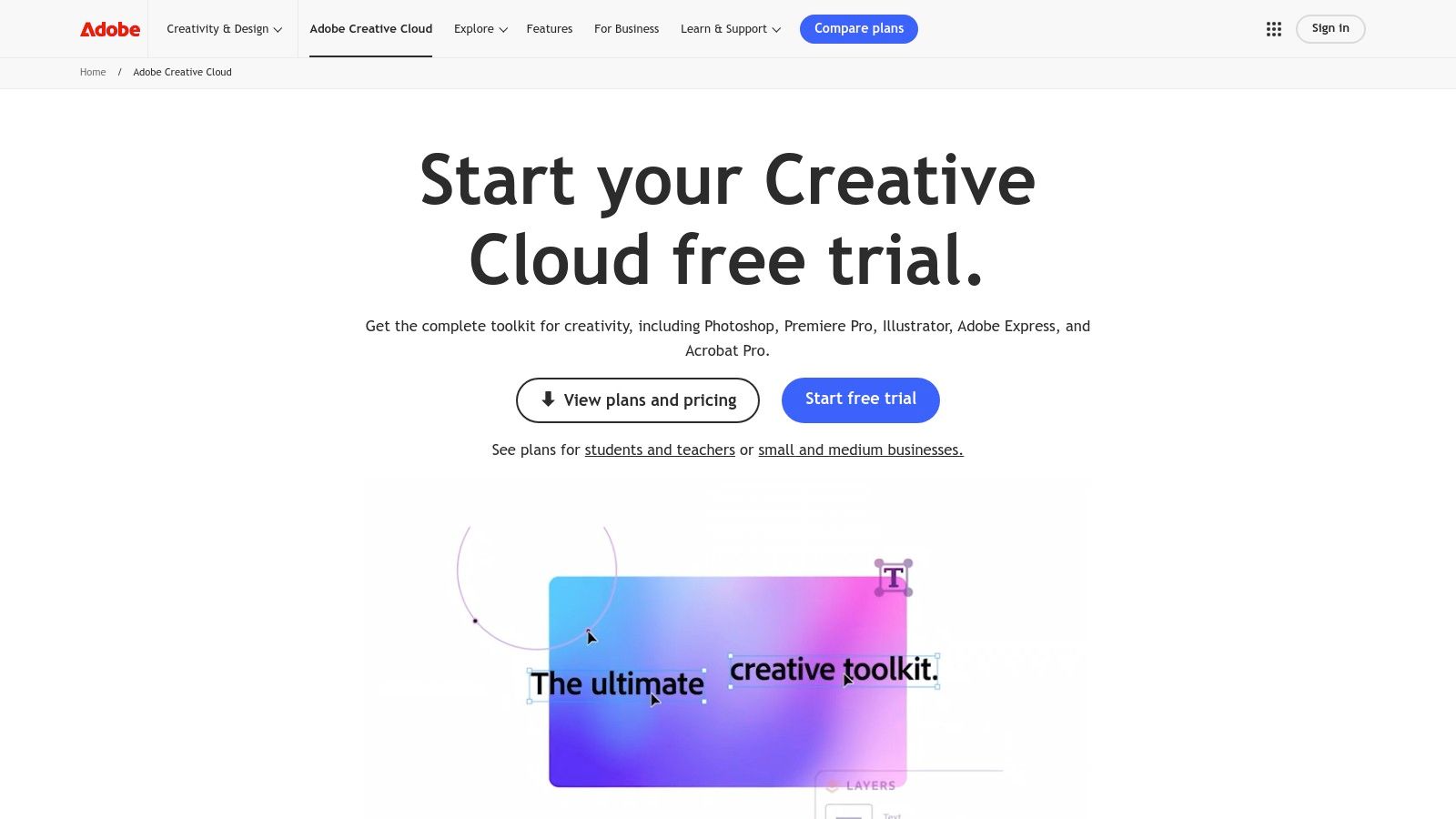
Adobe Creative Cloud's true strength lies in its seamless integration. Assets, libraries, and settings synchronize across applications, significantly reducing friction in cross-platform workflows. The cloud storage feature facilitates effortless collaboration, enabling teams to share files, track revisions, and work concurrently on projects.
Features and Benefits
- Extensive Application Suite: Access over 20 desktop and mobile apps, including industry staples like Photoshop, Illustrator, InDesign, Premiere Pro, After Effects, and Audition.
- Cloud Storage and Collaboration: Share files, manage versions, and collaborate with team members using cloud-based storage and collaborative tools.
- Continuous Updates: Benefit from regular updates, ensuring access to the latest features, performance enhancements, and bug fixes.
- Rich Asset Library: Leverage a vast library of fonts, stock photos, templates, and other creative assets, saving valuable time and resources.
Pricing and Considerations
While the breadth of features and cross-platform compatibility are undeniable advantages, the subscription-based pricing model can be a significant investment. Beginners may also find the learning curve for some applications steep. However, the comprehensive support resources and active user community offer valuable assistance. Consider the long-term costs and your specific creative needs when evaluating if Adobe Creative Cloud is the right creative workflow software for your projects.
2. Figma
Figma is a cloud-based design tool revolutionizing UI/UX design workflows. Its browser-based platform facilitates real-time collaboration, enabling teams to work seamlessly on projects regardless of location. This accessibility makes it ideal for distributed teams and agencies. You can learn more about Figma at Learn more about….
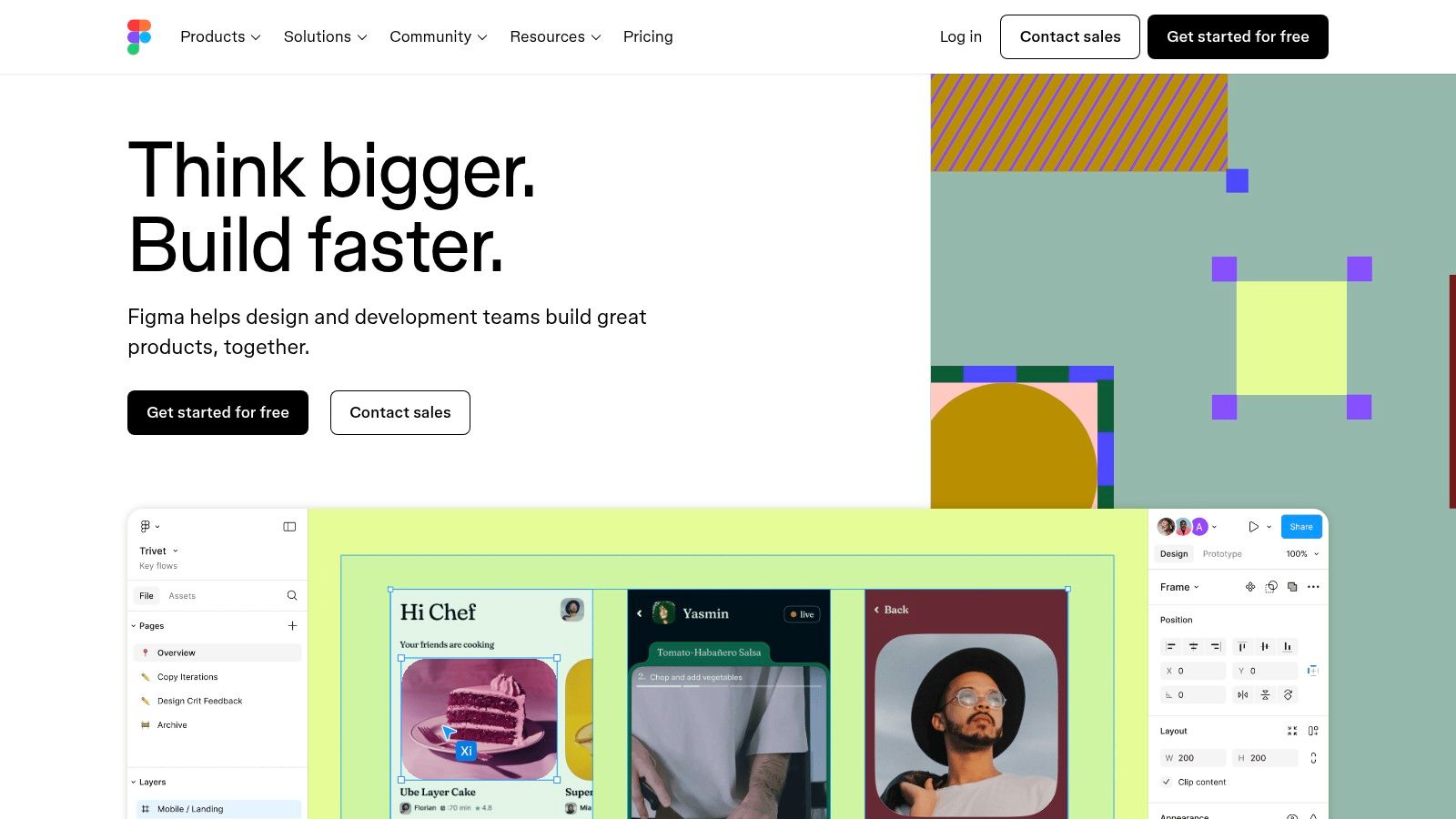
Figma's strength lies in its collaborative features. Multiple designers can work on the same file simultaneously, seeing each other's changes in real time. This eliminates the need for tedious file sharing and version control headaches. The built-in commenting system further streamlines feedback and communication within the design process. This makes it particularly effective for fast-paced projects requiring rapid iteration.
Features and Benefits
- Real-time Collaboration: Edit designs collaboratively with your team, witnessing changes instantly.
- Vector-Based Design: Create scalable vector graphics for web and mobile interfaces.
- Prototyping: Build interactive prototypes to test user flows and interactions.
- Version History: Track design iterations and revert to previous versions effortlessly.
- Plugin Ecosystem: Extend Figma's functionality with a vast library of plugins.
Pricing and Considerations
Figma offers a generous free tier suitable for individual users and small teams. Paid plans unlock additional features like unlimited version history and team libraries. While the reliance on an internet connection can be a drawback in areas with limited connectivity, Figma's platform independence allows access from any device with a web browser. This accessibility combined with its robust feature set positions Figma as a strong contender in the creative workflow software landscape.
3. Trello
Trello stands out as a highly visual and adaptable creative workflow software option. Its strength lies in its intuitive Kanban board system, making it easy to visualize and manage projects from concept to completion. This approach works exceptionally well for creative teams who thrive on visual organization and collaboration. Individuals can also leverage Trello's flexibility for personal project management, from brainstorming ideas to tracking progress on creative endeavors.
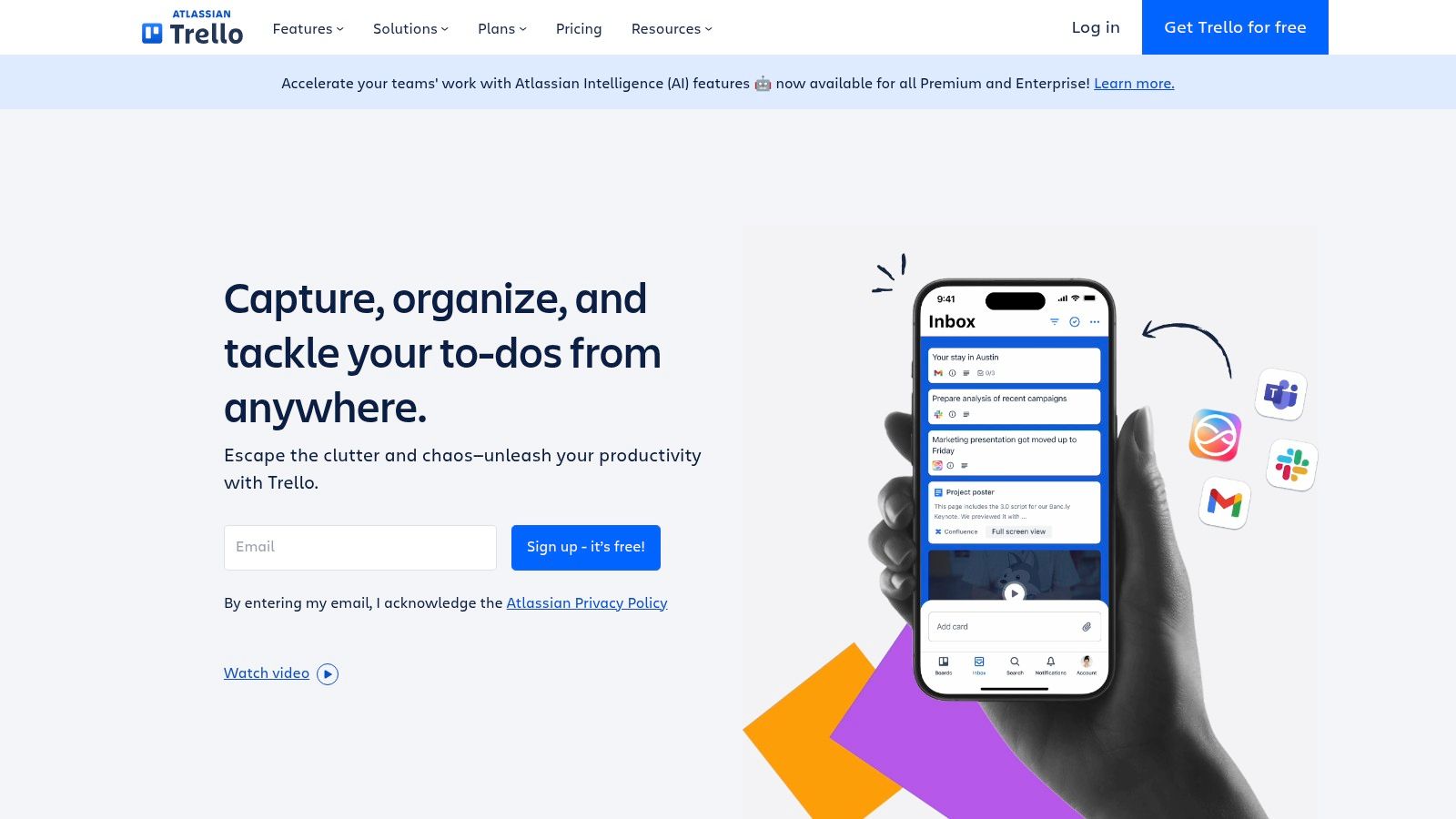
Trello’s drag-and-drop interface simplifies task management. Moving cards across lists visually represents project advancement. This clear visualization keeps everyone informed and promotes a sense of shared progress. The ability to assign tasks, set due dates, and create checklists ensures accountability and timely completion.
Features and Benefits
- Customizable Boards: Create boards for different projects, campaigns, or even individual client work. Tailor lists to represent various workflow stages (e.g., Ideation, In Progress, Review, Completed).
- Collaboration Tools: Facilitate team communication through comments, file attachments, and mentions. Real-time updates ensure everyone stays informed on project developments.
- Power-Ups & Integrations: Extend Trello's functionality by integrating with other tools. Connect with Slack for communication, Google Drive for file storage, and other creative workflow software.
- Mobile Accessibility: Manage projects on the go using Trello's mobile apps. This feature is crucial for creatives who need to stay connected and update tasks from anywhere.
Pricing and Considerations
Trello offers a generous free plan suitable for individuals and small teams. Paid plans unlock advanced features like unlimited boards, custom fields, and advanced automation. While Trello excels at visual project management, it may not be as robust as dedicated project management software for highly complex projects. Consider the scope of your creative projects and team size when deciding if Trello’s features meet your needs. For creatives seeking a visually driven and flexible project management tool, Trello offers an excellent platform for streamlined creative workflows.
4. Asana
Asana is a robust work management platform built to help creative teams organize, track, and manage their projects. It offers a flexible system with various views, accommodating diverse project management styles, from Kanban boards for visual workflows to Gantt charts for timeline-driven projects. This adaptability makes Asana a valuable tool for creative workflow software, allowing teams to tailor the platform to their specific needs. For creatives who juggle multiple projects with complex dependencies, Asana provides much-needed clarity and control.
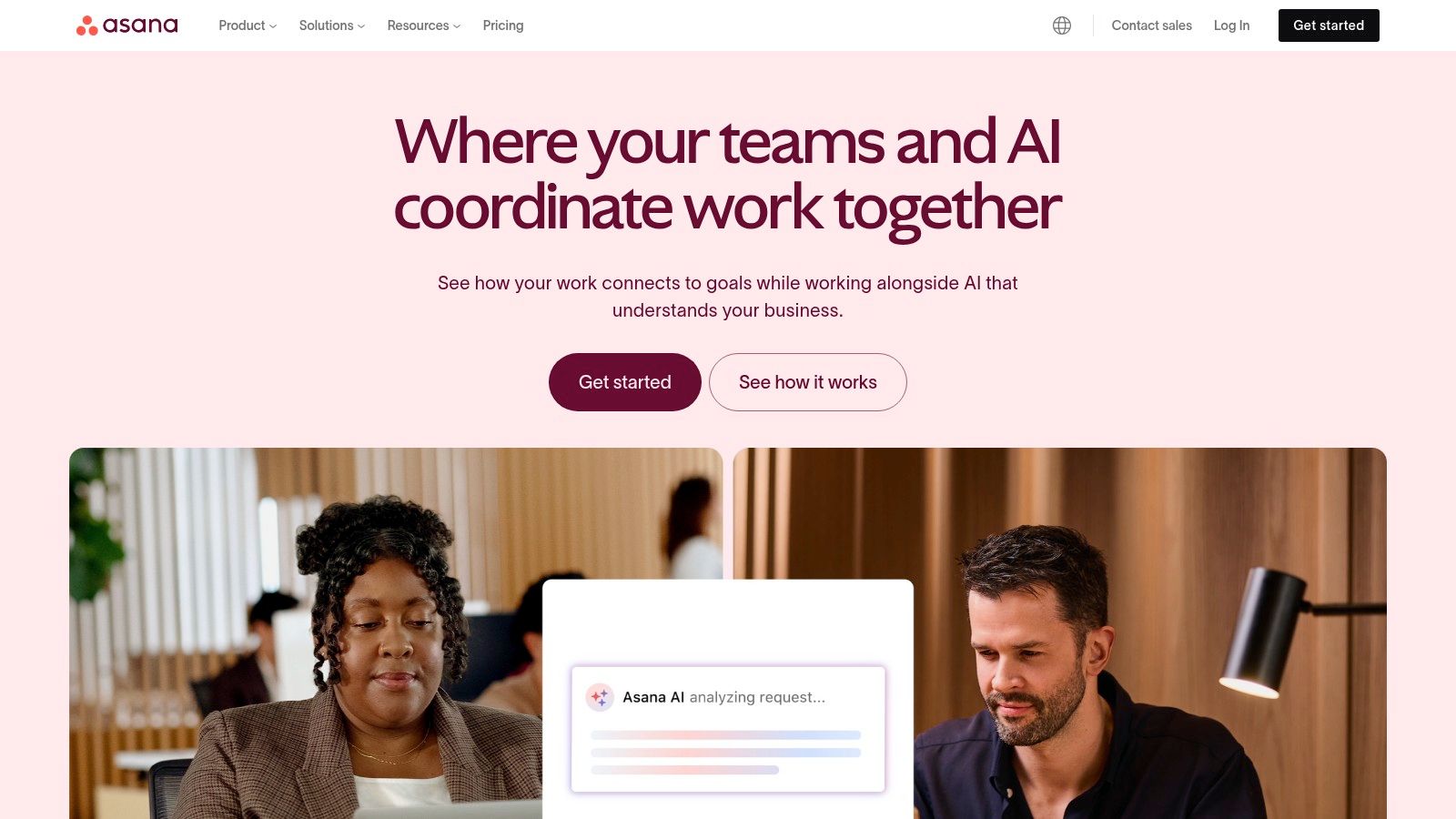
Asana's true power lies in its collaborative features. Real-time updates keep everyone on the same page, fostering seamless communication and reducing the risk of miscommunication or duplicated efforts. The platform also integrates with over 100 apps, connecting various tools used in a typical creative workflow, from file sharing services to communication platforms. This integration streamlines workflows, reducing the need to constantly switch between different applications.
Features and Benefits
- Multiple Project Views: Choose from list, board, calendar, and timeline views to visualize projects in a way that best suits your team's workflow.
- Task Management: Create tasks, assign owners, set due dates, and track progress with ease. Dependencies and milestones ensure projects stay on track.
- Collaboration Tools: Real-time updates, comments, and file sharing facilitate effective communication and collaboration.
- Customizable Workflows: Tailor Asana to your specific needs using custom fields, templates, and automation rules.
Pricing and Considerations
Asana offers a free plan with basic features suitable for small teams starting out. Paid plans unlock advanced features like custom fields, reporting, and portfolio management. While Asana’s flexibility is a strength, it can also feel overwhelming for new users. The sheer number of features can create a steep learning curve. However, Asana offers extensive resources and tutorials to help users get started. Consider the long-term cost, your team’s size, and the complexity of your projects when evaluating if Asana is the right creative workflow software for you.
5. Notion
Notion stands out as a highly adaptable creative workflow software solution. It merges note-taking, project management, and database functionalities into a single, unified workspace. This flexibility allows creative teams to tailor their workflows to precisely match project needs and individual preferences, moving beyond the limitations of rigid, pre-defined structures. Notion empowers users to build their ideal creative environment, from simple task lists to complex content calendars.
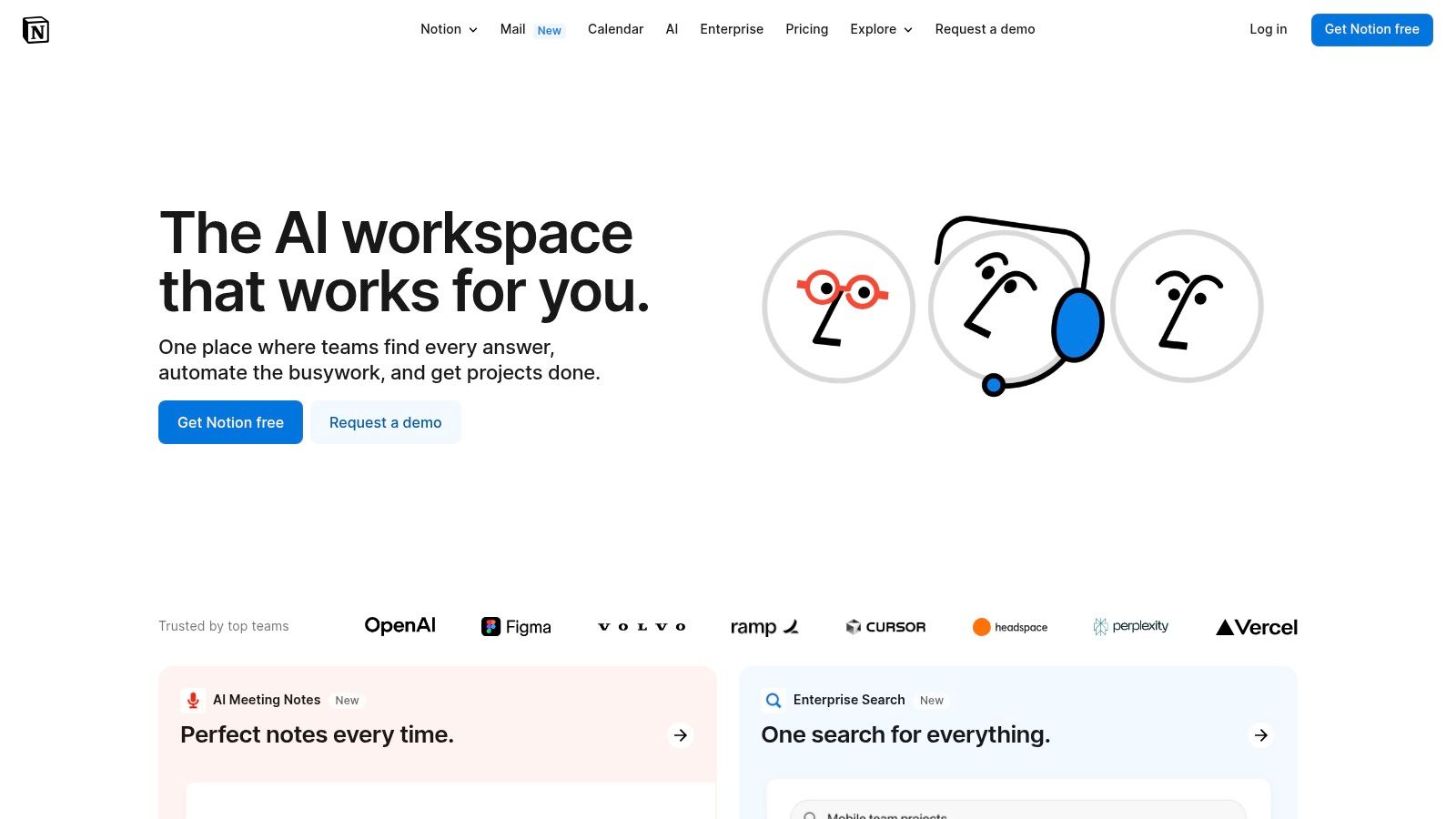
Notion's real power lies in its database functionality. Imagine creating a database to track every asset for a design project, complete with image previews, deadlines, and assigned team members. Or picture a content calendar seamlessly integrated with task lists, allowing writers to track progress and manage deadlines. This interconnected approach promotes a smoother, more efficient workflow by centralizing information and fostering collaboration.
Features and Benefits
- Customizable Templates: Leverage pre-built templates or create your own for notes, tasks, wikis, and databases, tailoring Notion to your specific requirements.
- Database Power: Create relational databases to organize and track any type of information, from design assets and project timelines to content calendars and meeting notes.
- Seamless Collaboration: Foster teamwork with real-time comments, mentions, and collaborative editing features, keeping everyone aligned and informed.
- Integrations: Connect Notion to other essential tools in your creative workflow, such as Slack, GitHub, and Google Drive, enhancing efficiency and centralizing communication.
Pricing and Considerations
Notion offers a generous free plan suitable for individual users and small teams exploring its capabilities. Paid plans provide increased storage, collaboration features, and administrative controls, scaling with team size and project complexity. While its extensive features are a strength, they can also feel overwhelming to new users. Investing time in learning the platform's nuances is crucial to unlocking its full potential. Consider experimenting with templates and tutorials to become comfortable with Notion's interface and database structure. This upfront investment will pay off in a significantly more streamlined and efficient creative workflow.
6. ClickUp
ClickUp markets itself as the "one app to replace them all," and for creative teams, this claim holds some weight. It provides a centralized platform for project management, document collaboration, and even goal tracking, streamlining workflows that often span multiple tools. Its highly customizable nature makes it adaptable to various creative processes, from video production to graphic design. You can further enhance ClickUp's functionality through integrations, such as pairing it with GitHub Copilot for enhanced coding assistance as seen in this review.
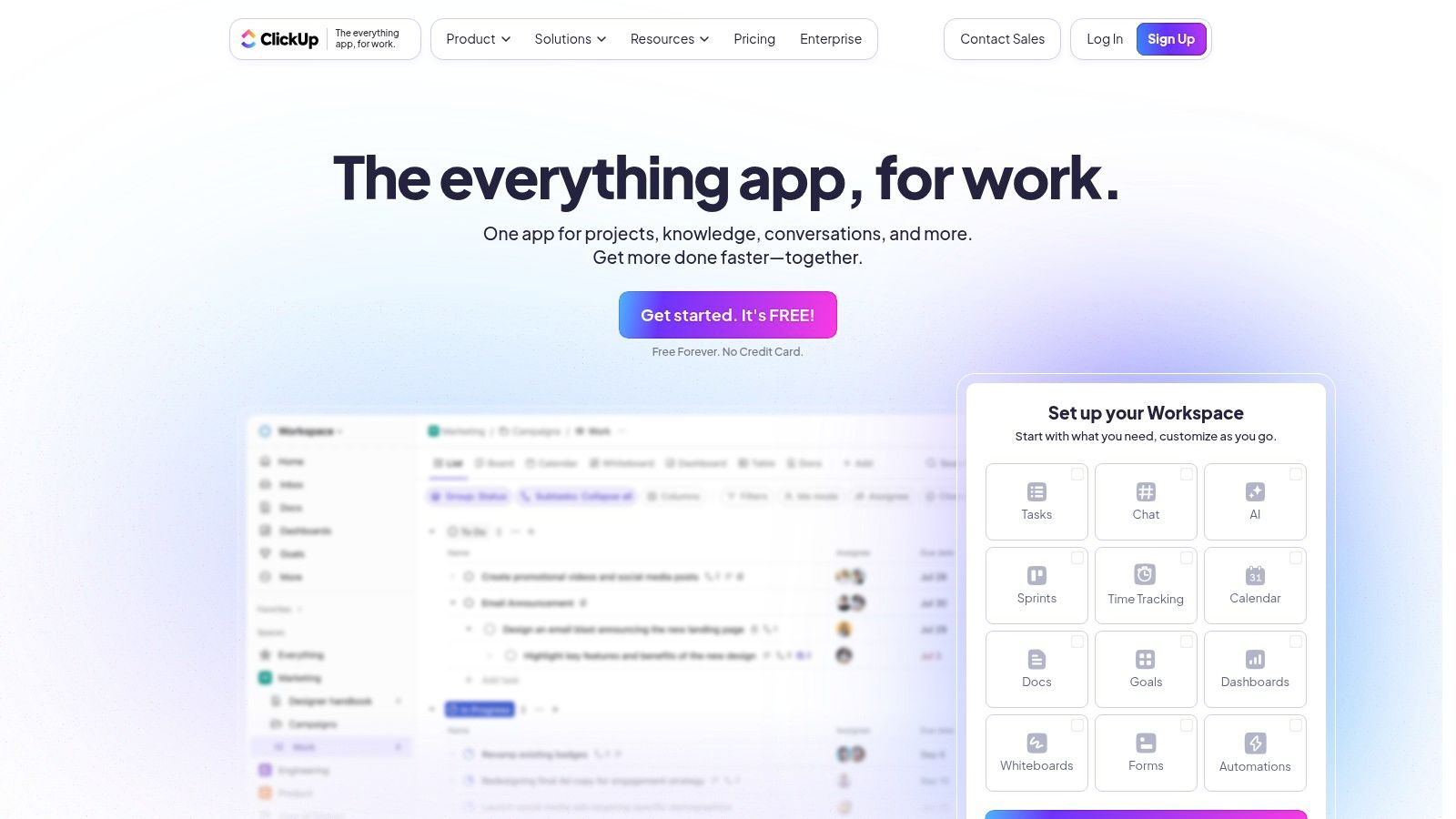
ClickUp's strength lies in its flexibility. Multiple views, including List, Board, Calendar, and Gantt, cater to diverse project visualization preferences. Customizable tasks, priorities, and dependencies ensure that projects stay organized and on track. Built-in Docs and Whiteboards foster real-time collaboration, eliminating the need for external communication tools.
Features and Benefits
- Multiple Views: Visualize projects in various formats, from traditional lists to Kanban boards and Gantt charts.
- Customizable Tasks: Define task details, assign priorities, establish dependencies, and track progress effectively.
- Real-time Collaboration: Use Docs and Whiteboards to collaborate seamlessly with team members.
- Extensive Integrations: Connect with over 1,000 tools to enhance functionality and centralize workflows.
Pricing and Considerations
ClickUp offers a generous free plan suitable for small teams. Paid plans unlock advanced features like increased storage, custom fields, and reporting. While the vast array of features can be beneficial, it can also feel overwhelming initially. The sheer number of options and settings may require some dedicated time to configure and truly master. However, the comprehensive documentation and active user community provide ample resources for getting started. Consider your team's size, budget, and desired level of customization when deciding if ClickUp is the right creative workflow software for your needs.
7. Wrike
Wrike stands out as a robust work management platform tailored for creative teams. It excels in centralizing collaboration, feedback, and approvals, proving invaluable for projects involving multiple stakeholders. This is particularly crucial in creative workflows where clear communication and version control are paramount. Forget endless email chains and confusing file versions; Wrike brings order to the chaos.
Having used Wrike for managing complex design projects, I've found its built-in proofing and approval system a game-changer. The visual planning tools, including Gantt charts and collaborative calendars, offer a clear overview of project timelines and individual responsibilities. The seamless integration with over 400 third-party apps further enhances its flexibility, connecting it with tools creatives already use.
Features and Benefits
- Built-in Proofing and Approvals: Streamline feedback and approvals with marked-up visuals and clear communication tools.
- File Versioning: Maintain a clear history of file revisions, eliminating confusion and ensuring everyone works with the latest version.
- Visual Planning: Utilize Gantt charts and collaborative calendars for efficient project scheduling and resource allocation.
- Extensive Integrations: Connect with over 400 third-party apps to create a unified creative workflow.
Pricing and Considerations
While Wrike offers powerful features, its complexity might feel overwhelming for smaller teams or individual freelancers. The cost, while justifiable for larger teams managing complex projects, can be higher compared to simpler project management alternatives. Consider your team size and project scope when evaluating if Wrike is the right fit for your creative workflow software needs. Its power truly shines when managing intricate projects with diverse stakeholders.
8. Affinity Designer
Affinity Designer stands as a powerful contender in the world of vector graphic design, providing a robust alternative to industry giants. Developed by Serif, this software offers a comprehensive suite of tools for creating stunning vector illustrations, logos, and marketing materials. It’s part of the “Affinity trinity,” integrating seamlessly with Affinity Photo and Affinity Publisher for a complete creative workflow solution. Its cross-platform compatibility across macOS, iPadOS, and Windows further expands its reach.
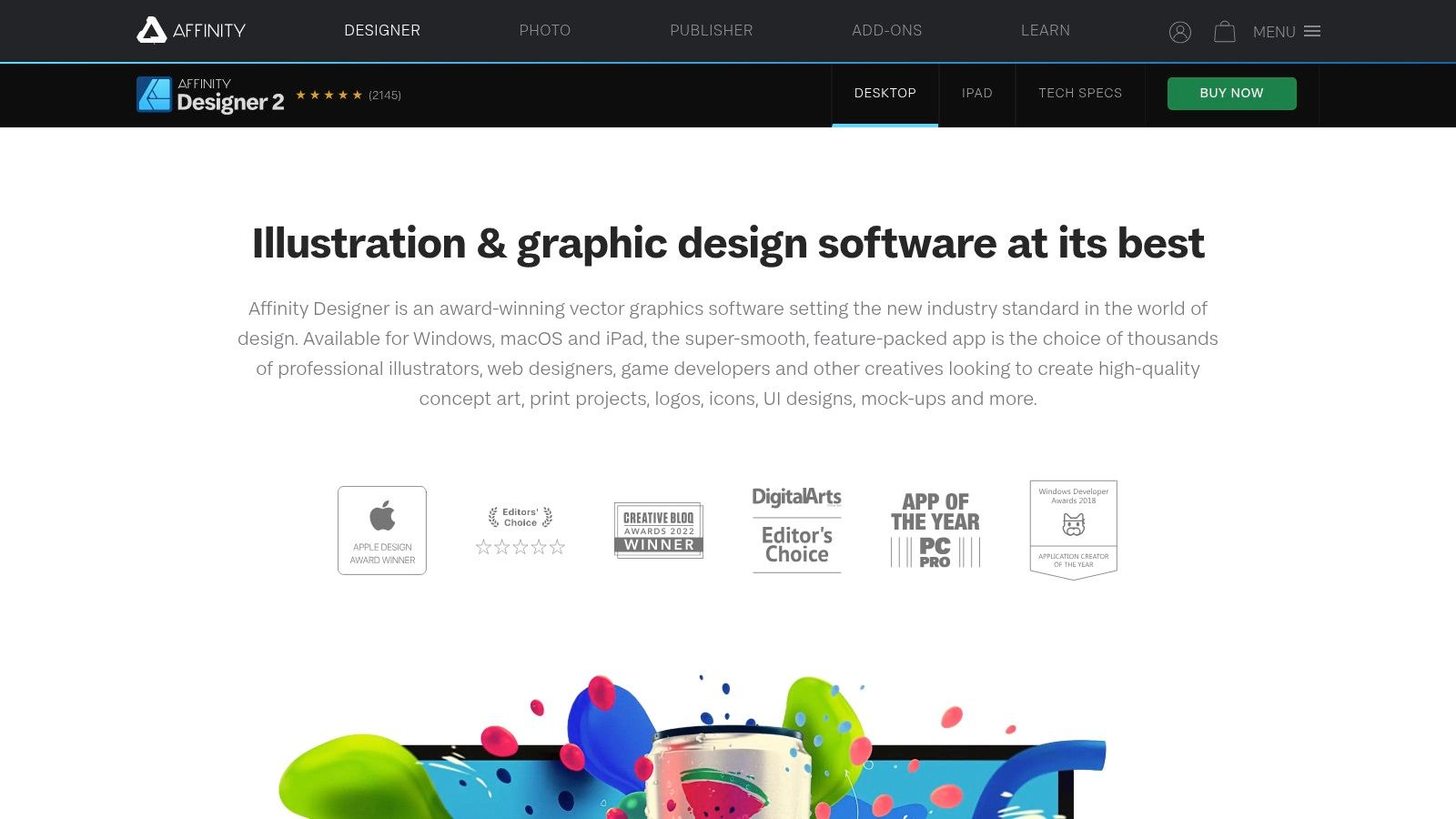
From a practical standpoint, Affinity Designer shines with its intuitive interface and impressive performance, even on complex projects. The non-destructive workflow allows for flexible experimentation, while the advanced features like dynamic symbols and custom brush creation offer creative freedom. Its one-time purchase model makes it a particularly attractive option for budget-conscious creatives or those hesitant to commit to subscription-based creative workflow software.
Features and Benefits
- Precision Vector Tools: Access a full range of vector drawing tools, including pen, pencil, shape tools, and advanced curve editing capabilities.
- Non-Destructive Editing: Experiment freely with adjustments and effects without permanently altering your original artwork.
- Dynamic Symbols: Create and edit complex symbols with linked instances for consistent branding and efficient design updates.
- Seamless Integration: Enjoy smooth workflows across the Affinity suite, transferring projects between Designer, Photo, and Publisher.
Pricing and Considerations
Affinity Designer's one-time purchase pricing structure sets it apart. This eliminates recurring subscription fees, offering significant long-term cost savings. However, the initial investment might be higher than starting a subscription with other software. While the software offers robust features comparable to Adobe Illustrator, some users might find the learning curve steeper. The smaller community also means fewer third-party tutorials and plugins are available compared to more established creative workflow software.
Consider Affinity Designer if you're looking for powerful, subscription-free vector graphics software. Its speed, performance, and non-destructive workflow are major advantages for creative professionals. However, be prepared to invest time in learning the software and exploring its features to maximize your creative potential.
9. Filestage
Filestage excels as a collaborative creative review and approval platform. It empowers brand teams to automate and simplify their creative workflows, centralizing feedback and streamlining approvals. This is invaluable for managing multiple projects with diverse stakeholders, eliminating email chains and scattered communication. It becomes the single source of truth for all feedback, versions, and approvals.
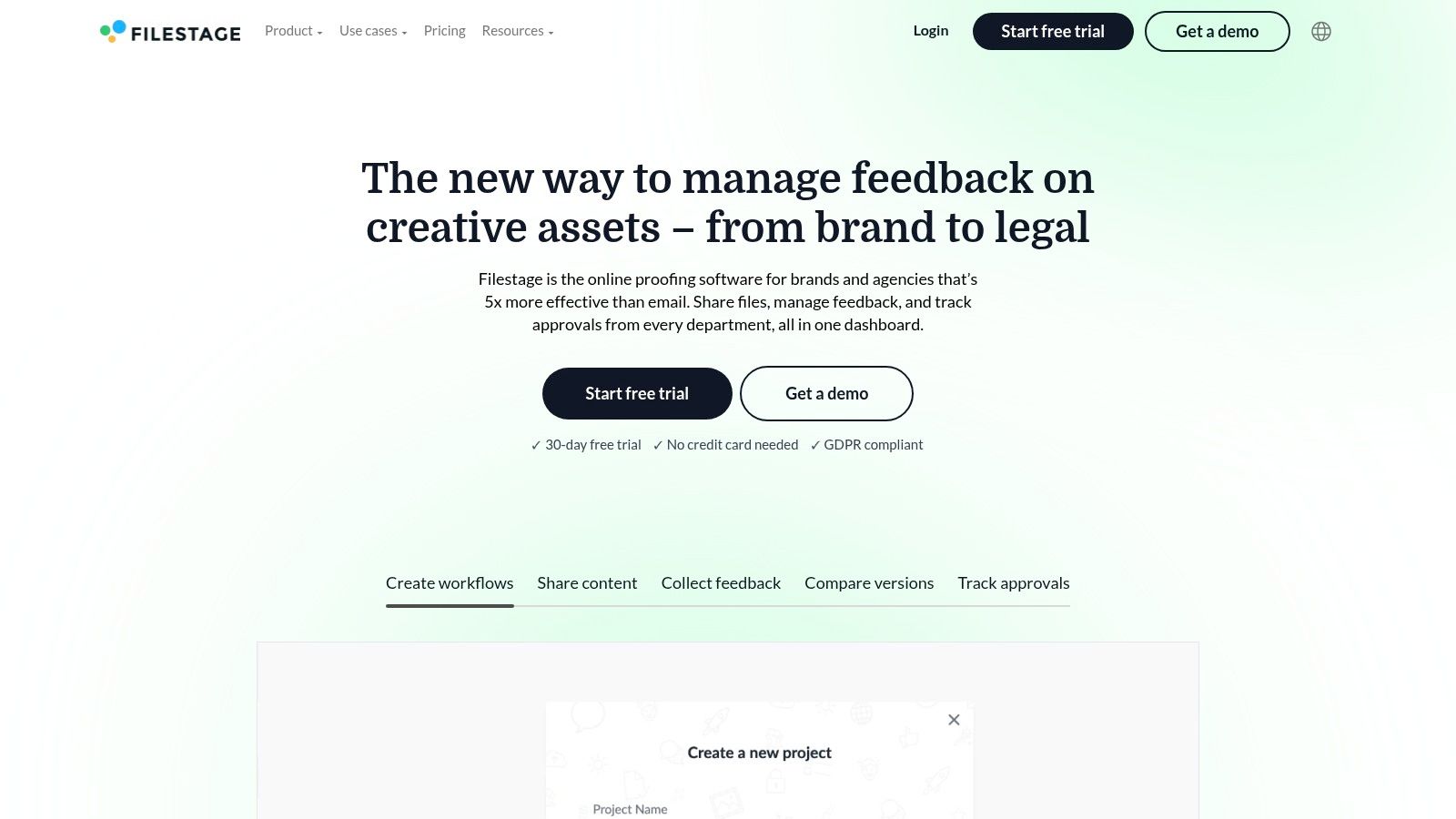
Filestage's strength resides in simplifying complex review cycles. Automated reminders ensure deadlines are met, while version comparison tools allow clear tracking of changes. Its access management features ensure only authorized personnel can view and comment on specific files, safeguarding sensitive materials and maintaining organized workflows. This granular control over access permissions adds a layer of security and organization often lacking in traditional review processes.
Features and Benefits
- Centralized Feedback: Consolidate all feedback in one location, eliminating confusion and streamlining revisions.
- Automated Workflows: Automate reminders and notifications to keep projects moving forward efficiently.
- Version Compare: Track changes easily with clear version comparisons, ensuring everyone is on the same page.
- File Sharing and Status Tracking: Monitor project progress with real-time status updates and easy file sharing.
- Access Management: Control access to files and feedback, maintaining security and organization.
Pricing and Considerations
Filestage offers various pricing tiers based on the number of users and projects. While generally user-friendly, the limited number of available templates can sometimes restrict flexibility. Occasional performance lags can occur with larger projects or numerous files, requiring some patience during peak usage. However, its benefits in streamlining reviews and centralizing feedback often outweigh these minor limitations. Consider the size and complexity of your projects and team when evaluating Filestage for your creative workflow.
10. ProofHub
ProofHub stands out as a robust project management and team collaboration platform tailored for creative teams. It facilitates the entire creative workflow, from planning and organization to asset sharing and the crucial review process. This centralized platform eliminates the chaos of scattered emails, feedback loops, and version control issues that often plague creative projects. Its strength lies in streamlining communication and ensuring everyone stays on the same page.
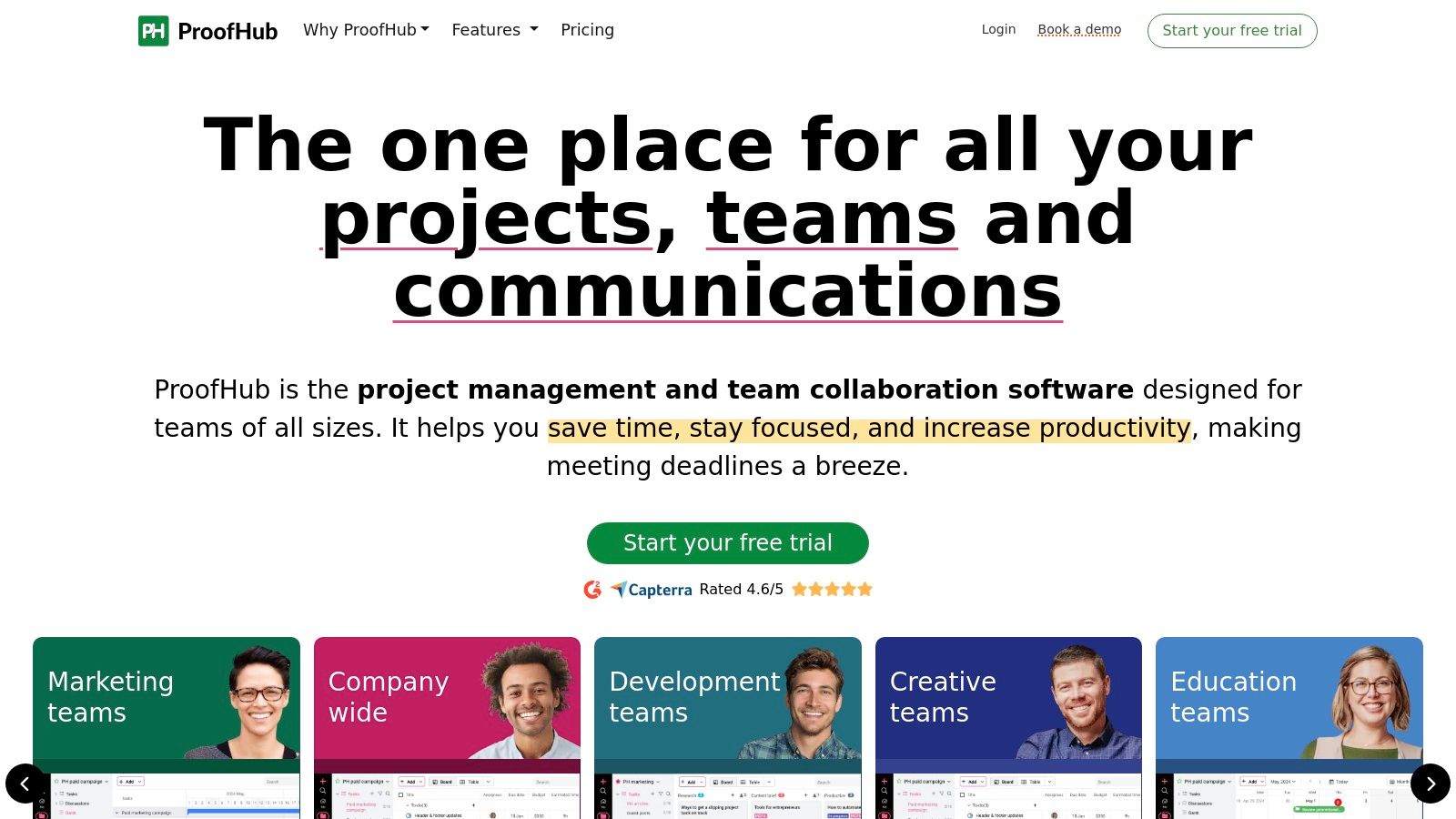
ProofHub excels at organizing brand assets, providing a central repository accessible to all stakeholders. This is particularly useful for managing approvals, tracking revisions, and ensuring brand consistency. Unlike generic project management software, ProofHub offers specialized features like proofing tools and customized workflows designed specifically for creative review cycles. It proves valuable for teams of all sizes, from small design studios to large marketing departments.
Features and Benefits
- Creative Workflows and Task Categorization: Define custom workflows, assign tasks, set deadlines, and track progress in one centralized location.
- Proofing and Reviews: Streamline the feedback process with online proofing tools, annotated comments, and version control.
- Time-Tracking and Announcements: Monitor project timelines, track billable hours, and keep the team informed with announcements and updates.
- Custom Reports and Access Control: Generate reports on project progress, resource utilization, and individual performance. Manage user access and permissions to ensure data security.
Pricing and Considerations
ProofHub offers a flat-rate pricing structure, making it a predictable cost for teams, regardless of size. However, it might lack some advanced features present in more specialized creative tools. The interface, while functional, may appear somewhat dated compared to newer platforms. Despite these minor drawbacks, ProofHub's comprehensive project management capabilities and focus on creative workflows make it a valuable asset for teams seeking to enhance collaboration and streamline their creative processes. Consider ProofHub as a viable creative workflow software if centralized project management, asset organization, and streamlined reviews are your priorities.
11. Bynder
Bynder positions itself as more than just a digital asset management (DAM) system; it aims to be a central hub for creative workflow management. It offers a centralized platform for storing, organizing, and sharing creative assets, combined with project management functionalities. This combination is particularly appealing for larger teams and enterprises struggling to maintain brand consistency across various marketing channels. Bynder's value proposition hinges on streamlining content creation, review, and approval processes, ultimately speeding up time to market.
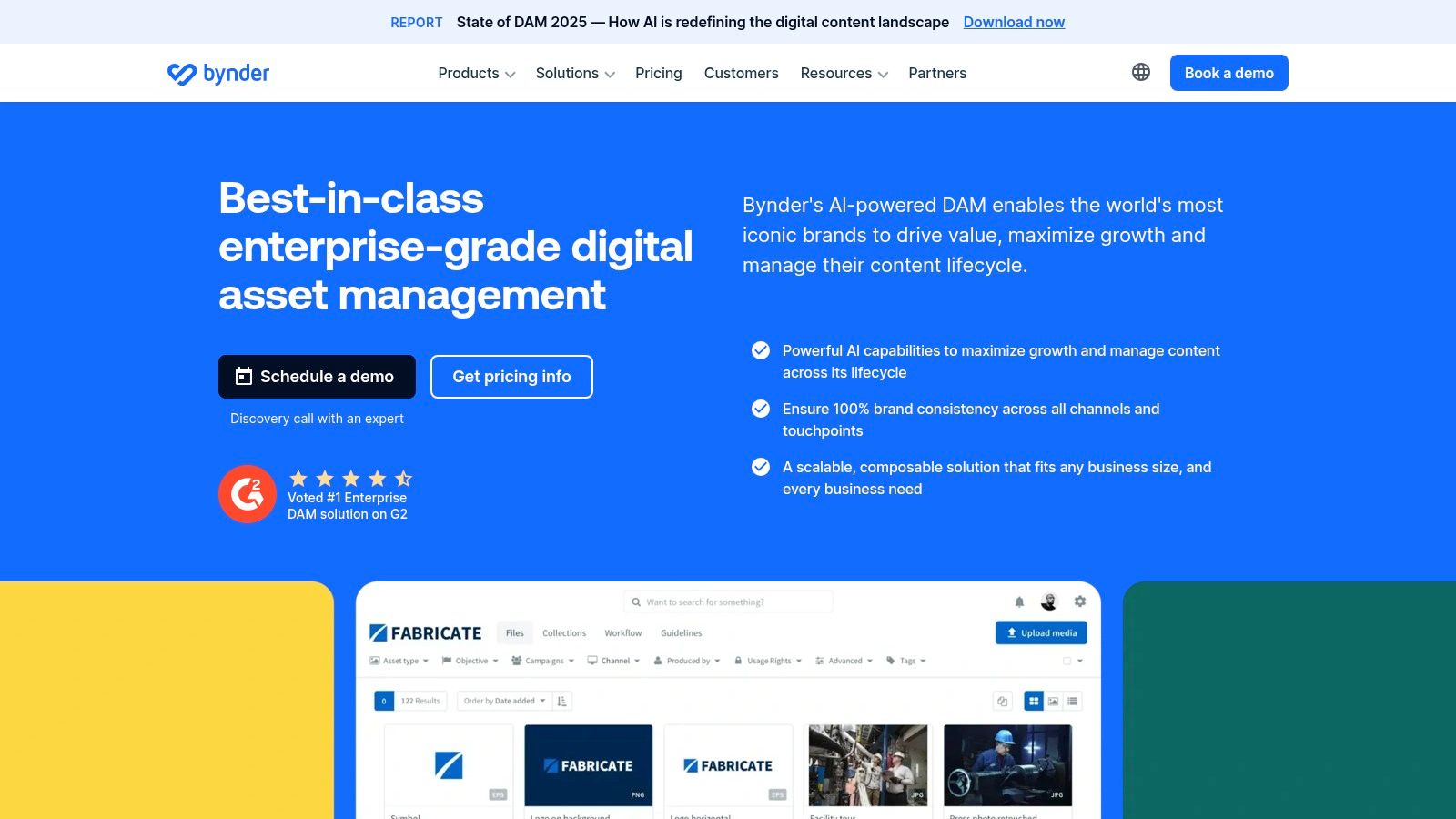
Having used Bynder extensively, I've found its strength lies in managing complex creative projects involving numerous stakeholders. The built-in version control, in-app proofing, and task assignment features are incredibly useful for keeping everyone on the same page. However, its project management capabilities may not be as robust as dedicated workflow software like Asana or Monday.com, a limitation to consider if your needs extend beyond basic task management.
Features and Benefits
- Centralized Asset Library: Store and organize all your creative assets, from images and videos to documents and brand guidelines, in one secure location.
- Brand Consistency: Enforce brand guidelines and style guides directly within the platform, ensuring consistent branding across all materials.
- Collaboration and Version Control: Facilitate seamless collaboration with team members, track revisions, and manage different asset versions efficiently.
- Automated Workflows: Create custom workflows to automate repetitive tasks, from content creation to review and approval.
Pricing and Considerations
Bynder operates on a complex, quote-based pricing model, which can be a hurdle for smaller teams or budget-conscious organizations. Evaluating the return on investment becomes crucial, especially when comparing it to less expensive DAM solutions. However, for large enterprises with stringent brand guidelines, the benefits of centralized control and streamlined workflows often justify the cost. Before committing, carefully assess your specific requirements and explore alternative DAM solutions to ensure Bynder aligns with your budget and creative workflow needs.
12. Adobe Creative Cloud
Adobe Creative Cloud dominates as the industry standard for creative workflow software. It offers a comprehensive suite of applications spanning graphic design, video editing, web development, and photography. This interconnected ecosystem streamlines workflows, proving invaluable for professionals managing multiple projects. Its powerful tools empower creatives to seamlessly transition between tasks such as photo editing in Photoshop, creating vector graphics in Illustrator, and producing videos in Premiere Pro.
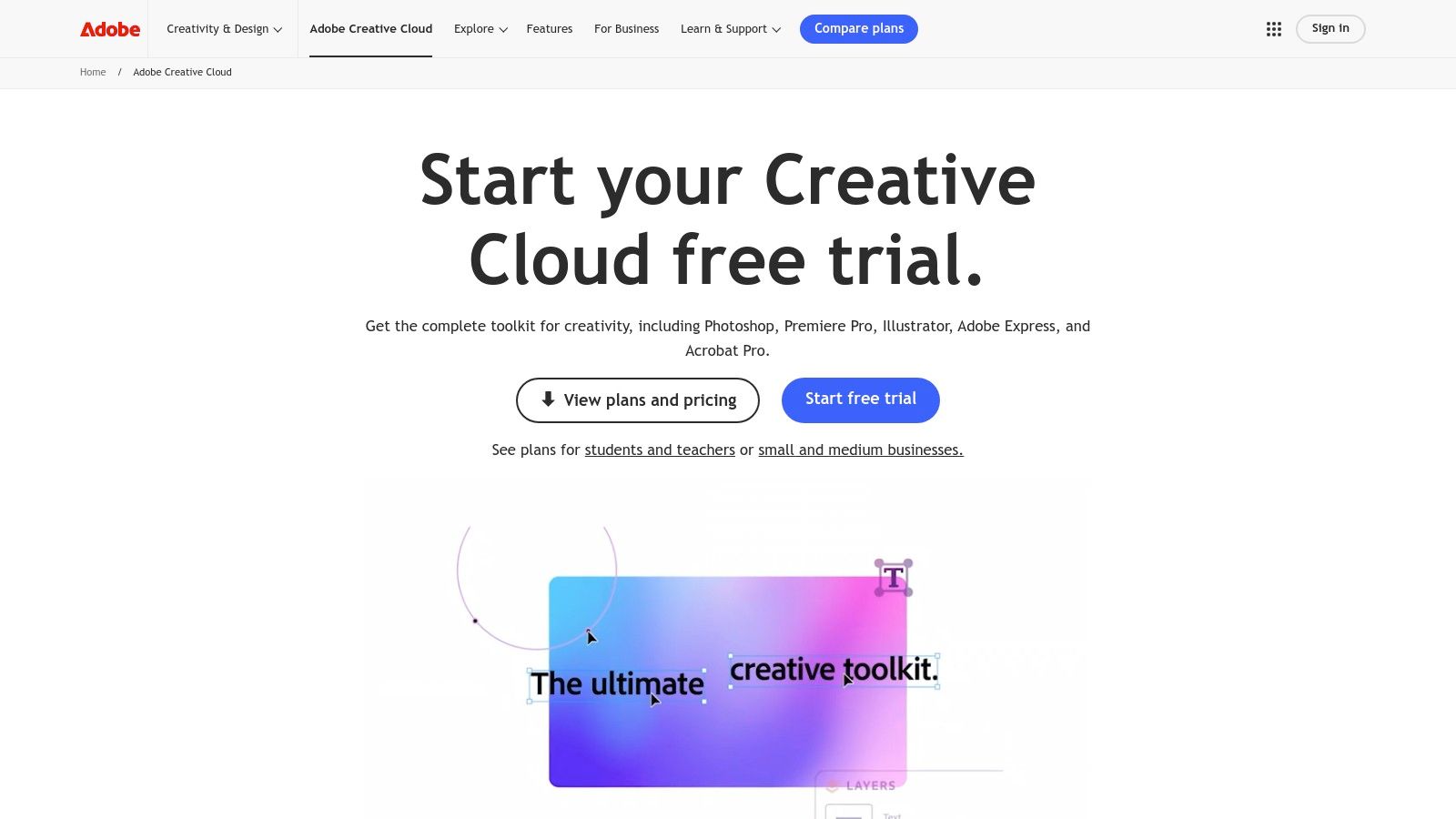
Adobe Creative Cloud's strength lies in its seamless integration. Assets, libraries, and settings synchronize across applications, minimizing friction in cross-platform workflows. The cloud storage facilitates effortless collaboration. Teams can easily share files, track revisions, and work concurrently on projects. This makes it especially useful for distributed teams or complex project management.
Features and Benefits
- Comprehensive Application Suite: Access over 20 desktop and mobile apps, including Photoshop, Illustrator, InDesign, Premiere Pro, After Effects, and XD.
- Cloud Storage and Collaboration: Share files, manage versions, and collaborate effectively with team members through integrated cloud storage.
- Continuous Updates: Receive regular updates with new features, performance enhancements, and bug fixes, ensuring access to the latest tools.
- Rich Asset Library: Utilize Adobe's vast library of fonts, stock photos, templates, and other creative assets, saving time and resources.
- Third-Party Integrations: Extend functionality through integrations with various third-party plugins and services, enhancing workflow customization.
Pricing and Considerations
While feature-rich and cross-platform compatible, Adobe Creative Cloud's subscription model can be a substantial investment. Beginners might find the learning curve steep for certain applications. However, the comprehensive support resources and a large user community offer valuable assistance. Weigh the long-term costs against your specific creative needs when determining if Adobe Creative Cloud is the right creative workflow software for your projects.
Creative Workflow Software Comparison
| Tool | Core Features/Capabilities | User Experience & Quality ★★★★☆ | Value Proposition 💰 | Target Audience 👥 | Unique Selling Points ✨ |
|---|---|---|---|---|---|
| Adobe Creative Cloud | 20+ apps, cloud storage, seamless integration | Industry-standard, powerful but steep learning curve | Subscription-based, costly over time | Professionals, creatives, studios | Extensive app suite, cross-platform 🏆 |
| Figma | Real-time collaboration, prototyping, plugins | Intuitive UI, beginner-friendly, web-based | Free tier available, cost-effective | Designers, remote teams, startups | Browser-based, live multiplayer editing ✨ |
| Trello | Kanban boards, task management, automation | User-friendly, drag & drop, simple | Free plan with essential features | Small teams, individuals | Flexible boards, easy workflow customization ✨ |
| Asana | Multiple views, task dependencies, analytics | Scalable, real-time collaboration, feature-rich | Can be expensive at higher tiers | Medium to large teams | Flexible workflows, strong reporting tools 🏆 |
| Notion | Notes, databases, templates, rich media embedding | Highly customizable, all-in-one workspace | Free plan for individuals/small teams | Teams, creatives, project managers | Combines notes & PM, extensive integrations ✨ |
| ClickUp | Views: List/Board/Gantt, time tracking, goals | Comprehensive but complex, customizable | Robust free plan | Creative teams, productivity seekers | All-in-one platform, docs + whiteboards 🏆 |
| Wrike | Proofing, approvals, Gantt, file versioning | Powerful for complex projects, may be complex for small | Higher cost, enterprise focus | Large creative teams, enterprises | Built-in proofing & approvals ✨ |
| Affinity Designer | Vector tools, custom brushes, export options | Fast, one-time purchase, steep learning curve | One-time cost, no subscription | Graphic designers, illustrators | Competitive Adobe alternative, non-destructive 🏆 |
| Filestage | Automated reminders, version compare, workflows | Streamlines feedback, good collaboration | Pricing varies, may lag with many projects | Brand teams, marketing teams | Automated approvals and status tracking ✨ |
| ProofHub | Creative workflows, proofing, time tracking | Effective resource management, interface outdated | Mid-range pricing | Brand teams, medium-sized teams | All-around review & collaboration solution |
| Bynder | DAM, brand guidelines, collaboration, version control | Enterprise-level, complex pricing | Premium pricing | Large teams, enterprises | Centralized brand asset management 🏆 |
Elevate Your Creative Process: Choosing the Right Software for 2025 and Beyond
Navigating the landscape of creative workflow software can feel overwhelming. This article explored twelve leading solutions, each offering unique strengths and catering to diverse creative needs. From industry giants like Adobe Creative Cloud and Figma to versatile platforms like Notion and ClickUp, the options are vast. This concluding section distills key takeaways and empowers you to make informed decisions for your creative projects in 2025 and beyond.
Key Considerations for Choosing Creative Workflow Software
Finding the optimal creative workflow software hinges on several crucial factors. Consider these points as you evaluate potential solutions:
- Team Size and Collaboration Needs: Tools like Trello and Asana excel for smaller teams emphasizing agile methodologies. Larger teams with complex projects might benefit from the robust features of Wrike or ProofHub.
- Project Complexity: Simple task management can be handled efficiently with Trello or Notion. However, intricate creative projects demanding version control and feedback loops might require specialized software like Filestage or Bynder.
- Budgetary Constraints: Open-source options or those with freemium tiers, like Figma, offer cost-effective entry points. Premium solutions like Adobe Creative Cloud provide advanced features but come with higher price tags.
- Integration Capabilities: Seamless integration with your existing tool stack is crucial for workflow efficiency. Consider whether your chosen software integrates with your preferred communication, file sharing, and other essential platforms.
Implementing Your Chosen Software: Best Practices
Successful implementation of creative workflow software requires careful planning and execution:
- Phased Rollout: Introduce the software gradually to allow your team to adapt. Start with a pilot group and gather feedback before a full-scale deployment.
- Comprehensive Training: Provide thorough training to ensure your team understands the software's functionalities and can leverage its features effectively.
- Customization and Configuration: Tailor the software to your specific workflow. Customize dashboards, notifications, and integrations to optimize its utility for your team.
- Ongoing Evaluation and Refinement: Regularly assess the software's impact on your creative workflow. Solicit feedback from your team and make adjustments to ensure it continues to meet your evolving needs.
Finding Your Perfect Fit: Matching Software to Your Needs
Choosing the right creative workflow software is not a one-size-fits-all endeavor. Your specific requirements will dictate the most suitable solution.
- For Visual Collaboration: Figma and Affinity Designer offer powerful design tools combined with collaborative features, making them ideal for visual projects.
- For Agile Project Management: Trello, Asana, and ClickUp provide agile frameworks for managing tasks, sprints, and team communication effectively.
- For Comprehensive Creative Suites: Adobe Creative Cloud remains the industry standard for a wide range of creative disciplines, offering an extensive suite of powerful applications.
- For Digital Asset Management: Bynder provides robust features for managing, storing, and sharing digital assets, ensuring brand consistency and efficient workflows.
The Future of Creative Workflow: Embracing Innovation
The world of creative workflow software is constantly evolving. Staying ahead of the curve requires embracing new technologies and adapting to emerging trends. As we move toward 2025 and beyond, artificial intelligence (AI) and automation will likely play increasingly significant roles in streamlining creative processes. Look for creative workflow software that integrates these advancements to further enhance efficiency and unlock new possibilities.
Selecting and implementing the right creative workflow software is a strategic investment in your team's future. By carefully considering your needs, exploring available options, and implementing best practices, you can transform your creative processes, boost productivity, and elevate your creative output. Embrace the power of technology to streamline your workflow and empower your team to reach new heights of creative excellence.