Why Your Portfolio Matters More Than Your GPA
Let's be real, your GPA doesn't tell the whole story. I've seen amazing students with sky-high GPAs get passed over for internships, while classmates with lower GPAs but killer portfolios snag incredible opportunities. Talking to hiring managers and admissions folks, one thing is crystal clear: they want to see what you can do, not just what your grades are.
This shift toward portfolios makes perfect sense. Picture two candidates: a 4.0 student with zero experience, and a 3.5 student with a portfolio packed with real-world projects. Who would you hire? Nine times out of ten, it's the person who can show, not just tell. Your portfolio is your professional calling card. It shows off your problem-solving skills and creative potential.
What's more, the growing emphasis on practical skills in education reinforces the importance of a strong portfolio. Schools are working hard to connect their programs with what employers actually need. The education market is expected to hit $10 trillion by 2025, with a huge focus on vocational training and workforce pathways. This really highlights how valuable it is to showcase practical skills through a well-crafted portfolio. Discover more insights into education trends here.
For example, think about what you could include. A computer science student might showcase coding projects. A marketing student could include campaign analyses. And a design student would, of course, feature their visual work. A portfolio turns those abstract grades into concrete proof of your abilities. It gives potential employers and admissions committees a glimpse into how you work, your creative process, and your ability to get things done.
Your portfolio is like your personal brand story. It's a chance to tell your story, highlight your strengths, and demonstrate your value. It's about showing, not just telling. By carefully choosing your best work and presenting it in a compelling way, you can stand out from the crowd and open doors to exciting opportunities. This isn't about exaggerating; it's about translating your academic achievements into the language of professional success.
Choosing Your Platform Without The Analysis Paralysis
Picking a platform for your student portfolio can feel overwhelming. I know, because I've seen students get stuck comparing features for weeks instead of actually building their portfolios. I've been there myself! The truth is, there’s no single “perfect” platform. There's only the right platform for you. So, let's ditch the marketing jargon and figure out what actually matters.
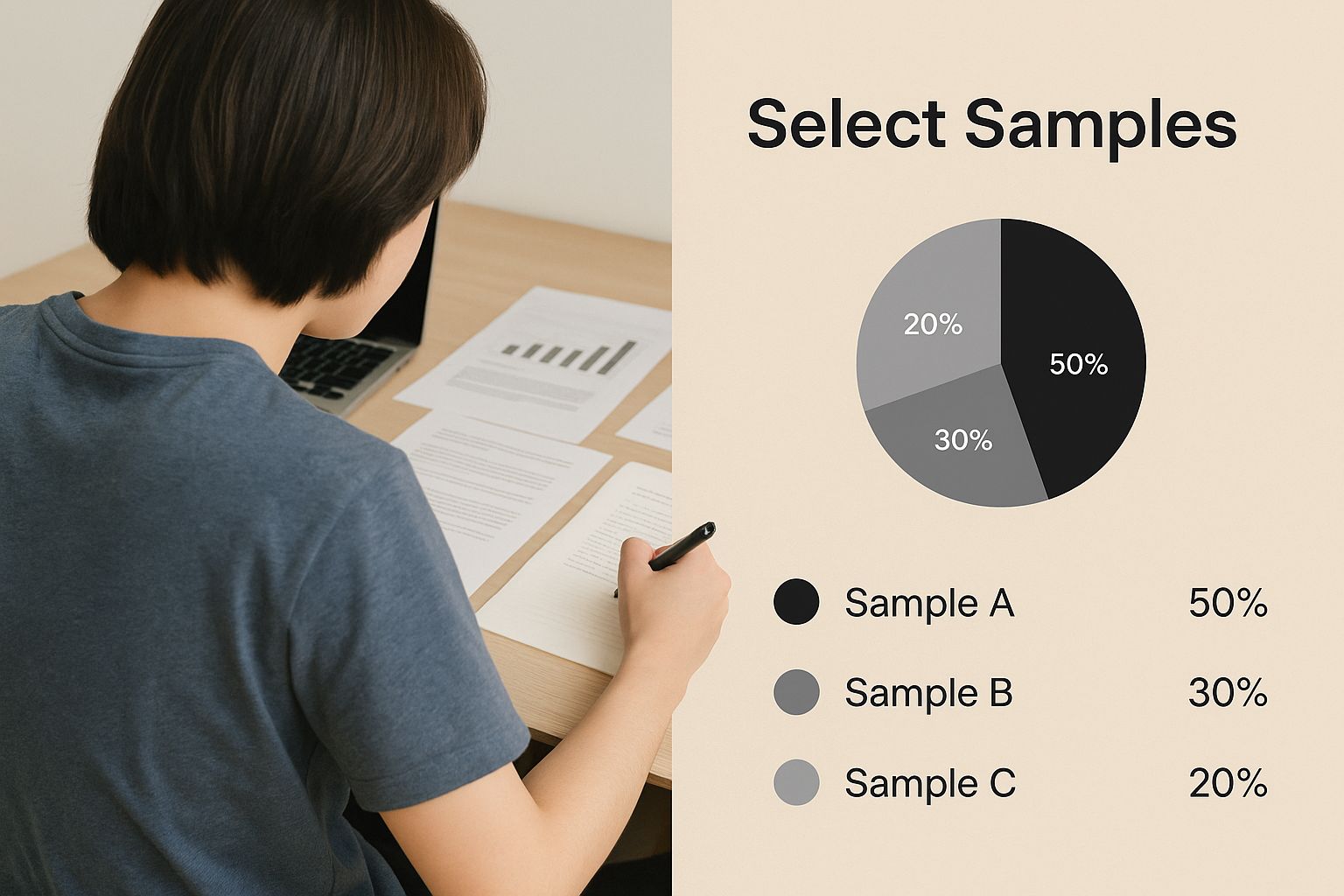
This infographic shows a student carefully choosing work samples, highlighting the importance of showcasing the right pieces. Your portfolio isn't just a pile of everything you’ve done; it's a carefully curated presentation of your skills and potential.
I’ve helped students from all backgrounds create amazing portfolios – from computer science grads landing jobs with simple GitHub Pages sites to art students whose Behance portfolios got them noticed by top agencies. Here’s what I've learned about choosing the right platform:
Consider Your Tech Skills and Budget
Be honest about your tech skills. If coding isn't your strength, platforms like Squarespace or Wix offer easy drag-and-drop interfaces. If you’re comfortable with code, a more customizable personal website might be a better choice. Budget matters too. Adobe Portfolio integrates seamlessly with Creative Cloud (a perk for some), but free options like Google Sites or GitHub Pages can be just as effective, especially when you’re starting out.
This screenshot shows how polished an Adobe Portfolio site can look. Its user-friendly interface makes it easy to create a professional presentation, a great option for visually-driven portfolios.
To help you compare, I’ve put together a table outlining some popular choices:
Student Portfolio Platform Comparison: A comprehensive comparison of popular portfolio platforms including cost, ease of use, customization options, and best use cases for different student needs.
| Platform | Cost | Ease of Use | Customization | Best For | Technical Skills Required |
|---|---|---|---|---|---|
| Squarespace | Paid | Easy | Medium | General portfolios, blogs | Low |
| Wix | Paid | Easy | Medium | General portfolios, blogs | Low |
| Adobe Portfolio | Paid (with CC) | Easy | Medium | Visual portfolios | Low |
| Google Sites | Free | Easy | Limited | Simple portfolios, projects | Low |
| GitHub Pages | Free | Medium | High | Technical portfolios | Medium |
| Behance | Free | Medium | Medium | Visual portfolios | Low |
| Dribbble | Free | Medium | Medium | Visual portfolios, snippets | Low |
As you can see, each platform offers different advantages depending on your needs and skills.
Think About Your Career Goals
Finally, think about how your portfolio can support your career goals. Are you a visual artist? Dribbble or Behance are popular with creative professionals and might be a good fit. If you're in computer science, GitHub lets you showcase your coding skills and contributions to open-source projects. Your portfolio should be a dynamic tool that evolves with your career path.
Curating Content That Actually Tells Your Story
Putting together a student portfolio can be a real head-scratcher. Lots of students treat it like a digital dumping ground, cramming in every single piece of work they've ever done. But I've seen portfolios that instantly screamed "hire me!" and others filled with amazing work that somehow fell flat. The secret? Curation. It’s about picking the right pieces and showing them off in a way that tells a captivating story.
Think highlight reel, not the extended cut. You want to showcase your growth and key skills, not just document every assignment. For example, I knew a marketing student who turned a regular class presentation into a killer case study. She highlighted the market research, the campaign strategy, even the projected results. Landed her a top-notch internship. Another student, an engineering major, transformed his senior project into a dynamic presentation with photos, diagrams, and a clear explanation of the technical hurdles. He got three job offers!
Selecting Your Star Pieces
So, how do you decide what makes the cut? Here's my tried-and-true method:
- Demonstrate Growth: Include projects from different points in your academic career to show how far you’ve come. Even an early project, even if it's not perfect, can highlight your progress.
- Highlight Transferable Skills: Even projects that seem purely academic can demonstrate skills employers value. Did you do research? Lead a team? Give presentations? Play up these transferable skills.
- Focus on Impact: If you can, quantify your achievements. Did your marketing campaign boost engagement by 15%? Did your code cut processing time by 20 seconds? Numbers are powerful.
You might find these Examples of student portfolios helpful.
Context is King
Just throwing your work up there isn't enough. You need to give it context. Imagine a stunning painting in a gallery with no title, no artist's statement, no information. It loses some of its impact, right? Your portfolio pieces are the same. Each one needs a short, engaging description that explains the goal, your process, and the results.
Also, think about the bigger picture of access to education. Making higher education more affordable and accessible is vital, and student portfolios are a big part of that. They empower students, including working adults and transfer students, to effectively communicate their accomplishments and goals. Discover more insights here.
By carefully selecting your work and providing context, you transform your portfolio from a list of projects into a compelling narrative. It showcases your unique skills, potential, and professional identity. This approach will help you create a student portfolio that truly shines.
Design That Doesn't Scream 'Amateur Hour'
So, you're building a student portfolio. You want it to look professional, right? You don't need to be a design guru to pull that off. The trick is avoiding the common traps that instantly scream "amateur." I've spent way too much time admiring (and dissecting) award-winning student portfolios, and I've noticed some subtle design choices that separate the pros from the newbies. Let's talk about visual hierarchy, the power of white space, and why font choices matter more than you might think.
Visual Hierarchy: Guiding the Viewer's Eye
Think of your portfolio as a guided tour. You're the tour guide, and you decide what the viewer sees first, second, and third. This is visual hierarchy at work. I know a journalism student who nailed this with a clean, navigation-focused design. Her strongest pieces were front and center, and her contact info was easy to find. This clear hierarchy made it simple for potential employers to quickly see her best work, which helped her land a great gig. You can achieve this same effect through size (bigger things get noticed), color (bold colors pop), and contrast (light against dark, or the other way around).
White Space: It's Not Empty, It's Powerful
White space – the empty area around elements – is like breathing room for your design. It keeps your portfolio from feeling cluttered and overwhelming. Think about a website jammed with text and images versus one with thoughtfully placed elements and plenty of spacing. The second one feels way more professional, doesn't it? This same journalism student used white space effectively, giving each project room to shine. If you’re looking for tools to help with layout, check out some helpful design tools on Vibecoding VIP.
Font Choices: The Unsung Heroes of Design
Fonts communicate a feeling. A playful script font isn't the best choice for a finance portfolio, just like a stiff corporate font won't work for a graphic designer. Stick to a maximum of three fonts – one for headings, one for body text, and maybe one for accents – to create a cohesive and professional look. Think about the vibe you want to project and choose fonts that match. This is where the three-color rule comes in handy, too. Limiting your color palette to three complementary colors instantly elevates your visual appeal and creates a unified look.
Real-World Examples: From Cluttered to Classy
Imagine a portfolio crammed with mismatched fonts, clashing colors, and images squeezed together. Now, picture that same portfolio with a clear visual hierarchy, strategic use of white space, and a consistent font and color palette. The difference is night and day. By learning from practical examples like the journalism student's portfolio, you’ll see how simple design choices can take your work from cluttered to classy. A well-designed portfolio doesn’t just showcase your skills; it demonstrates your professionalism and attention to detail – qualities employers value.
Writing Descriptions That Make Employers Take Notice
This is where a good student portfolio transforms into a great one. I've seen amazing projects fall flat due to weak descriptions, while so-so projects get noticed because of compelling storytelling. The difference? It's not just what you did, but how you explain it. Go beyond summarizing – showcase your thinking. That's the secret to a standout portfolio.
Showcasing Your Process and Impact
The key is to move past basic summaries. Instead of listing what you did, explain why. For example, I worked with a psychology student who initially described her research project with a dry methodology summary. We reframed it to focus on the user behavior insights she uncovered, turning it into a compelling narrative. The result? An interview!
Another student, an engineering major, quantified his impact. He didn't just describe his coding project; he explained how it reduced processing time by 18%. This concrete detail made all the difference. These real-world examples demonstrate the power of effective descriptions.
Crafting Compelling Descriptions: A Framework
So, how do you create descriptions that grab attention? A simple framework can help:
- The Challenge: What problem did you solve? What limitations did you face?
- Your Approach: How did you tackle the challenge? Which skills and tools did you use? What were your key decisions?
- The Outcome: What were the results? How did you measure success? What did you learn?
This framework provides a clear, concise way to showcase your work and encourages critical thinking about your accomplishments. Let's dive deeper into how to craft descriptions that resonate with potential employers. I've found using a structured approach incredibly helpful, and I think you will too.
To really nail those project descriptions, consider the following table as a guide. It breaks down how to write compelling descriptions, offering examples and pointing out common pitfalls.
Portfolio Description Framework
A structured approach to writing compelling project descriptions with key elements, example phrases, and common mistakes to avoid
| Section | Purpose | Key Elements | Example Phrases | Avoid |
|---|---|---|---|---|
| The Challenge | Set the context and highlight the problem | Problem statement, context, constraints | "The existing system was slow and inefficient," "Users struggled to navigate the interface," "The project had a tight deadline and limited budget." | Simply stating the project title or assignment. |
| Your Approach | Explain your methodology and decision-making process | Tools used, skills applied, key decisions, rationale | "I used Python to develop a more efficient algorithm," "I employed user-centered design principles," "I chose this approach because it offered the best balance between performance and scalability." | Listing technical details without explaining their relevance. |
| The Outcome | Showcase the results and impact of your work | Quantifiable results, lessons learned, impact on users/business | "The new system reduced processing time by 18%," "User satisfaction increased by 15%," "The project resulted in a 10% increase in sales." | Vague statements like "the project was successful." |
This framework helps you present your projects in a way that’s both informative and engaging. Remember, your portfolio is a chance to show off not only what you’ve done but also how you think and approach problems.
Translating Classroom Experiences into Professional Language
Finally, remember your audience. You're writing for potential employers, not your professor. Use professional language and avoid jargon. Even academic projects demonstrate transferable skills like problem-solving, critical thinking, communication, and teamwork. Mastering this translation is crucial. Show how your academic experience translates into real-world value. It's all about connecting the dots for hiring managers.
Getting Your Portfolio In Front Of Decision-Makers
Creating a killer student portfolio is a massive win, but honestly, it's just the first step. I've seen so many students pour their heart and soul into amazing portfolios that, unfortunately, gather digital dust because no one ever sees them. Conversely, I've watched others strategically present their work, transforming portfolio views into actual job offers and exciting projects. What's the secret sauce? It's all about smart networking and knowing how to get your work in front of the right people.
This isn't about being arrogant or constantly tooting your own horn. It's about seamlessly weaving your portfolio into conversations, applications, and networking opportunities. Let's say you're chatting with a recruiter at a career fair, and they ask about your skills. Instead of just rattling off a list, you could say, "I've actually used those skills in a recent project, which you can see in my portfolio. Would you be interested in taking a look?" It's a low-key invitation that feels natural and engaging. If you're looking for more tips, you might find these additional resources on Vibecoding VIP helpful.
Networking With Your Portfolio
Networking events can be a little daunting, I know, but your portfolio can be your secret weapon and a great conversation starter. I've seen students use their portfolios to kickstart fantastic conversations with industry pros. I remember one graphic design student who brought a tablet loaded with her portfolio to a design conference. This made it super easy to share her work with other attendees and led to some serious networking gold. By being proactive, she turned a potentially overwhelming event into a productive opportunity.
Integrating Your Portfolio Into Applications
Your portfolio needs to be a core part of your application strategy. Don't just slap a link in there and call it a day. Integrate it into your cover letter and resume. Instead of a generic "See my portfolio for examples," try something more specific, like, "My passion for UX design is reflected in a recent app redesign project (featured in my portfolio) where I boosted user engagement by 15%." Quantifying your accomplishments, whenever you can, makes a huge difference and shows the real value you bring.
The Power Of Follow-Up
Just sharing your portfolio isn't enough. Follow-up is key. After networking or an interview, send a personalized email referencing a specific project you discussed. For example, "It was great talking with you about the challenges of designing for accessibility. I've included a link to my portfolio, highlighting a project where I focused on inclusive design principles." This reinforces your interest and keeps you top of mind.
Tracking Your Success
Keeping tabs on what’s working and what’s not is super important. Use a simple spreadsheet or a document to track where you've shared your portfolio and the results you've seen. Did it lead to an interview? A new connection? This data helps you focus your energy where it matters most. It turns portfolio promotion from a guessing game into a focused strategy. By analyzing your results, you can pinpoint which methods are generating the most interest and refine your approach. Building a student portfolio is a journey, and promoting it strategically is the key to unlocking its full potential.
Maintaining Momentum Without Burning Out
Let's be honest, your student portfolio isn't something you create once and then forget about. It's a living, breathing document that should grow and change alongside your skills and experience. The biggest challenge? Many students either ditch their portfolios after the initial setup or get totally bogged down trying to keep everything perfectly updated. I've been there, I totally understand. But trust me, finding a sustainable way to maintain your portfolio can make a huge difference.
Seasonal Updates and Application Deadlines
One helpful tip I've picked up is to link your portfolio updates with important deadlines. Think of it like training for a marathon – you ramp up your efforts as the big day approaches. Before graduation, during summer breaks, or leading up to internship application periods, block out some dedicated time to refresh your portfolio. This "seasonal" approach ensures your portfolio stays relevant without becoming a never-ending task.
Incorporating New Work (The Easy Way)
Adding new projects should be a seamless process, not a major headache. Find a system that works for you and stick with it. Personally, I use a dedicated folder on my computer where I save project files and jot down key details as I complete them. This makes updating my portfolio so much easier. When those "seasonal" refresh periods come around, I can quickly pull together my best work without racking my brain trying to remember everything I've done.
Archiving Older Projects (Without Losing Their Value)
Now, what about those older projects you're still proud of, but that don't quite fit with your current career goals? Don't delete them! Instead, create an archive section within your portfolio. This is a fantastic way to showcase your growth and the evolution of your skills. Plus, if a potential employer is interested in seeing a broader range of your work, you'll have it readily available.
I’ve spoken to several recent grads who've used this strategy effectively throughout their careers, keeping their portfolios current and dynamic without burning out. Their secret? Planned updates, simple systems, and smart archiving. By adopting these practices, you can ensure your portfolio works for you, not against you. It becomes a powerful tool that reflects your progress and supports your ambitions, rather than just another item on your to-do list. You’ll have a clear framework for deciding what to add, what to remove, and how to keep your portfolio aligned with your evolving career aspirations.