Why Most Innovation Processes Fail (And How to Fix Them)
Many organizations approach innovation as a series of spontaneous creative bursts rather than a structured, ongoing process. This haphazard approach often results in wasted resources and disappointing outcomes. Imagine a brainstorming session generating exciting new ideas. Without a clear path to implementation, these ideas often lose momentum and are never fully realized. Similarly, lacking defined criteria for evaluating ideas can lead to pursuing projects that don't align with overall strategic goals. It's like throwing darts in the dark and hoping for a bullseye.
Common Pitfalls in Innovation Management
One of the biggest reasons innovation initiatives fail is the difficulty in translating promising ideas into tangible business outcomes. This challenge is not unique; in fact, it's widespread. A significant 87% of respondents in the 2025 State of Corporate Innovation Report by HYPE Innovation identified this as the top pipeline obstacle. To improve your own innovation process management, reviewing the essential Innovation Process Steps is a good place to start. This disconnect between ideation and implementation highlights the critical need for robust innovation process management.
Another common pitfall is the inefficient allocation of resources. Innovation requires investment – both financial and personnel. Without a clear understanding of which projects offer the best potential return, resources can be spread too thin, hindering progress across the board. This can result in a collection of underfunded and underdeveloped projects, none of which achieve significant impact.
A lack of clear communication and collaboration can also derail innovation efforts. Innovation thrives in environments where teams can openly share ideas, provide constructive feedback, and collaborate effectively. When communication breaks down, silos form, and potentially valuable insights are lost.
Building a Successful Innovation Process
Successful innovation process management requires a systematic approach that directly addresses these common challenges. This involves establishing clear processes for the following:
-
Idea Generation: Foster a culture of continuous ideation, creating channels for employees at all levels to contribute their ideas.
-
Idea Evaluation: Implement objective criteria to assess the feasibility, potential impact, and strategic alignment of each idea.
-
Project Prioritization: Develop a framework to prioritize projects based on their potential value and required resources.
-
Resource Allocation: Strategically allocate resources to ensure high-priority projects receive the necessary funding and support.
-
Project Management: Use effective project management methodologies to track progress, manage risks, and ensure timely completion.
-
Performance Measurement: Establish key performance indicators (KPIs) to monitor the success of innovation initiatives and identify areas for improvement. This could include tracking the number of new products launched or the revenue generated from these innovations.
-
Continuous Improvement: Regularly review and refine the innovation process based on performance data and stakeholder feedback.
By implementing a well-defined innovation process, organizations can transition from sporadic bursts of creativity to a sustainable source of competitive advantage. This structured approach helps ensure resources are used effectively, projects align with strategic goals, and innovative ideas consistently translate into tangible business results.
Building Innovation Frameworks That Actually Deliver
Innovation isn't about sudden bursts of inspiration; it's a continuous process that thrives on structure and careful development. This means going beyond brainstorming and buzzwords to build systems that turn ideas into tangible products or services. This section explores how to build innovation frameworks that consistently deliver valuable results.
Stage-Gate vs. Agile: Choosing the Right Approach
Two main frameworks dominate innovation process management: Stage-Gate and Agile. The Stage-Gate process is a linear model. It breaks innovation down into distinct phases, each with defined deliverables and evaluation points, often called "gates." This structured approach ensures a thorough review of ideas at each stage, minimizing the risk of investing in unviable projects. However, this rigidity can sometimes stifle creativity and slow down the overall process.
Agile innovation, on the other hand, emphasizes flexibility and iterative development. It’s a more responsive approach, constantly adapting to feedback and changing market demands. This adaptability makes Agile ideal for fast-paced environments where speed and responsiveness are paramount. However, its less structured nature can present challenges when managing larger, more complex projects. For a more detailed comparison, see How to master the differences between these approaches at vibecoding.vip.
Balancing Structure and Freedom
The best innovation frameworks find the right balance between structured governance and creative freedom. Too much structure can stifle innovation, while too little can lead to unproductive chaos. This balance is achieved through carefully designed evaluation criteria. These criteria need to identify promising opportunities without discouraging unconventional thinking. Think of it like tending a garden: you need fertile soil (creative freedom) and supporting structures (governance) for your plants (ideas) to thrive.
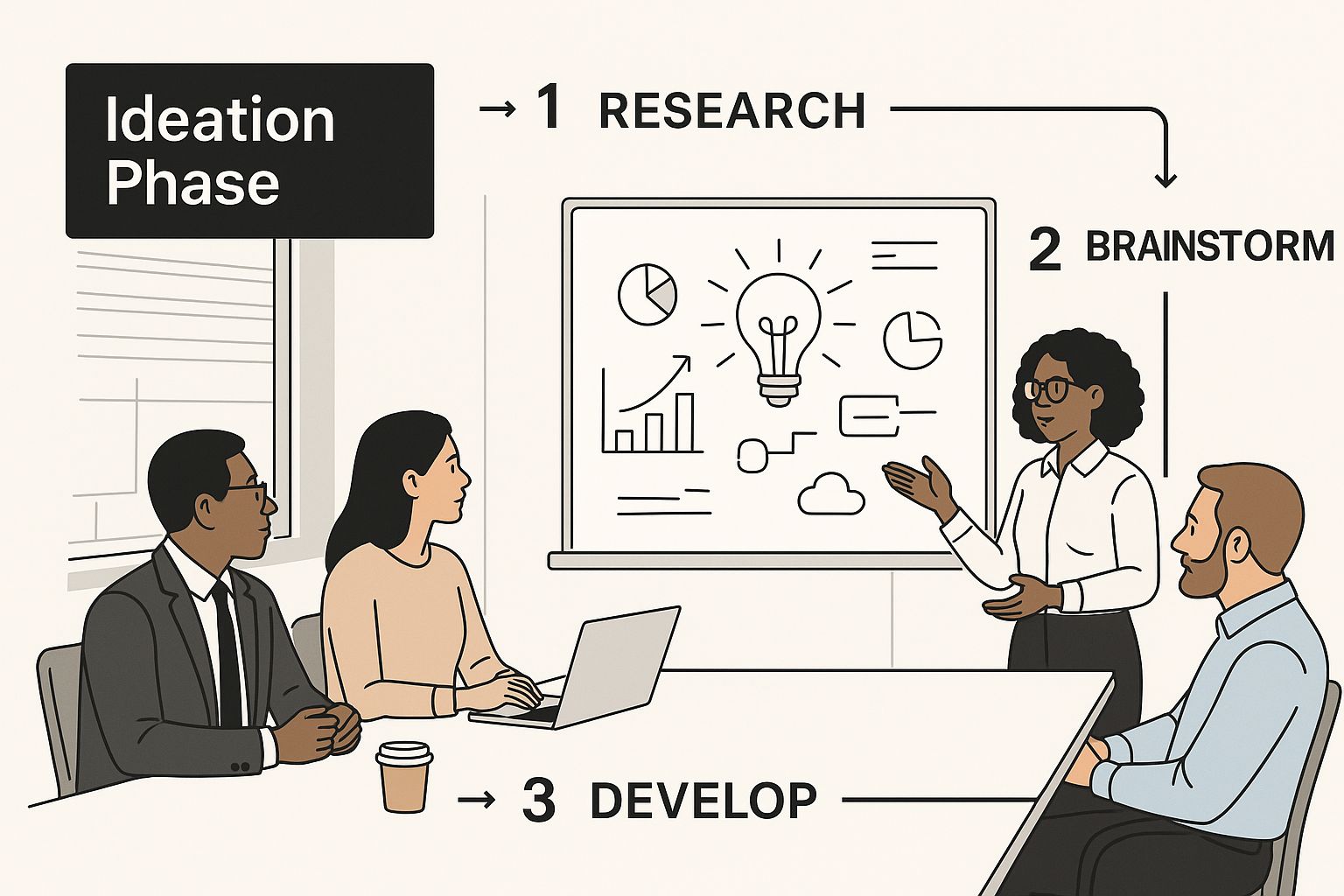
The infographic above shows professionals in the ideation phase, illustrating how a structured process, visualized on a whiteboard, guides the creative flow. This visual emphasizes how even in the earliest stages, a framework is vital for capturing, organizing, and aligning ideas with the overall innovation strategy.
Aligning Innovation With Strategic Objectives
Effective innovation process management should always be tied to broader strategic goals. This involves prioritizing projects that directly support the organization’s mission and vision. For example, a company focused on sustainability might prioritize projects that minimize environmental impact. This strategic alignment ensures that innovation efforts are not only creative but also contribute to real business value.
To better understand how different frameworks address these factors, let's look at a comparison:
To better understand how different frameworks support innovation, the following table provides a comparison:
Innovation Framework Showdown: What Actually Works
This table compares different innovation process frameworks across key factors including flexibility, resource requirements, suitability for different types of innovation, and implementation complexity.
| Framework Type | Best For | Resource Requirements | Time to Implementation | Flexibility | Success Rate |
|---|---|---|---|---|---|
| Stage-Gate | Incremental innovation, large projects | High | Long | Low | High (for well-defined projects) |
| Agile | Disruptive innovation, small projects | Moderate | Short | High | Moderate (dependent on team experience) |
| Lean Startup | Early-stage startups, validating ideas | Low | Short | High | Variable (highly dependent on market feedback) |
| Design Thinking | Human-centered innovation, problem-solving | Moderate | Moderate | Moderate | Moderate (requires strong user research) |
This table provides a general overview; the optimal framework will depend on the specific context of each organization and project. Choosing the right framework can significantly influence the success of innovation initiatives.
Resource Allocation and Portfolio Management
Managing an innovation portfolio requires strategic resource allocation. This involves carefully distributing funding, personnel, and time across various projects with varying levels of risk and potential return. Much like a diversified investment portfolio, organizations should distribute their innovation efforts across incremental improvements and breakthrough innovations to balance risk and reward. This approach maximizes the chances of both short-term gains and long-term transformative growth. It also means building in processes for reviewing and adapting systems, a key practice for 77% of organizations active in innovation. This continual refinement ensures that innovation frameworks remain dynamic and relevant to the evolving needs of the business.
Transforming Ideas Into Outcomes: Pipeline Management Mastery
The innovation graveyard is filled with promising ideas that never quite make it to market. This section explores the crucial challenge of effectively moving concepts through your innovation pipeline. It's about transitioning from simply brainstorming ideas to actively managing their development and ensuring a successful launch.
Capturing and Evaluating the Right Ideas
Effective innovation process management starts with capturing the right ideas. This means establishing clear channels for collecting ideas from everyone in the organization. Brainstorming sessions, suggestion boxes, or dedicated innovation platforms are all valuable tools. But gathering ideas is only the first step. We also need robust evaluation mechanisms. This means defining clear criteria for assessing ideas based on factors like feasibility, market potential, and strategic alignment. It's like panning for gold – you have to sift through a lot of material to find the truly valuable nuggets.
Governance Without Stifling Creativity
Once promising ideas are identified, the next challenge is managing their development without stifling the initial creative spark. This requires a balanced approach to governance. Organizations need structured processes, like stage gates, to ensure quality and track progress. However, these processes shouldn't become bureaucratic bottlenecks that slow down innovation. Effective governance provides a framework without being overly restrictive. Think of it like a trellis for a climbing plant – it provides support while allowing the plant to grow and flourish.
Balancing Quick Wins and Breakthroughs
Not all innovations are created equal. Some offer quick wins with incremental improvements, while others aim for groundbreaking advancements that can disrupt entire markets. Successful innovation process management involves finding the right balance between these two types of innovation. Organizations need strategies for allocating resources across both incremental and breakthrough projects. This balance ensures both short-term success and long-term growth.
Resource Allocation and Stage Gates
Strategic resource allocation is essential. This involves distributing funding, personnel, and time across projects based on their potential impact and risk level. To ensure your innovation frameworks truly deliver, consider establishing robust product management processes. This allows for a strategic approach to innovation that aligns with your organization’s strategic objectives. Clear stage gates are also critical. These checkpoints ensure that projects meet specific quality criteria before moving to the next phase, maintaining quality control throughout the process.
Feedback Loops and Stakeholder Engagement
Creating feedback loops is crucial for continuous improvement. This means gathering feedback from internal teams, customers, and other stakeholders throughout the innovation process. These insights inform future development and help avoid costly mistakes. Maintaining stakeholder engagement throughout the innovation journey is equally essential. Regular communication keeps stakeholders informed of progress, challenges, and adjustments, fostering buy-in and support.
The projected growth of the innovation management market underscores its increasing importance. The market is expected to reach $5,892.7 million by 2030, growing at a CAGR of 24.5% between 2024 and 2030. This growth is driven by factors like increased R&D investment and the adoption of cloud-based innovation platforms. You can find more detailed statistics here. This trend reinforces the need for organizations to invest in robust innovation process management to stay competitive. By mastering these aspects of pipeline management, organizations can transform promising ideas into tangible results and achieve sustainable innovation success.
Technology That Powers Modern Innovation Processes
The business world is changing. Companies that adopt new technologies are thriving, while those clinging to outdated methods are falling behind. This section explores how forward-thinking organizations use technology to revolutionize their innovation process management. We'll look beyond basic idea management to the power of integrated platforms and intelligent analytics.
Integrated Innovation Platforms: Connecting the Dots
Historically, innovation activities were often siloed within different departments. An integrated innovation platform connects these disparate activities, creating cohesive workflows and encouraging collaboration. Imagine a central hub for capturing, evaluating, prioritizing, and developing ideas – all within a single system. This streamlines the process, improves visibility, and prevents valuable ideas from being overlooked. For example, marketing insights can directly inform product development, and engineering feedback seamlessly integrates into the overall innovation strategy.

This interconnectedness creates a more comprehensive approach to innovation.
AI-Powered Analytics: Unveiling Hidden Insights
Artificial intelligence (AI) and machine learning are transforming innovation process management by uncovering patterns and insights humans might miss. These tools analyze vast datasets from various sources – market trends, customer feedback, and competitor activity – to reveal hidden opportunities and potential risks. This data-driven approach helps organizations make informed decisions regarding project selection, resource allocation, and innovation pipeline optimization. AI can even predict the potential success of innovation initiatives, helping organizations prioritize efforts and maximize their return on investment.
Collaboration Tools: Breaking Down Barriers
Collaboration is essential for successful innovation. Technology facilitates this by providing tools that connect teams across departments and locations. These tools enable seamless communication, document sharing, and real-time feedback, fostering a more collaborative and efficient innovation process. Check out our guide on essential tools for effective collaboration. Open communication and knowledge sharing spark new ideas, identify potential roadblocks, and accelerate the innovation cycle. This also builds a stronger sense of community and shared purpose among teams.
Emerging Technologies and New Innovation Approaches
Beyond these core technologies, emerging technologies such as blockchain and virtual reality (VR) offer new avenues for innovation. Blockchain can create transparent and secure systems for managing intellectual property and tracking project progress. VR can build immersive environments for prototyping and testing new products and services. These technologies aren't just incremental improvements; they represent fundamental shifts in how innovation is managed. The UNCTAD's 2025 Technology and Innovation Report highlights this transformative potential, emphasizing the role of AI in fostering inclusive innovation processes. Explore this further here. This global perspective showcases the growing importance of technology in driving sustainable and equitable innovation. As technology evolves, it will unlock further possibilities for organizations to reimagine their innovation process management and achieve breakthrough results. This constant evolution underscores the need to stay informed and adapt strategies accordingly.
Measuring What Matters in Innovation Processes
Measuring the effectiveness of your innovation process is crucial. Tracking the wrong metrics can incentivize unproductive behaviors and obscure key insights. This section explores how to measure innovation process effectiveness with metrics that truly drive success, moving beyond traditional R&D to encompass your entire innovation ecosystem.
Key Performance Indicators (KPIs) for Innovation
A robust innovation process management system relies on well-defined KPIs. These KPIs should align with your overall strategic goals and offer a balanced perspective on your innovation endeavors. For instance, if increasing market share is your objective, relevant KPIs might include the number of new product launches, the revenue generated from those products, and customer acquisition costs. Conversely, if improving operational efficiency is the primary goal, your focus might shift to metrics like cycle time reduction, cost savings from process improvements, and employee productivity.
Here’s a breakdown of key metric categories:
-
Leading Indicators: These metrics offer a glimpse into the future, predicting potential success. Examples include the number of ideas generated, the number of prototypes developed, and the percentage of employees actively engaged in innovation initiatives. These offer early warnings or signals of future potential.
-
Lagging Indicators: Measuring past performance and outcomes, these indicators show the tangible results of innovation efforts. Examples include revenue from new products, market share growth, and return on investment (ROI) on innovation projects. These are the ultimate measures of success.
-
Process Metrics: These metrics help pinpoint bottlenecks and highlight areas for improvement within the innovation process itself. They diagnose the efficiency of your innovation engine. Examples include the time it takes to bring an idea from concept to launch, the success rate of innovation projects, and the number of projects abandoned before completion.
To gain a comprehensive view of innovation performance, let's look at the balanced scorecard approach.
Building a Balanced Scorecard
A balanced scorecard offers a holistic perspective on innovation performance by combining multiple KPIs across various viewpoints. This ensures your measurement approach is comprehensive and strategically aligned. A well-structured balanced scorecard usually incorporates metrics from four key perspectives:
-
Financial: How does innovation impact the bottom line? Examples include revenue growth and ROI.
-
Customer: How does innovation affect the customer experience? Examples include customer satisfaction and market share.
-
Internal Processes: How efficient and effective are the innovation processes? Examples include cycle time and project success rate.
-
Learning & Growth: How is innovation nurturing organizational learning and employee development? Examples include employee participation rates and the number of new skills acquired.
The following table summarizes key innovation metrics for driving success:
To fully understand how these metrics can influence your innovation strategy, let's explore a table that organizes these concepts into actionable categories. This will provide a structured approach to implementing these metrics and interpreting their impact.
Innovation Metrics That Actually Drive Success
This table presents essential metrics for evaluating innovation process effectiveness across different stages of the innovation lifecycle, helping organizations track both performance and progress.
| Metric Category | Specific Metrics | What It Measures | Target Range | Warning Signs |
|---|---|---|---|---|
| Financial | Revenue from New Products | Financial return from innovation | > 10% of total revenue | < 5% of total revenue |
| Financial | Return on Investment (ROI) | Profitability of innovation projects | > 15% | < 5% |
| Customer | Customer Satisfaction | Customer perception of new offerings | > 4.5 out of 5 | < 3.5 out of 5 |
| Customer | Market Share Growth | Impact of innovation on market penetration | > 5% year-over-year | < 1% year-over-year |
| Internal Processes | Cycle Time | Time to bring an idea to market | < 6 months | > 12 months |
| Internal Processes | Project Success Rate | Percentage of successful innovation projects | > 70% | < 30% |
| Learning & Growth | Employee Participation Rate | Engagement in innovation initiatives | > 60% | < 20% |
| Learning & Growth | Number of New Skills Acquired | Development through innovation | > 2 per employee per year | < 1 per employee per year |
This table provides a framework for evaluating your innovation efforts and identifying areas for potential improvement. Regularly reviewing these metrics can help you make data-driven decisions and optimize your innovation process for long-term success.
Avoiding Measurement Traps
While measuring innovation is vital, it's important to avoid common pitfalls that can stifle creativity. Overemphasizing short-term financial results can discourage investment in potentially groundbreaking, long-term, high-risk projects. Likewise, focusing exclusively on quantitative metrics can overshadow qualitative aspects, such as brand image enhancement or improved employee morale. For additional insights into effective innovation practices, explore our guide on essential resources. This can further refine your measurement strategy.
Communicating Innovation Performance
Effectively communicating innovation performance is essential for maintaining stakeholder support. Tailor your communication to each audience, emphasizing metrics relevant to their interests. For example, the C-suite will likely prioritize the financial impact of innovation, while frontline teams might be more interested in process improvements and their contributions. Using clear visuals like dashboards and infographics can make data more compelling and digestible, ensuring everyone understands the progress and remaining challenges.
By implementing a thorough measurement framework, organizations can track progress, identify areas for improvement, and demonstrate the value of their innovation initiatives. This ensures effective resource allocation and cultivates a culture of continuous improvement and lasting success.
Creating an Innovation Culture That Reinforces Your Process
Systems and processes alone won't guarantee innovation success. A supportive culture is essential. This section explores how leading organizations cultivate innovation cultures that strengthen, not hinder, their innovation process management.
Fostering Broad Participation
Well-designed processes can encourage everyone to contribute to innovation. This means creating accessible channels for submitting ideas and providing constructive feedback.
Some organizations use online platforms like Microsoft Teams where employees can share ideas, vote on them, and even collaborate on their development. This inclusivity fosters a sense of ownership and encourages participation from all levels of the organization.
Rewarding Appropriate Risk-Taking
Innovation inherently involves risk. A healthy innovation culture rewards calculated risk-taking, even if those risks sometimes fail.
This doesn't mean blindly pursuing every risky idea. Rather, it means fostering an environment where employees feel comfortable experimenting and pushing boundaries within a structured framework. This calculated risk-taking leads to learning and growth, even from failures.
Embedding Innovation into Everyday Operations
Innovation shouldn't be relegated to isolated initiatives. Leading organizations embed innovation into their daily operations.
This might involve incorporating innovation goals into performance reviews or dedicating time each week for employees to explore new ideas related to their work. This integration normalizes innovation, making it a part of everyone's job.
Leadership Practices That Reinforce Innovation
Leaders play a crucial role in shaping innovation culture. They must actively champion innovation, communicate its importance, and model the desired behaviors.
For example, leaders can publicly acknowledge and celebrate successful innovations, both big and small. This visibility demonstrates the organization's commitment to innovation and encourages others to contribute.
Communication Approaches That Maintain Engagement
Innovation isn't always a smooth upward trajectory. Setbacks are inevitable. Maintaining engagement through these challenges requires transparent and consistent communication.
Leaders should openly share both successes and failures, explaining lessons learned and adjusting strategies as needed. This honest communication builds trust and resilience, keeping teams motivated during challenges.
Organizational Structures That Enable Collaboration
Cross-functional collaboration is essential for effective innovation process management. Organizational structures should facilitate this interaction, breaking down silos and enabling teams to work together seamlessly.
This might involve creating dedicated cross-functional innovation teams or establishing regular forums for information sharing and joint problem-solving. These collaborative structures allow for a more holistic and integrated approach to innovation.
Overcoming Resistance and Balancing Freedom With Governance
Implementing innovation processes can sometimes meet with resistance. Addressing these concerns requires clear communication about the benefits and purpose of these processes.
Organizations must find a balance between creative freedom and necessary governance. Too much structure can stifle innovation, while too little can lead to unproductive chaos. Finding this balance is crucial for a thriving innovation environment.
Adapting Frameworks to Different Cultural Contexts
Innovation cultures can vary significantly across different organizations and industries. Adapting frameworks to these unique contexts is essential for success.
A startup might embrace a more agile and experimental approach, while a large established enterprise may require a more structured and stage-gated process. Tailoring the approach to the specific organizational culture ensures a better fit and increases adoption.
By nurturing a supportive culture, organizations can create environments where innovation flourishes, extending beyond isolated initiatives to become a core organizational capability. This transforms innovation process management from a set of procedures into a fundamental aspect of how the organization operates, ensuring continuous growth and adaptation in a dynamic market.
The Future of Innovation Process Management

Innovation processes require constant adaptation to remain effective. This section explores emerging trends shaping how organizations manage innovation, offering valuable insights into future-proofing your innovation process management.
Sustainability and Ecosystem Approaches
Sustainability is now a core component of innovation, not just a separate consideration. Organizations are increasingly integrating environmental and social impact into their innovation processes. This involves evaluating ideas not only for profitability but also for their contribution to a sustainable future.
For instance, companies are exploring new materials, processes, and business models that minimize environmental impact and maximize social benefit. This shift requires a more holistic approach to innovation process management, integrating sustainability metrics into each stage.
Closed innovation models are being replaced by ecosystem approaches. Organizations recognize the benefits of collaborating with external partners—startups, universities, and even competitors—to accelerate innovation. This collaboration provides access to a wider range of expertise, technologies, and resources, fostering more diverse and impactful innovations.
Inclusive Practices and Distributed Work
Inclusive practices are increasingly crucial in innovation process management. Organizations understand that diverse teams generate more creative and effective solutions. This means actively seeking input from individuals with varied backgrounds, perspectives, and experiences.
These diverse viewpoints challenge assumptions, reveal hidden opportunities, and lead to more inclusive and user-centered innovations. Innovation processes are also adapting to distributed work environments.
The rise of remote work demands new tools and strategies for collaboration and communication. Organizations are adopting virtual whiteboards, online collaboration platforms like Microsoft Teams, and other technologies to facilitate remote brainstorming, idea sharing, and project management. This shift necessitates rethinking traditional processes for effective collaboration and knowledge sharing in virtual settings.
Rapid Experimentation and Open Innovation
The rapid pace of change necessitates quick experimentation. Organizations are shifting from long development cycles to iterative approaches, testing ideas quickly and learning from failures.
This rapid prototyping and experimentation allows for early feedback gathering, adaptation to market changes, and acceleration of the innovation process. This focus on speed and adaptability is essential for competitiveness.
Open innovation methodologies are also gaining traction. Organizations are actively seeking external input and collaborating with outside partners to generate new ideas and accelerate development. This approach breaks down traditional boundaries and fosters a more collaborative and dynamic innovation ecosystem. Open innovation provides access to a broader pool of talent, knowledge, and resources, leading to more impactful innovations.
Future-Proofing Your Innovation Processes
To remain competitive, organizations must adopt a flexible and forward-thinking approach to innovation process management. This includes embracing emerging technologies, fostering a culture of experimentation, and building strong partnerships.
-
Embrace Emerging Technologies: Explore how technologies like AI, blockchain, and VR, can enhance your innovation process.
-
Foster Experimentation: Encourage a culture of rapid experimentation, learning from both successes and failures.
-
Build Strong Partnerships: Collaborate with external partners to access new expertise and resources.
-
Prioritize Sustainability: Integrate sustainability considerations into every stage of your innovation process.
-
Promote Inclusivity: Cultivate diverse teams and foster inclusive practices to unlock a wider range of innovative solutions.
By embracing these trends, organizations can build resilient innovation processes that deliver sustainable value in a dynamic business landscape. This proactive approach ensures agility, adaptability, and preparedness to capitalize on new opportunities. Implementing these strategies future-proofs your innovation process management and positions your organization for long-term success.