Unleash Your Inner Artist with Machine Learning
Discover how machine learning is transforming artistic expression. This list explores 10 exciting projects, demonstrating how machine learning empowers anyone, artist or not, to create and interact with art in new ways. From neural style transfer to AI-augmented painting and generative audio-visual experiences, these projects reveal the creative potential of AI. Explore these innovative applications and find inspiration for your own machine learning art journey.
1. Neural Style Transfer Art Generator
Neural Style Transfer is a fascinating technique that leverages the power of convolutional neural networks (CNNs) to blend the artistic style of one image with the content of another. Imagine taking a photograph of your pet and reimagining it in the style of Van Gogh's "Starry Night" – that's precisely what this method allows you to achieve. It works by separating the content and style representations within the images. The CNN identifies and extracts the content (e.g., the shapes and objects in your pet photo) and the style (e.g., the brushstrokes and color palette of "Starry Night") independently. These representations are then combined to generate a new image that retains the original content but adopts the chosen artistic style.
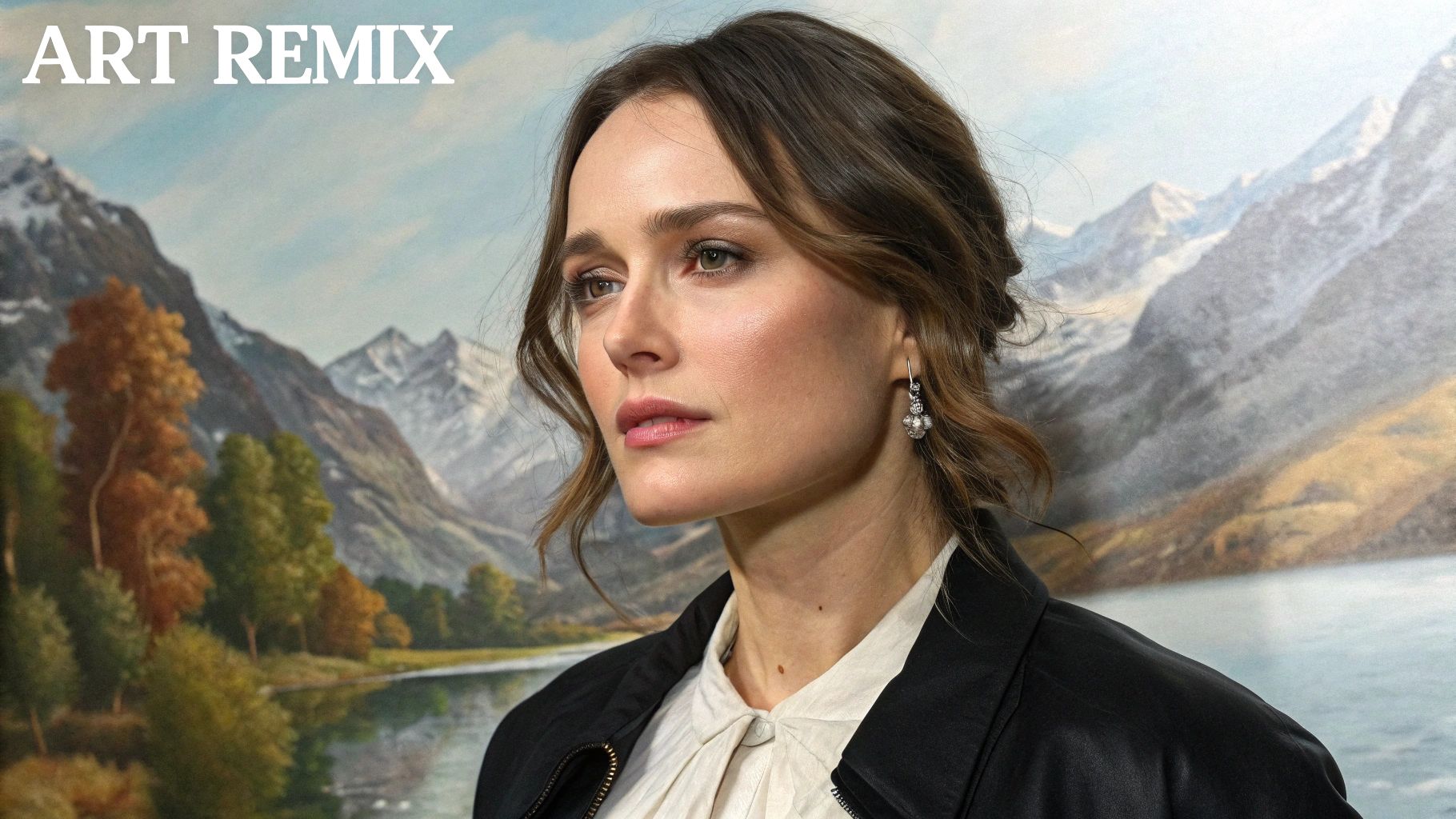
This approach opens up a world of creative possibilities for anyone interested in exploring the intersection of art and artificial intelligence, regardless of their artistic background. Successful implementations range from commercial applications like DeepArt.io, which offers high-quality style transfer services, to mobile apps like Prisma, which brought stylized photo filters to the masses. Other notable examples include Google's Deep Dream Generator, known for its psychedelic and dreamlike outputs, and RunwayML, a platform that offers style transfer as part of its suite of creative AI tools. These diverse applications showcase the versatility and accessibility of neural style transfer.
This method deserves a top spot on any list of machine learning art projects due to its impactful combination of technical innovation and artistic expression. Key features include the core content-style separation mechanism using CNNs, often offering real-time style transfer capabilities. Many implementations support applying multiple styles simultaneously, blending them together, and adjusting their influence with custom style weight parameters. The ability to personalize these parameters empowers users to fine-tune the artistic output to their liking.
Pros:
- Accessibility: Creates unique artistic outputs without requiring artistic skill.
- Customization: Highly customizable style parameters and blending options.
- Availability: Well-documented algorithms with many open-source implementations available.
- Deployment: Can be deployed as web apps, mobile apps, or desktop software.
Cons:
- Computational Cost: Computationally intensive, often requiring GPU acceleration.
- Quality Dependence: Output quality depends heavily on training data and parameter tuning.
- Predictability: May produce predictable results after extended use with the same style.
- Copyright: Potential copyright concerns arise when using famous artworks as style inputs.
Tips for Successful Neural Style Transfer:
- High-Resolution Images: Use high-resolution images for both content and style inputs to achieve better quality outputs.
- Experimentation: Experiment with content-style weight ratios to find the perfect balance between the two.
- Pre-trained Models: Consider using pre-trained models like VGG-19 to reduce training time and improve results.
- Gradual Style Transfer: Implement gradual style transfer techniques for more controlled and refined results.
When and Why to Use Neural Style Transfer:
Neural Style Transfer is ideal for anyone looking to create unique artistic visuals, from personal projects to professional artwork. It's particularly useful for:
- Digital Artists: Exploring new artistic styles and generating creative variations of existing artwork.
- Photographers: Enhancing photos with artistic filters and creating stylized portraits.
- Graphic Designers: Generating unique textures and patterns for design elements.
- Content Creators: Producing eye-catching visuals for social media and other online platforms.
The contributions of Leon Gatys (author of the original Neural Style Transfer paper), the Google DeepMind team, and François Chollet (creator of Keras, which simplifies implementation) have been pivotal in popularizing this technique. Neural Style Transfer stands as a testament to the creative potential unlocked when artificial intelligence and art converge.
2. GANs for Portrait Generation
Generative Adversarial Networks (GANs) have revolutionized the field of image synthesis, particularly in the realm of portrait generation. This technique uses two competing neural networks, the generator and the discriminator, in a kind of digital arms race. The generator attempts to create realistic human faces, while the discriminator tries to differentiate between these generated faces and real ones. This back-and-forth process drives both networks to improve, resulting in increasingly realistic and convincing generated portraits. The generator learns to create images that can fool the discriminator, while the discriminator gets better at identifying the subtle characteristics that distinguish real faces from fakes.
This innovative approach allows for the creation of completely novel faces that don't belong to any real person. Control over various facial attributes like age, gender, expression, and even hair style is also possible, making GANs a powerful tool for artistic expression. These networks can generate infinite variations, opening doors to diverse character creation, virtual avatar design, and much more.
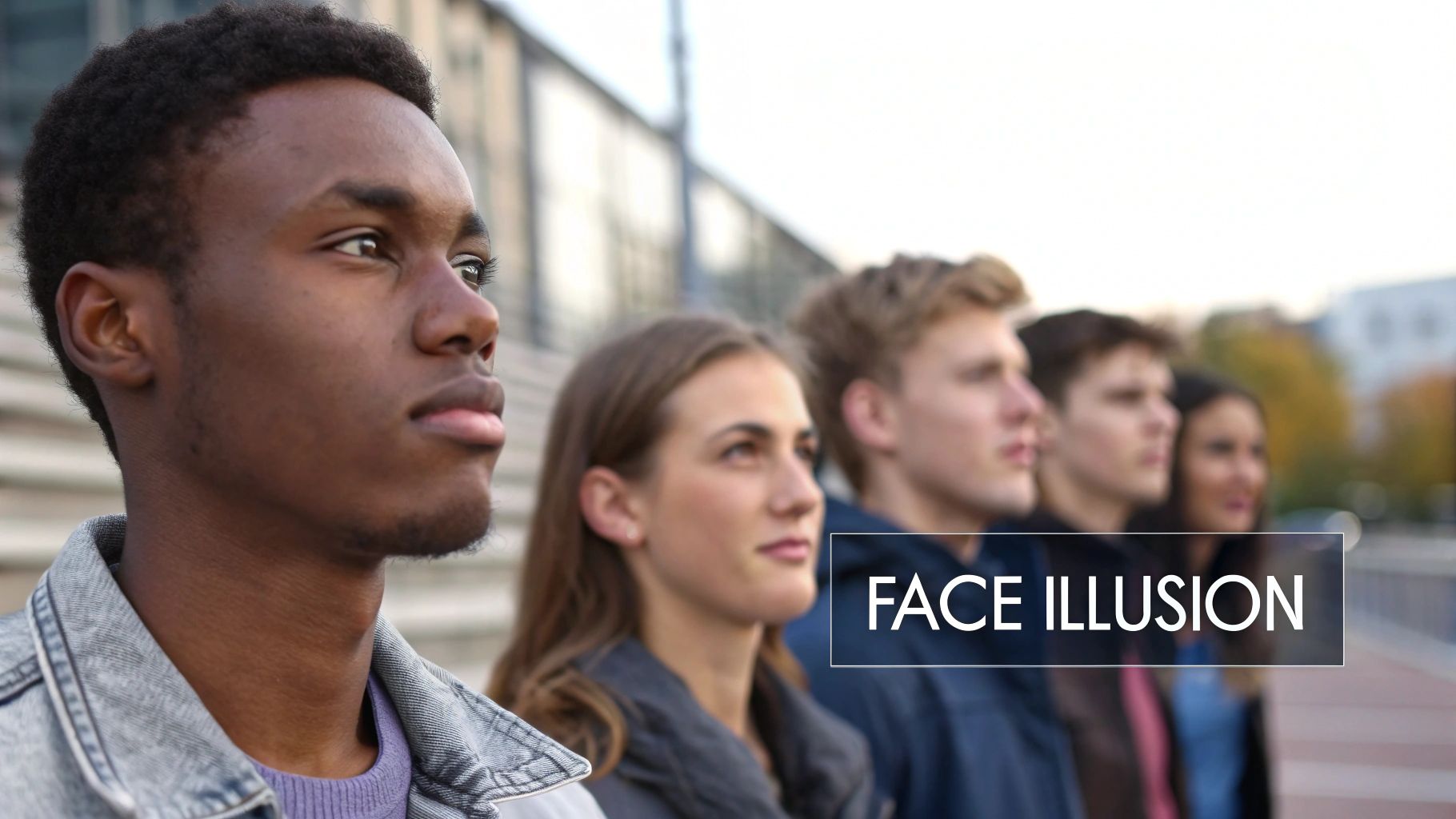
Several successful implementations of GANs for portrait generation have garnered significant attention. NVIDIA's StyleGAN2 and StyleGAN3 are leading examples, renowned for their high-resolution and realistic outputs. Websites like ThisPersonDoesNotExist.com showcase the impressive realism achievable with these models, generating a new, unique face every time the page is refreshed. Tools like GANSpace demonstrate the fine-grained control over facial attributes that GANs offer, enabling users to manipulate and edit generated portraits with precision. Artbreeder takes this a step further, allowing users to mix and interpolate between different generated faces for even more creative possibilities.
When and why to use GANs for portrait generation:
This approach is ideal for projects requiring unique, non-existent human faces. If you need a diverse cast of characters for a game, virtual world, or artistic project, GANs can automate this process. The controllable attributes also make them suitable for targeted image generation, enabling artists and developers to create specific types of faces based on their needs.
Pros:
- Uniqueness: Creates completely new faces, avoiding copyright and privacy issues.
- Variety: Can generate an endless stream of variations.
- Realism: Modern architectures like StyleGAN3 achieve remarkably realistic results.
- Control: Offers control over facial attributes for artistic direction.
Cons:
- Resource Intensive: Training GANs requires substantial computational resources.
- Training Instability: GANs are known for their training instability, requiring careful tuning.
- Ethical Concerns: Potential for misuse in deepfakes and misrepresentation warrants careful consideration.
- Complexity: Achieving high-quality results demands complex hyperparameter tuning.
Tips for using GANs for portrait generation:
- Start with Pre-trained Models: Leverage pre-trained models like StyleGAN2 to save time and resources.
- Progressive Growing: Employ progressive growing techniques to enhance training stability.
- Truncation Tricks: Use truncation tricks to balance output quality and diversity.
- Ethical Considerations: Be mindful of the ethical implications and consider adding watermarks to generated content.
Popularized By: Ian Goodfellow (GAN inventor), NVIDIA Research (StyleGAN team), Phillip Wang (ThisPersonDoesNotExist creator)
GANs for Portrait Generation deserve a place in this list because they represent a significant advancement in creative AI. This technology empowers artists, developers, and innovators to explore new frontiers in visual content creation, blurring the lines between the real and the imagined. By understanding the capabilities and limitations of this powerful technique, you can unlock its potential for your own innovative projects.
3. Interactive Music Generation with ML
Interactive Music Generation with ML empowers users to create original musical pieces without needing traditional musical composition skills. This approach leverages machine learning models, such as Transformers and Recurrent Neural Networks (RNNs), to learn patterns and structures from existing musical data. These models can then generate new compositions in real-time, responding to user input or pre-defined parameters. This dynamic interaction opens up exciting possibilities for both musicians and non-musicians to explore the creative potential of AI.
How it Works:
The core of these systems lies in training a machine learning model on a vast dataset of transcribed music, often in MIDI format due to its structured nature. The model analyzes the musical data, learning melodies, harmonies, rhythms, and other musical elements. Once trained, the model can generate new music based on this learned information. The "interactive" component comes from enabling users to influence the generation process. This can be achieved through various input methods, including:
- MIDI controllers: Users can play notes, chords, and melodies on a MIDI keyboard or other controller, which the model uses as a starting point or continuous input for generating accompanying music.
- Gestures: Motion capture or other gesture recognition technologies can translate physical movements into musical parameters, allowing for more expressive and intuitive control.
- Drawing: Users can draw shapes or patterns that are interpreted as musical instructions, influencing the melody, rhythm, or other aspects of the composition.
- Parameter adjustments: Users can directly manipulate parameters like tempo, key, dynamics, and instrumentation, shaping the overall style and feel of the generated music.
Examples of Successful Implementation:
Several projects demonstrate the potential of interactive music generation:
- Google's Magenta Studio: A suite of tools and models for creating music and art with machine learning. Magenta's projects like Piano Genie offer simplified interfaces for interactive music generation.
- AI Duet: Developed by Yotam Mann and Google Creative Lab, AI Duet allows users to play a melody on a virtual piano, and the AI responds with a harmonizing melody in real-time.
- AIVA (Artificial Intelligence Virtual Artist): A platform that uses AI to compose music for various purposes, including film scoring, advertising, and video games.
- OpenAI's MuseNet and Jukebox: These projects demonstrate the power of large-scale language models to generate music across different styles and with multiple instruments.
Tips for Implementation:
- Use MIDI Data: MIDI data is preferable for training due to its structured representation of musical notes and events.
- Parameter Control: Implement controls for musical parameters like tempo, key, dynamics, and instrumentation to allow users to shape the generated output.
- Hybrid Approach: Combining rule-based systems with ML can help ensure better musical structure and coherence, particularly in longer compositions.
- Intuitive Interfaces: Design user-friendly interfaces that are accessible to non-musicians, encouraging broader participation and exploration.
Pros:
- Enables anyone to create music, regardless of musical training.
- Fosters a unique creative partnership between humans and AI.
- Offers potential for live performances and interactive installations.
- Can serve as a valuable tool for musicians seeking inspiration or new compositional ideas.
Cons:
- Maintaining musical coherence over longer pieces can be challenging.
- Fine-tuning is often required to avoid generic-sounding results.
- Training requires large datasets of transcribed music.
- Real-time generation can be computationally demanding.
Why This Approach Deserves Its Place in the List:
Interactive Music Generation with ML represents a significant advancement in the intersection of art and technology. It democratizes the process of music creation, providing new avenues for artistic expression and exploration. By allowing for real-time interaction and feedback, it transforms the relationship between humans and AI, establishing a dynamic partnership that can lead to unexpected and inspiring musical outcomes. This approach holds immense potential for revolutionizing how music is created, experienced, and shared, making it a crucial area of exploration for anyone interested in machine learning art projects.
Popularized By:
Key figures in this field include Douglas Eck (Google Magenta lead), François Pachet (Sony CSL AI music researcher), OpenAI's music generation team, and David Cope (early algorithmic composition pioneer).
4. ML-Powered Creative Writing Assistant
Struggling with writer's block? Looking for fresh story ideas or help fleshing out your characters? An ML-powered creative writing assistant might be just what you need. This innovative application of machine learning leverages large language models (LLMs) to assist in various aspects of the writing process, acting as a collaborative partner that responds to your input with contextually relevant text. From generating initial concepts and developing plotlines to crafting compelling character descriptions and even emulating the style of your favorite authors, these tools offer a powerful new way to approach creative writing.
These assistants work by processing vast amounts of text data, learning patterns, and stylistic nuances. When you provide a prompt, the model uses this knowledge to predict and generate text that fits the context, effectively continuing your narrative, suggesting dialogue, or even creating entire scenes. Learn more about ML-Powered Creative Writing Assistant and discover how these tools are transforming the creative landscape.
Features and Benefits:
- Text Completion and Suggestion: These tools excel at predicting the next word or phrase, making them excellent for overcoming writer's block and keeping the creative flow going. They can also suggest alternative phrasings or directions for your narrative.
- Character and Setting Generation: Need a compelling villain or a vibrant setting? ML assistants can generate detailed descriptions, backstories, and even unique quirks for your characters and environments.
- Plot Development Assistance: Stuck on a plot point? These tools can suggest twists, turns, and unexpected developments to keep your story engaging.
- Style Emulation: Want to write like Hemingway or capture the tone of a gothic novel? Some models can analyze and emulate the writing style of specific authors or genres.
- Dialogue Generation: Crafting realistic dialogue can be challenging. These assistants can generate conversations between characters, taking into account their personalities and the context of the scene.
Examples of Successful Implementation:
- NovelAI: Specializes in assisting with fiction writing, offering various tools for generating story elements and refining narratives.
- AI Dungeon: Known for its dynamic narrative generation capabilities, allowing users to collaboratively create and explore interactive stories.
- Sudowrite: Provides a suite of creative writing tools, including brainstorming assistance, style suggestions, and plot development features.
- ShortlyAI: Designed for collaborative storytelling, allowing users to work with the AI to develop and expand their narratives.
Pros:
- Helps Overcome Writer's Block: Provides prompts and suggestions to spark creativity when you're feeling stuck.
- Suggests Unexpected Narrative Directions: Can introduce novel ideas and plot twists you might not have considered.
- Can Adapt to User's Writing Style Over Time: Some models can learn your preferences and generate text that aligns more closely with your style.
- Enables Rapid Prototyping of Story Concepts: Quickly explore different ideas and narrative possibilities before committing to a full draft.
Cons:
- Risk of Plagiarism or Generating Unoriginal Content: Because these models are trained on existing text, there's a potential for generating content that is too similar to existing works.
- May Produce Inconsistent Narratives Without Human Oversight: The AI may not always maintain narrative coherence or character consistency, requiring careful editing and revision.
- Heavy Reliance Might Diminish Human Creativity: Over-dependence on the tool could potentially stifle your own creative thinking and development.
- Ethical Considerations Around AI Authorship: Raises questions about the role of AI in the creative process and the ownership of generated content.
Tips for Using ML-Powered Creative Writing Assistants:
- Fine-tune Models on Specific Genres: Training the model on a specific genre (e.g., science fiction, fantasy, romance) can lead to more relevant and stylistically appropriate output.
- Implement Controls for Narrative Coherence and Continuity: Use features or techniques to ensure that the generated text aligns with the overall narrative arc and character development.
- Use Temperature Settings to Control Creativity vs. Coherence: Adjust the "temperature" parameter of the model to control the randomness and creativity of the generated text. Higher temperatures result in more creative but potentially less coherent output.
- Design the Interface to Encourage Human Creativity Rather Than Replace It: The tool should be seen as a collaborative partner, enhancing rather than replacing human creativity.
Popularized By:
The development and popularization of ML-powered creative writing assistants can be attributed to several key figures and organizations, including OpenAI's GPT models, Nick Walton (creator of AI Dungeon), Robin Sloan (experimenter with AI writing tools), and Janelle Shane (AI humor writer). These pioneers have pushed the boundaries of what's possible with AI and opened up exciting new avenues for creative expression.
This approach deserves its place on the list because it represents a paradigm shift in how we think about creative writing. It offers powerful new tools for aspiring and experienced writers alike, opening doors to new possibilities and pushing the boundaries of storytelling. However, it's crucial to approach these tools with a critical eye, understanding both their potential and their limitations. By using them thoughtfully and responsibly, we can harness the power of AI to enhance and expand our creative endeavors.
5. Artistic Image-to-Image Translation
Artistic image-to-image translation represents a fascinating application of machine learning in art, allowing for the transformation of images from one domain to another. This goes beyond simply applying a stylistic filter, as seen in traditional style transfer. Instead, it aims to learn the underlying mapping between two distinct visual domains, enabling the generation of entirely new images that maintain the content of the original while adhering to the aesthetics of the target domain. Imagine turning a photograph into a realistic painting, a sketch into a photorealistic image, or a daytime scene into a nighttime one – these are all achievable through image-to-image translation.
This technique leverages powerful machine learning models, most notably Generative Adversarial Networks (GANs), particularly conditional GANs. These networks consist of two competing components: a generator that learns to create images in the target domain, and a discriminator that learns to distinguish between real images from the target domain and fake images produced by the generator. Through this adversarial training process, the generator progressively improves its ability to create convincing transformations.
How it Works:
The core principle is to train a model that learns the mapping between two image domains. This can be achieved through paired or unpaired training:
- Paired Training: Requires a dataset of images where each image in the source domain has a corresponding image in the target domain. For example, a dataset of photos paired with their corresponding anime versions.
pix2pixis a prominent example of a model using this approach. - Unpaired Training: Doesn't require direct image pairings. Instead, it learns the underlying style and characteristics of each domain independently.
CycleGANis a groundbreaking example that uses cycle consistency – translating an image from domain A to B and then back to A – to ensure the content is preserved.
Examples of Successful Implementation:
- pix2pix: Excels at paired image translation tasks, such as converting building facades from label maps to photorealistic images, or sketches to cat photos.
- CycleGAN: Enables impressive unpaired translations, like turning horses into zebras, summer landscapes into winter scenes, or photos into paintings.
- GANILLA: Focuses specifically on translating photos into illustrations while retaining line art details and vibrant colors.
- AnimeGAN/2: Specifically designed for photo-to-anime conversion, offering high-quality results that capture the characteristic anime aesthetic.
Actionable Tips:
- Paired Datasets: If possible, use paired datasets as they generally lead to better training results and more accurate translations.
- Attention Mechanisms: Incorporating attention mechanisms into the model architecture can help preserve important details and improve the quality of generated images.
- Progressive Training: Training at progressively higher resolutions can help generate sharper and more detailed outputs.
- User Controls: Consider implementing user controls for parameters like transformation intensity, allowing for greater artistic flexibility.
When and Why to Use This Approach:
Image-to-image translation is ideal for projects that require consistent and automated transformation of images across a specific domain. It's particularly useful when:
- Creating datasets: Generating variations of existing images for data augmentation.
- Visualizing concepts: Exploring how scenes would look under different conditions or styles.
- Artistic expression: Transforming photos into artistic mediums like paintings or illustrations.
- Entertainment and gaming: Creating unique character designs or generating environment variations.
Pros:
- Consistent transformations across an entire domain.
- Can work with unpaired datasets.
- Versatile applications in various artistic contexts.
- Enables visualization of scenes in different styles or conditions.
Cons:
- Domain-specific training required for each transformation type.
- May struggle with preserving identity or specific details.
- Complex architectures require significant computational resources.
- Challenging to balance transformation strength and content preservation.
Popularized By:
Jun-Yan Zhu (CycleGAN creator), Phillip Isola (pix2pix creator), Berkeley AI Research lab, Yanghua Jin (AnimeGAN developer).
Image-to-image translation earns its place on this list due to its transformative power and wide-ranging artistic applications. It pushes the boundaries of creative expression by enabling artists and developers to explore new visual possibilities and seamlessly bridge the gap between different artistic domains. While it presents some technical challenges, the potential for innovation and creative exploration makes it a powerful tool for machine learning art projects.
6. Interactive Dance and Movement Generation
Interactive dance and movement generation represents a fascinating intersection of artificial intelligence and the performing arts. This approach uses computer vision to analyze human movement and translate it into corresponding dance movements, visualizations, or even music in real-time. This creates a dynamic feedback loop between the performer and the AI, blurring the lines between human creativity and computational generation. Imagine a dancer whose movements trigger swirling visuals or a musician whose gestures conduct a symphony of synthesized sounds – this is the potential of interactive movement generation.
How it Works:
At the core of these systems lies real-time body pose estimation. Technologies like Google's PoseNet and MoveNet track key body joints, allowing the system to understand the performer's posture and movement. This data then feeds into algorithms that predict and generate subsequent movements, often drawing on vast datasets of existing dance styles. The generated movements can be visualized on a screen, projected onto the performer, or used to control other elements of the performance, such as lighting and sound. Advanced systems even offer style transfer between different dance forms, enabling a performer trained in ballet, for instance, to explore hip-hop movements through the AI's interpretation.
Examples in Action:
Several projects showcase the potential of this technology:
- AI Choreographer by Universal Everything: This project uses AI to generate unique choreographic sequences, offering a glimpse into the future of dance creation.
- Wayne McGregor's Living Archive: This ongoing project uses machine learning to analyze McGregor's extensive choreographic archive, generating new movements inspired by his signature style. McGregor, a prominent figure in the field, has significantly popularized the use of AI in choreography.
- Bill T. Jones' "Ghostcatching": This digital dance installation captures and reconstructs dancers' movements as ghostly digital figures, creating a poignant exploration of presence and absence.
- Google Arts & Culture Lab: This lab actively explores the intersection of art, culture, and technology, including projects focusing on movement and AI. Alongside Merce Cunningham, a pioneer of dance and technology, and Refik Anadol, a media artist known for his work with movement data, Google Arts & Culture Lab contributes significantly to the field.
Tips for Implementation:
- Transfer Learning: Leverage pre-trained pose estimation models like PoseNet and MoveNet to jumpstart your project.
- Smoothing Algorithms: Implement smoothing algorithms to mitigate jitter and noise in the predicted movements, creating a more fluid and natural experience.
- Low Latency Processing: Design your processing pipeline for minimal latency to ensure real-time responsiveness, which is crucial for interactive performance.
- Intuitive Visualizations: Develop clear and intuitive visualizations of the AI's interpretation of movement, enabling both the performer and the audience to understand the interaction.
Pros and Cons:
Pros:
- Novel Interactive Performances: Opens up exciting new possibilities for interactive and dynamic performances.
- Democratization of Choreography: Provides AI-powered assistance for choreographic creation, making the process more accessible to a wider range of individuals.
- New Forms of Human-Computer Interaction: Enables innovative forms of human-computer interaction through the language of movement.
- Dance Education and Training: Offers valuable tools for dance education and training, allowing dancers to explore new styles and refine their technique.
Cons:
- Specialized Hardware: May require specialized hardware like motion capture systems, which can be expensive and complex to set up.
- Latency Issues: Latency in the system can disrupt the real-time experience and hinder the performer's ability to interact seamlessly with the AI.
- Limited Training Data: Training data for specific or niche dance styles may be limited, impacting the AI's ability to accurately capture and generate those movements.
- Nuanced Movement Challenges: Accurately capturing the nuances and subtleties of human movement remains a challenge, especially for highly complex or expressive movements.
When and Why to Use This Approach:
This approach is ideal for artists, choreographers, and developers interested in exploring the creative potential of AI in the context of dance and movement. It’s particularly relevant for projects aiming to create interactive performances, generate novel choreographic sequences, or develop new forms of human-computer interaction. Learn more about Interactive Dance and Movement Generation
This item deserves its place in the list because it represents a cutting-edge application of machine learning in the arts, pushing the boundaries of creative expression and human-computer interaction. It showcases the potential of AI not just as a tool for automation but as a collaborative partner in the creative process.
7. Text-to-Image Art Generator
Text-to-image generation represents a revolutionary leap in the field of digital art, empowering users to conjure visuals simply by describing them in words. This technology leverages sophisticated deep learning models, specifically diffusion models and generative adversarial networks (GANs), to interpret natural language prompts and translate them into corresponding images. These models are trained on massive datasets of images and text, learning the complex relationships between words and visual elements. The process involves understanding the semantics of the prompt, identifying relevant visual concepts, and then generating a novel image that embodies the described scene, objects, and style.
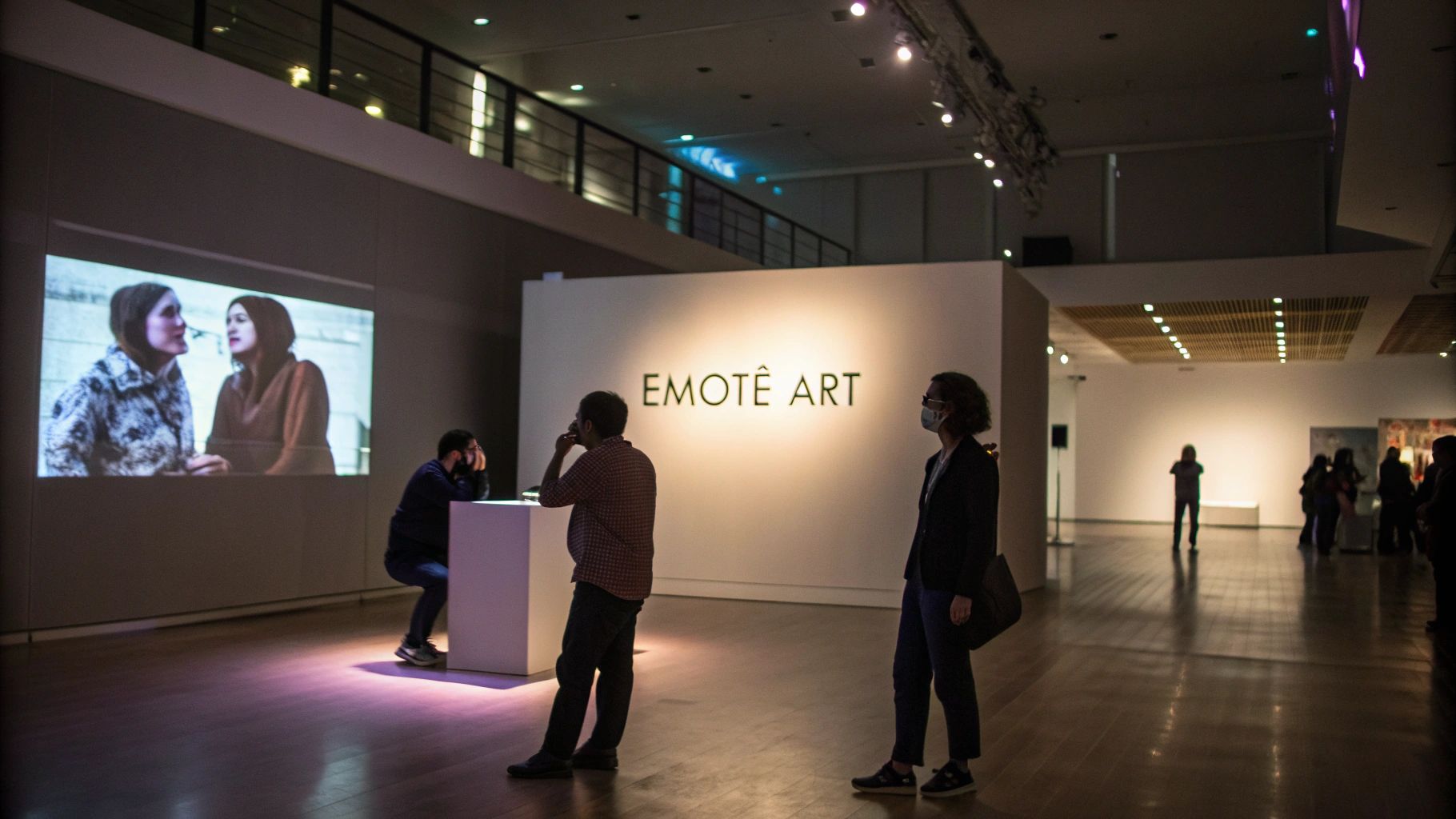
Several platforms have successfully implemented this technology, democratizing artistic creation for a broad audience. DALL-E 2 by OpenAI, Midjourney, and Stable Diffusion by Stability AI are prime examples, offering users intuitive interfaces and powerful generation capabilities. These platforms allow for generating high-resolution images in a variety of artistic styles, controlled through text modifiers and iterative refinement. Google's Imagen and Parti systems are also making strides in this field, showcasing the rapid advancements in text-to-image technology. This approach earns its place on this list because it fundamentally changes the way we create and interact with visual art, opening doors for innovative applications across various fields.
This technology is incredibly useful for rapid visualization of concepts and ideas. Whether you're a designer prototyping a new product, a writer seeking visual inspiration, or an educator crafting engaging learning materials, text-to-image generation can bring your visions to life quickly and efficiently. It's particularly empowering for those without traditional art skills, providing a new avenue for visual expression. Specific features like natural language processing, high-resolution image generation, style control through text prompts, iterative refinement, and diverse artistic style capabilities make it a versatile tool for creative exploration.
Tips for Effective Text-to-Image Generation:
- Detailed Prompts: The more specific and descriptive your prompt, the better the results. Instead of "a cat," try "a fluffy ginger cat sitting on a windowsill, bathed in warm sunlight."
- Prompt Engineering: Learning prompt engineering techniques allows for finer control over the generated output. This involves using specific keywords, modifiers, and even artistic style references to guide the AI.
- Inpainting: Combine text-to-image generation with inpainting tools to selectively regenerate specific portions of an image, enabling detailed editing and revisions.
- Negative Prompts: Utilize negative prompts to specify elements you don't want to appear in the image, further refining the output.
Pros:
- Intuitive interface accessible to anyone with language skills.
- Democratizes visual creation, empowering non-artists.
- Endless possibilities through diverse prompts.
- Rapid visualization of concepts and ideas.
Cons:
- Achieving precise control over details can be challenging.
- Ambiguous prompts can lead to misinterpretations.
- High-quality image generation can be computationally intensive.
- Potential copyright issues surrounding generated content require careful consideration.
While challenges remain in achieving perfect control and navigating copyright implications, text-to-image generation represents a powerful and accessible tool for artistic expression and visual communication, promising to reshape the creative landscape for years to come.
8. Interactive Installation with Emotion Recognition
Interactive installations powered by emotion recognition technology offer a compelling new frontier in artistic expression. These projects leverage machine learning to analyze human emotions—detected through facial expressions, voice analysis, or even biometric data—and translate them into dynamic visual or auditory art experiences. This creates a powerful feedback loop where the artwork adapts and evolves in real-time based on the emotional state of the viewer, resulting in a deeply personal and engaging encounter.
How it Works:
At the core of these installations is an emotion recognition system, typically trained on vast datasets of facial expressions, vocal intonations, and other physiological signals. When a participant interacts with the installation, their emotional state is analyzed by the system. This data then informs the artistic output, triggering changes in lighting, sound, visuals, or even the physical structure of the installation itself. For example, a joyful expression might trigger a vibrant burst of color, while a look of sadness could shift the ambiance to a more subdued palette.
Examples of Successful Implementation:
- Refik Anadol's "Machine Hallucination" series uses machine learning to interpret and transform architectural spaces into immersive, data-driven environments that react to the collective emotional state of the audience.
- TeamLab's immersive installations, such as "Forest of Resonating Lamps," create interactive environments where light and sound respond to visitors' movement and inferred emotional states, fostering a sense of collective participation and wonder.
- "The Treachery of Sanctuary" by Chris Milk uses computer vision to track viewers' silhouettes, allowing them to interact with projected shadows and explore themes of birth, death, and transformation in a deeply personal way. Though not explicitly using emotion recognition, it exemplifies interactive engagement based on viewer input.
- Affectiva, a company specializing in emotion AI, has collaborated on various art projects utilizing their technology for emotion-aware interactive experiences.
Tips for Implementation:
- Multi-Modal Sensing: Combine multiple data sources (facial expression, voice, biometric data) for more robust and accurate emotion detection.
- Ambiguity and Nuance: Design the system to respond gracefully to ambiguous emotional states or mixed signals. Avoid overly simplistic or binary interpretations.
- Cultural Sensitivity: Consider cultural variations in emotional expression to avoid misinterpretations and ensure inclusivity.
- Transparency and Understanding: Clearly communicate to participants how their emotions are being detected and used to influence the artwork. This transparency builds trust and enhances engagement.
When and Why to Use This Approach:
This approach is ideal for projects aiming to:
- Create deeply personal and engaging art experiences.
- Explore the interplay between human emotion and technology.
- Foster empathy and emotional understanding.
- Develop interactive installations that respond dynamically to audience participation.
Pros:
- Creates deeply personal art experiences.
- Engages viewers on an emotional level.
- Enables new forms of empathic interaction with technology.
- Can be educational about emotional awareness.
Cons:
- Privacy concerns with emotion detection.
- Accuracy limitations in diverse populations.
- Cultural differences in emotional expression.
- Technical complexity in deployment.
This approach deserves a place on this list because it pushes the boundaries of artistic expression by integrating cutting-edge technology with the deeply human realm of emotions. It offers a glimpse into the future of art, where technology facilitates profound and personalized interactions between artwork and viewer, opening up exciting possibilities for creative exploration and emotional connection. While navigating the ethical considerations related to privacy and data sensitivity is crucial, the potential of emotion-aware interactive art to enrich human experience is immense.
9. AI-Augmented Drawing and Painting Tools
AI-augmented drawing and painting tools represent a fascinating intersection of art and artificial intelligence. These tools aren't about replacing the artist but rather empowering them with intelligent assistants that enhance and expedite the creative process. Imagine a digital brush that predicts your next stroke, a color palette that suggests harmonious shades, or a tool that automatically refines your sketch into a polished artwork. This is the power of AI augmentation in the digital art space.
These tools work by leveraging various machine learning models. Some utilize deep learning to analyze vast datasets of images and artistic styles, enabling features like style transfer, auto-coloring, and content-aware fill. Others employ algorithms that understand perspective, proportions, and anatomy, offering corrections and suggestions as you draw. Still others focus on predictive modeling to anticipate the artist's intentions, streamlining tasks like brush stroke completion and line smoothing.
Features and Benefits:
- Intelligent brush stroke prediction and completion: AI can analyze your current stroke and predict its trajectory, allowing for smoother lines and easier creation of complex curves.
- Style-consistent auto-fill and coloring: Based on the existing artwork, AI can automatically fill areas with colors and textures that maintain stylistic consistency.
- Perspective and proportion correction: AI can analyze your drawing and suggest corrections to perspective and proportions, helping to create more realistic and believable compositions.
- Reference-based drawing assistance: Some tools allow you to upload reference images, and the AI can assist in translating elements from the reference into your drawing.
- Sketch-to-finished-art conversion: Transform rough sketches into polished artwork with AI assistance in refining lines, adding details, and applying professional-grade finishes.
Examples of Successful Implementation:
- NVIDIA Canvas: This software uses AI to transform simple brushstrokes into realistic landscapes, allowing users to paint with materials like grass, clouds, and water.
- Google's AutoDraw: Recognizes sketches and suggests refined vector versions, making it easy to create clean and polished illustrations.
- Adobe Sensei features in Photoshop and Illustrator: Integrated AI features within Adobe's flagship products offer powerful tools for tasks like object selection, content-aware fill, and style transfer.
- Clip Studio Paint's AI-assisted tools: Offers features like automatic coloring, line art extraction, and pose estimation, streamlining the comic and manga creation process.
Pros:
- Enhances rather than replaces human creativity: These tools act as collaborators, augmenting the artist's skills and vision without taking over the creative process.
- Lowers technical barriers to artistic expression: AI assistance can make complex artistic techniques more accessible to beginners and hobbyists.
- Speeds up tedious aspects of the creative process: Tasks like coloring, line cleaning, and perspective correction can be significantly accelerated with AI.
- Enables new artistic techniques not possible manually: AI opens up possibilities for exploring new artistic styles and techniques that would be difficult or impossible to achieve by hand.
Cons:
- Risk of homogenizing artistic styles: Over-reliance on certain AI tools might lead to a convergence of artistic styles, potentially diminishing individuality.
- May create dependency on AI assistance: Artists might become overly reliant on the tools, hindering the development of their own skills and artistic voice.
- Potential learning curve for professional artists: Adapting to new AI-powered workflows might require a learning curve for established artists.
- Balancing assistance vs. artistic control: Finding the right balance between AI assistance and maintaining artistic control can be a challenge.
Tips for Utilizing AI-Augmented Drawing Tools:
- Design intuitive interfaces that feel like natural extensions of traditional tools: Seamless integration with existing workflows is crucial for adoption.
- Allow variable levels of AI assistance based on user preference: Give users control over the intensity of the AI's influence.
- Implement undo/redo capabilities for AI suggestions: Ensure that artists can easily revert changes made by the AI.
- Create tools that teach artistic principles while assisting: Integrate educational elements to help users learn and improve their artistic skills.
Why This Deserves Its Place in the List:
AI-augmented drawing and painting tools represent a significant advancement in digital art, bridging the gap between traditional and digital mediums. By empowering artists with intelligent assistance, these tools unlock new levels of creativity and efficiency. They are democratizing art by lowering technical barriers and opening up exciting new possibilities for both seasoned professionals and aspiring artists. This approach fosters a symbiotic relationship between human creativity and artificial intelligence, marking a new chapter in the evolution of artistic expression.
10. Generative Audio-Visual Synesthesia
Generative Audio-Visual Synesthesia represents a fascinating frontier in machine learning art, blurring the lines between sound and sight. This approach leverages AI to create cross-modal experiences, translating between the audio and visual domains in compelling and often unexpected ways. Imagine music that paints vibrant landscapes on a screen, or images that spontaneously generate their own unique soundscapes – that's the essence of generative audio-visual synesthesia. These systems can operate in several ways, from generating visuals based on musical input, to creating audio from images, and even facilitating interactive relationships between color, shape, and sound, resulting in genuinely synesthetic artistic experiences. This powerful approach has the potential to revolutionize artistic expression, opening up new avenues for creativity and accessibility.
This type of project functions by training machine learning models on paired audio-visual data. For instance, a model might learn the correlations between certain musical frequencies and specific colors or shapes. Once trained, these models can then generate new visuals in response to live music, or produce sound based on the characteristics of an image. Advanced techniques can even preserve emotional qualities during translation, ensuring that the feeling conveyed by a piece of music is reflected in the visuals it generates, and vice-versa. Learn more about Generative Audio-Visual Synesthesia to explore how frameworks like Three.js can be used for visualization.
The features of generative audio-visual synesthesia projects extend beyond simple spectrographic visualizations. They include real-time audio visualization, image-to-sound conversion with semantic understanding, and even cross-modal style transfer. Imagine applying the visual style of Van Gogh to a jazz composition! Interactive control over both audio and visual elements further enhances the artistic possibilities, allowing artists to sculpt their creations in real-time. Emotion-preserving translations between modalities add another layer of depth, ensuring that the generated outputs resonate emotionally with the inputs.
Successful implementations of this concept are becoming increasingly prominent. Google's DeepDream experiments have explored the psychedelic intersection of audio and visuals. The Synesthesia Lab at MIT Media Lab pushes the boundaries of sensory perception through research and artistic exploration. Brian Eno, a pioneer in generative music, incorporates audio-visual elements in his installations, while Holly Herndon's groundbreaking "Proto" project utilizes an AI voice and accompanying visuals to create a unique sonic and visual experience. These examples demonstrate the breadth and depth of possibilities offered by generative audio-visual synesthesia.
Pros:
- Creates immersive multi-sensory experiences
- Enables new forms of artistic expression across domains
- Can make visual art accessible to visually impaired people
- Potential therapeutic applications for synesthetes
Cons:
- Subjective nature of cross-modal mappings
- Computational demands of real-time processing
- Challenge of creating meaningful rather than arbitrary translations
- Technical complexity involving multiple ML domains
Tips for Aspiring Vibe Coders and Artists:
- Study natural synesthetic associations: Research how individuals with synesthesia experience the world to inform your cross-modal mappings.
- Dimensionality reduction: Use techniques like PCA or t-SNE to find meaningful correlations between audio and visual data.
- Optimize for real-time performance: Carefully select and optimize your machine learning models for efficient real-time processing.
- Intuitive interfaces: Design user-friendly interfaces for controlling cross-modal parameters and interactions.
Generative audio-visual synesthesia deserves its place on this list because it represents a significant leap forward in artistic expression and accessibility. It empowers artists to explore new creative territories, bridging the gap between sound and sight in ways previously unimaginable. For developers and digital artists, it provides a challenging yet rewarding field of exploration, demanding both technical expertise and artistic vision. This approach opens up a new realm of possibilities for creating immersive, multi-sensory experiences that can captivate audiences and push the boundaries of art and technology. Pioneers like Brian Eno, Holly Herndon, Ryoichi Kurokawa, and Carsten Nicolai have paved the way, demonstrating the transformative potential of this exciting new medium.
Top 10 ML Art Projects: Feature Comparison
| Project Title | 🔄 Complexity | ⚡ Resources | 📊 Outcomes | ⭐ Advantages / 💡 Use Cases |
|---|---|---|---|---|
| Neural Style Transfer Art Generator | Moderate-High – tuning and real-time processing required | High – GPU acceleration recommended | Unique artistic renditions by blending content and style | Customizable outputs; user-friendly for non-artists; deployable across platforms |
| GANs for Portrait Generation | High – GAN training stability and hyperparameter tuning | Very High – extensive GPU use and large datasets | Hyper-realistic, controllable synthetic human faces | Infinite variations; state-of-the-art realism; suitable for artistic and commercial portrait generation |
| Interactive Music Generation with ML | Moderate – integration of ML with real-time interaction | Moderate to High – dataset heavy and real-time processing | Unique, interactive music compositions | Breaks musical skill barriers; creative partner for live performances; adaptive to user inputs |
| ML-Powered Creative Writing Assistant | Moderate – leveraging API integration and fine-tuning | Moderate – cloud or locally fine-tuned models | Enhanced storytelling and idea generation | Overcomes writer’s block; rapid ideation and collaborative writing; adaptive to user style |
| Artistic Image-to-Image Translation | High – complex conditional models and domain mapping | High – computationally demanding with paired/unpaired training | Consistent transformation across artistic domains | Versatile in style conversion; ideal for art editing, design visualization; consistent domain conversion |
| Interactive Dance and Movement Generation | High – real-time pose estimation and motion synthesis | High – requires specialized hardware and sensors | Interactive, responsive dance and movement generation | Merges human performance with AI; democratizes choreography; ideal for live interactive installations |
| Text-to-Image Art Generator | High – complex text-to-image deep learning modeling | Very High – computationally intensive for high-res outputs | Artistic images generated directly from textual descriptions | Intuitive and accessible for non-artists; rapid concept visualization; ideal for creative and conceptual brainstorming |
| Interactive Installation with Emotion Recognition | High – multi-modal sensing and adaptive response design | Moderate to High – varied sensors and real-time data processing | Personalized, adaptive art experiences responding to emotion | Engages audiences on an emotional level; innovative public installations; educational on emotional awareness |
| AI-Augmented Drawing and Painting Tools | Moderate – integration of intelligent assistance with UI | Moderate – desktop/tablet integration and cloud support | Enhanced creative process with automated assistance | Augments artistic techniques; speeds up tedious tasks; intuitive interfaces fit well in professional creative workflows |
| Generative Audio-Visual Synesthesia | Very High – complex cross-modal mapping and real-time processing | Very High – intensive processing across audio and visual domains | Immersive multi-sensory art experiences | Innovative cross-domain creativity; immersive and therapeutic potential; ideal for experimental and performance art |
The Future is Creative: Exploring the Intersection of Art and AI
From neural style transfer that reimagines classic paintings to interactive installations that respond to human emotions, the projects explored in this article demonstrate the transformative power of machine learning in the realm of art. We've seen how AI can be used not just as a tool, but as a collaborative partner, pushing the boundaries of creative expression in music, writing, visual art, and even dance. Key takeaways include understanding the diverse applications of techniques like GANs, neural networks, and image-to-image translation, as well as the potential of AI to enhance interactivity and personalization in artistic experiences.
Mastering these concepts and approaches isn't just about technical proficiency; it's about unlocking a new dimension of artistic possibility. By understanding how these technologies work, artists and developers can leverage them to create entirely new art forms, explore complex themes, and connect with audiences in profound ways. Furthermore, these skills are increasingly valuable in a rapidly evolving creative landscape. The convergence of AI and no-code tools is further democratizing the creative process. Tools like AI-powered no-code platforms are making these powerful technologies accessible to a wider audience, empowering individuals with or without traditional coding experience to bring their creative visions to life. This democratization will undoubtedly lead to an explosion of new and exciting artistic endeavors.
As we move forward, the intersection of art and AI promises to become even more dynamic and inspiring. Whether you're a seasoned coder, a digital artist, or simply curious about the future of creativity, now is the time to explore, experiment, and contribute to this burgeoning field. The only limit is your imagination.