The Power of Cross Functional Teams: Beyond Traditional Silos
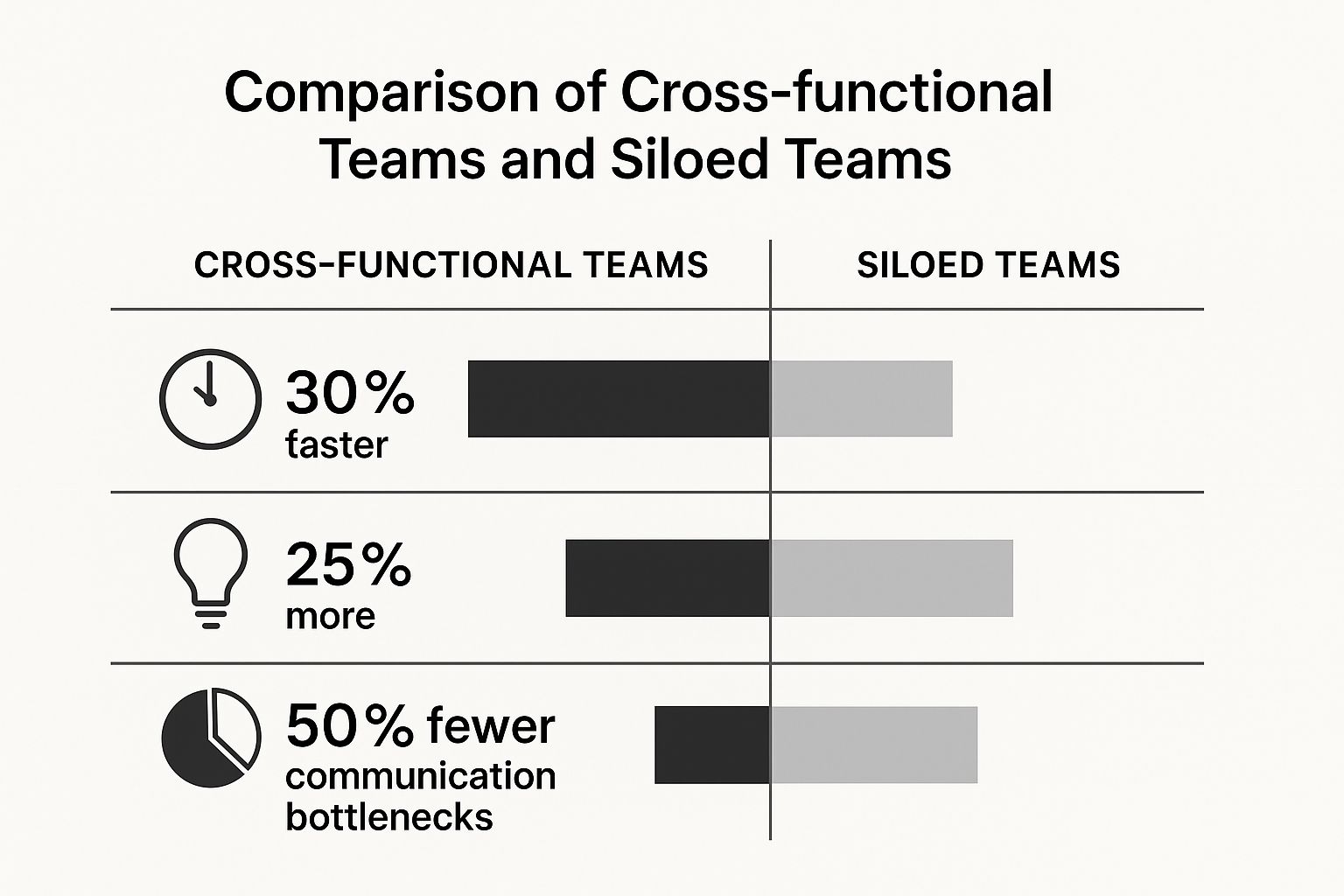
The infographic above shows how cross-functional teams outperform siloed groups on three fronts: 30% faster time-to-market, 25% more innovation output, and 50% fewer communication bottlenecks. These figures illustrate the value of removing departmental walls and encouraging collaboration. Organizations that adopt this structure can respond more quickly to market shifts, design creative solutions, and simplify their processes. To explore how teams achieve these gains, read more about Cross-Functional Collaboration.
Below is a comparison that highlights the main differences between cross-functional teams and traditional departmental structures.
Table Introduction: This table outlines key aspects where cross-functional teams differ from traditional hierarchies, helping you decide which structure best fits your organization’s goals.
| Aspect | Cross Functional Teams | Traditional Teams |
|---|---|---|
| Time to Market | 30% Faster deployments due to parallel workflows | Sequential handoffs slow down delivery |
| Innovation Output | 25% More creative ideas from diverse skillsets | Innovation often confined to an R&D department |
| Communication | 50% Fewer bottlenecks with open channels | Frequent information silos |
| Decision-Making | Decentralized, collaborative | Centralized, top-down |
| Adaptability | Rapid adjustment to feedback and market changes | Slower to pivot |
| Focus | Project-based with end-to-end accountability | Function-based, department-centric |
| Shared Ownership | High alignment on shared goals | Departments pursue separate KPIs |
Table Conclusion: Cross-functional teams excel in speed, creativity, and responsiveness, while traditional structures rely on specialization and hierarchical control. Choosing the right model depends on your need for agility versus functional depth.
Why Cross-Functional Teams Matter
Cross-functional teams blend expertise from marketing, engineering, finance and other areas to tackle a single objective. This mix of perspectives leads to a more holistic approach to problem-solving.
By involving marketers who understand customer pain points, engineers who can build solutions and finance professionals who manage budgets, teams produce more well-rounded outcomes. This collaboration also:
- Breaks down silos and improves transparency
- Speeds up decision-making by reducing handoffs
- Encourages shared responsibility for results
According to Deloitte, by 2024, 71% of established companies and 55% of early-stage firms use cross-functional teams to drive projects. Find more detailed statistics on team collaboration here.
Breaking Down Barriers: From Silos to Synergy
Traditional departments often work in isolation, which can cause delays and misunderstandings. Cross-functional teams intentionally remove these barriers by creating direct lines of communication.
When marketing flags a new customer requirement, product developers can immediately integrate that feedback into the design. This instant transfer of insights:
- Reduces response time for changing requirements
- Minimizes rework caused by late or unclear feedback
- Builds a culture of continuous learning across functions
Unlocking the Power of Diversity
One of the greatest strengths of cross-functional teams is their variety of backgrounds and experiences. Bringing together different skillsets fosters creative thinking and drives breakthrough solutions.
Team members gain a broader view of how their work impacts the organization, which often leads to higher engagement and a sense of shared purpose. Benefits include:
- Multiple viewpoints that prevent groupthink
- Faster identification of potential roadblocks
- Increased empathy as members learn each other’s roles
By harnessing diverse talents, companies can deliver solutions that are both innovative and practical.
Navigating the Unique Challenges of Cross-Functional Leadership

Leading a team across different departments requires a special kind of leadership. Cross-functional teams face unique obstacles, from simple miscommunications to complex conflicts arising from differing departmental priorities. For these teams to thrive, leaders must proactively address these challenges. Let's explore some of the most common hurdles.
Reconciling Competing Priorities
One of the biggest difficulties in managing cross-functional teams is balancing the varied priorities of each department. For instance, a marketing team might prioritize a fast product launch, while the engineering team emphasizes thorough testing and quality assurance. If left unaddressed, this can cause tension and hinder progress. Leaders must facilitate open communication and help teams find common ground by emphasizing shared project goals. This often requires negotiation and compromise to ensure every team member feels heard and valued.
Bridging Communication Gaps
Teams from different departments often use distinct terminology, focusing on specialized jargon and unique metrics. These differences can create communication barriers that lead to misunderstandings and hinder productive collaboration. Furthermore, varying communication styles can complicate interactions. Some may prefer direct communication, while others value a more collaborative approach. Leaders can address this by encouraging clear, shared language and establishing communication protocols that respect everyone's preferences.
Managing Split Loyalties
Team members often report to multiple managers in cross-functional teams. This can create divided loyalties, making it difficult to prioritize tasks and potentially causing confusion about roles and responsibilities. Clear role definitions within the cross-functional team are crucial. Leaders must ensure each member understands their individual contributions and how these align with the overall project objectives. This clarity minimizes conflict and fosters a sense of shared ownership.
Navigating Cultural Differences
Each department often has its own distinct culture, including different work styles, values, and expectations. These cultural nuances can affect team dynamics and create friction if not handled carefully. However, these differences can also become strengths if properly managed. Leaders should cultivate an inclusive environment where everyone feels respected, promoting open communication, active listening, and a willingness to learn from diverse perspectives. For further information on this topic, see this helpful resource: How to master cross-functional team leadership.
Overcoming Geographical Barriers
Many cross-functional teams are geographically dispersed, adding another layer of complexity to communication and collaboration. Leaders must effectively manage remote team members and bridge geographical barriers. Maintaining momentum and engagement across different time zones requires thoughtful planning and appropriate communication tools. Building trust and rapport is especially important for these teams. Leaders can achieve this through regular virtual meetings, transparent communication, and opportunities for social interaction, ensuring everyone feels connected and part of a cohesive unit.
Assembling Your Dream Cross Functional Team

Building a high-performing cross-functional team starts with a clear plan. It's not enough to gather people from different departments—you need the right combination of skills, strong communication, and a collaborative attitude. In the following sections, you'll learn how to pick the ideal team, define roles, and secure stakeholder support.
Identifying the Right Individuals
The success of a cross-functional team depends on its members’ abilities and mindset. Look for team members who pair strong technical skills with essential soft skills such as communication, empathy, and openness to feedback. Seek people who thrive in collaborative settings and can adapt to challenges outside their usual roles. This mix of expertise sets the stage for efficient problem-solving.
- Technical Expertise: Deep knowledge in their specific function
- Communication: Clear, transparent interactions
- Collaboration: Eagerness to share insights and learn from others
- Adaptability: Comfort moving across departmental boundaries
Defining Roles and Responsibilities
Once your team is in place, establish clear role definitions to prevent overlap and confusion. Outline each person’s tasks and how they tie back to the project’s objectives. A well-defined structure guides daily work and aligns efforts toward common goals. That framework makes it easier to track progress and address issues early.
Securing Buy-In From Department Heads
Gaining early support from department leaders keeps resources aligned and minimizes roadblocks. Start by:
- Explaining how the initiative advances broader organizational goals
- Addressing concerns about resource allocation and workflow impact
- Involving department heads in selecting team members
Early involvement of leaders fosters ongoing collaboration and trust. In fact, organizations using cross-functional teams are 36% more likely to deliver projects on time, thanks to diverse expertise that spots and solves problems early. Learn more about how these teams accelerate growth.
Establishing a Team Charter
A team charter serves as a roadmap for the team’s purpose, scope, and operating principles. Creating this document together ensures every member has a voice in decision-making, communication methods, and conflict resolution. Define:
- Objectives: Clear purpose and project scope
- Decision Processes: How choices will be made
- Communication Protocols: Channels, frequency, and etiquette
- Conflict Resolution: Steps for resolving disagreements
- Success Metrics: Criteria for measuring progress and celebrating wins
These shared guidelines give your team the structure it needs to navigate challenges and stay aligned. A clear charter also supports ongoing accountability and celebration of milestones.
Communication Mastery: The Lifeblood of Cross Functional Teams
Assembling a skilled team is only the first step. Even with the perfect combination of talent, success with cross-functional teams depends heavily on effective communication. In fact, communication breakdowns are the leading cause of failed cross-functional projects. Let's explore how to establish communication systems that promote both clarity and shared responsibility.
Establishing Clear Communication Protocols
Different departments often have different communication styles. Some may rely on email, while others favor instant messaging or in-person meetings. To address these differences, establish clear protocols for the following:
- Frequency: How often will the team connect?
- Channels: Which tools will be used for various types of communication?
- Response Times: What’s a reasonable timeframe for replies?
- Meeting Etiquette: How will meetings be structured and run?
These communication protocols should accommodate different work styles while ensuring clarity and efficiency. Regular review and adjustments will keep these protocols aligned with the team's evolving needs.
Leveraging Collaboration Technologies
The right collaboration technologies can significantly impact a cross-functional team's success. While some tools boost teamwork, others create unnecessary digital clutter and confusion. For a deeper dive into collaboration tools, explore our guide on How to master effective team collaboration tools.
To help you choose the right tools for your team, we've put together a comparison table. It highlights the best use cases, limitations, and implementation tips for various communication tools.
Communication Tools for Cross Functional Teams: A comparison of different communication tools and their optimal use cases for cross-functional collaboration
| Tool Category | Best Use Cases | Limitations | Implementation Tips |
|---|---|---|---|
| Project Management | Task assignments, progress tracking, document sharing | Can be overwhelming if not managed properly | Start with core features; train team members; integrate with existing systems |
| Instant Messaging | Quick updates, informal discussions, real-time feedback | Can distract from deep work; lacks context | Set clear communication guidelines; utilize channels for specific topics |
| Video Conferencing (Zoom) | Team meetings, presentations, relationship building | Requires reliable internet; can be time-consuming | Establish agendas; encourage active participation; record meetings |
| Shared Documents (Google Workspace) | Collaborative writing, editing, and version control | Requires consistent formatting and naming conventions | Define editing permissions; use commenting features for feedback |
Each tool has its strengths. Strategic selection and implementation can streamline communication without overwhelming the team.
Building Trust Through Transparency
Transparency is the cornerstone of successful cross-functional collaboration. Openly sharing information, decisions, and even challenges builds trust among team members from different departments. When everyone has access to the same information, they can contribute more effectively and feel a greater sense of ownership. This shared understanding also helps minimize potential conflicts.
Ensuring Every Voice is Heard
In cross-functional teams, some voices can easily be lost in the mix. Leaders must create a psychologically safe environment where every member feels comfortable sharing their perspective, regardless of their department. Active listening, respectful dialogue, and opportunities for all to contribute are essential. This inclusive approach ensures valuable insights from every area are considered, maximizing the team's collective intelligence. By prioritizing clear, open, and inclusive communication, you create the foundation for a highly productive and successful cross-functional team.
Forging Shared Purpose Across Departmental Boundaries

Cross-functional teams are most effective when everyone is working towards a shared vision. This means looking beyond individual departmental goals and focusing on a common objective. This section explores how strong leadership can cultivate this collective purpose, aligning team members from diverse backgrounds and maximizing their contributions to the overall mission. Effective communication is essential for success. For valuable strategies to improve communication, check out this resource on improving workplace communication.
Collaborative Goal Setting: Fostering Ownership
Collaboration is key when setting goals for cross-functional teams. It's important to involve team members from every department in defining objectives. This shared process cultivates a sense of ownership and ensures that goals resonate with each functional area. From the outset, this creates buy-in and significantly increases the likelihood of achieving desired outcomes. The participatory approach leads to more relevant and achievable goals.
Translating Objectives Into Actionable Deliverables
It's critical to translate high-level objectives into concrete, actionable deliverables. This requires breaking down broad goals into specific tasks and assigning responsibilities to individual team members. For example, if the objective is a new product launch, deliverables might include market research, product development, marketing campaigns, and sales training. Clearly defined deliverables, tailored to each function’s expertise, help teams stay focused and effectively track progress. Explore our guide on practical examples of cross-functional teams for further insights.
Maintaining Clarity Amidst Competing Priorities
Competing priorities are a common challenge in cross-functional teams. Leaders must actively manage these competing demands and consistently reinforce the overarching team goals. Regular communication and transparent decision-making are essential. This transparency helps team members understand the reasons behind decisions and maintain focus on shared objectives, even when facing departmental pressures. This consistent reinforcement keeps the team aligned and working together effectively.
Recognition and Reinforcement of Collaborative Behaviors
Recognizing and rewarding collaborative behaviors reinforces the importance of teamwork. Celebrate both individual and team accomplishments to motivate continued cross-functional cooperation. For instance, acknowledge individuals who go the extra mile to support colleagues in other departments. Also, celebrate milestones achieved through joint efforts. This positive reinforcement creates a culture of appreciation and encourages continued collaboration within the team. These celebrations build strong team spirit and foster lasting bonds between members from different departments.
Transforming Cross-Functional Conflict Into Creative Breakthroughs
Conflict within cross-functional teams is unavoidable. Different departments have varying priorities, working styles, and even communication preferences. However, rather than viewing conflict negatively, successful leaders recognize its potential to catalyze innovation. This section explores how to transform friction into breakthroughs within your cross-functional teams.
Understanding Common Conflict Patterns
Recognizing recurring conflict patterns is the first step toward resolution. In cross-functional teams, disagreements commonly stem from:
-
Resource Allocation: Disputes over budget, personnel, or equipment. For instance, the marketing team might require a larger budget for a new campaign, while the engineering team needs resources for product development.
-
Competing Methodologies: Clashes over preferred working approaches. Software developers might favor Agile methodologies, while operations teams rely on traditional Waterfall project management.
-
Conflicting Goals: Departmental aims that clash with the overall project objective. The sales department might focus on short-term revenue generation, while customer service prioritizes long-term customer satisfaction.
Identifying the root of the conflict is essential for devising effective solutions.
Facilitating Productive Dialogue
When conflict arises, open communication is crucial. Leaders can cultivate productive discussions by:
-
Creating a Safe Space: Encourage respectful communication where each team member feels comfortable expressing their viewpoint without fear of reprisal.
-
Active Listening: Promote attentive listening to ensure all parties feel heard and understood.
-
Focusing on Shared Goals: Remind the team of their collective purpose and how resolving the conflict benefits everyone.
-
Framing Differences as Strengths: Highlight how diverse perspectives can enhance the project and lead to more comprehensive solutions.
These strategies transform disagreements into opportunities for growth and learning. For example, a budget allocation conflict could uncover innovative ways to optimize resource utilization.
Mediation and Escalation: Knowing When To Intervene
Leaders need to discern when to allow conflicts to unfold naturally and when to intervene. Minor disagreements can often resolve themselves organically through team discussion. However, intervention is necessary when conflicts escalate and impede progress.
-
Mediation: Facilitate conversations between disagreeing parties, guiding them toward common ground and mutually beneficial resolutions.
-
Escalation: When mediation proves ineffective, engage higher management for guidance or to make decisive judgments. Escalation should be a last resort, as it can potentially diminish team autonomy.
Deciding when to escalate requires thoughtful evaluation of the conflict's intensity and potential impact on project timelines and objectives.
Turning Conflict into Creativity
Successfully navigating conflict can ignite innovation. The tension from contrasting perspectives can generate fresh ideas and novel approaches. By encouraging constructive dissent and openly exploring different solutions, cross-functional teams can achieve breakthroughs not possible in homogeneous groups. Managed effectively, conflict becomes a valuable asset, fostering creativity and yielding more effective and innovative outcomes.