The Evolution of Rock Paper Scissors Through History

From childhood playground disputes to cutting-edge artificial intelligence research, rock paper scissors boasts a surprisingly intricate history. Tracing its roots back centuries, the game intertwines with diverse cultural traditions and has continually evolved alongside technological advancements. This fascinating journey demonstrates how a simple game of chance can transform into a compelling lens for understanding human behavior and developing sophisticated algorithms.
The origins of rock paper scissors are often linked to ancient Chinese hand games, thought to have emerged during the Han dynasty (206 BC – 220 AD). The first documented account of the game appeared in Xie Zhaozhi's Wuzazu during the Ming dynasty, where it was referred to as shoushiling. This early form provided the fundamental framework for the rock paper scissors we recognize today.
Over time, variations of shoushiling spread throughout Asia, eventually reaching Europe and the rest of the world. This global diffusion transitioned the game from a local pastime to a universally understood method for resolving minor conflicts or making playful decisions. The game's enduring appeal even led to the establishment of world championships, further demonstrating its widespread popularity.
For example, in 2015, Beijing, China hosted the world championships, attracting over 2,000 participants from 50 countries. This global reach underscores its enduring appeal and simple yet engaging nature. Learn more about the history of rock paper scissors.
The Game's Cultural Significance
Rock paper scissors is more than just a game; it represents a significant cultural phenomenon. Its simple rules transcend language barriers, making it accessible to individuals of all ages and backgrounds. This universality contributes significantly to its lasting popularity. You might be interested in: How to master vibe coding. Furthermore, the inherent balance of the game, where each choice has an equal probability of winning or losing, has solidified its place in global culture.
From Hand Game to AI Battleground
The advancement of artificial intelligence has injected new life into this ancient game. Researchers are utilizing rock paper scissors AI as a platform for developing and refining complex algorithms. These AI systems are designed to identify patterns in human play, attempting to anticipate an opponent's next move.
This application extends beyond mere entertainment. The game's dynamics provide valuable insights into human psychology, decision-making strategies, and the nature of predictability itself. This exploration of rock paper scissors AI has unveiled exciting possibilities. The seemingly simple game now serves as a powerful tool for studying human behavior and pushing the boundaries of artificial intelligence.
The ongoing development of these AI systems promises to further blur the lines between chance and calculated strategy, sparking intriguing questions about the future of games and the expanding role of AI in our lives.
Behind the Curtain: How Rock Paper Scissors AI Works

The seemingly simple game of rock paper scissors has become a testing ground for artificial intelligence research. How can a computer learn to excel at a game often perceived as chance? The answer lies in algorithms designed to analyze and predict human behavior, often exploiting our subconscious tendencies.
Decoding the Algorithms: Rule-Based vs. Learning Systems
Two primary approaches define rock paper scissors AI development: rule-based systems and learning systems. Rule-based systems operate on pre-defined logic. They exploit common human biases, such as repeating winning moves or overcompensating after losses. For instance, a simple rule-based system might predict "paper" after an opponent throws "rock."
However, rule-based AI falters against experienced players who recognize and counter these predictable patterns. This is where learning systems, often powered by neural networks, come into play. These systems analyze extensive gameplay data to uncover more subtle patterns.
The Power of Pattern Recognition
Learning systems are adept at identifying patterns humans might miss. They track the frequency of throws, sequences of plays, and even timing delays. This builds a probabilistic model of an opponent's behavior. The AI isn't just reacting; it anticipates your next move based on your history.
Furthermore, advanced systems adapt in real-time. They learn from each interaction, adjusting their predictions accordingly. This adaptability creates a formidable opponent, challenging even seasoned rock paper scissors players.
To better understand the differences, let's examine the following table:
AI Approaches to Rock Paper Scissors: A comparison of different AI methodologies used in rock paper scissors systems
| AI Approach | How It Works | Strengths | Limitations |
|---|---|---|---|
| Rule-Based Systems | Operates on pre-programmed logic, exploiting common human biases. | Simple to implement; effective against predictable players. | Easily exploited by experienced players who can recognize the rules. |
| Learning Systems (e.g., Neural Networks) | Analyzes large datasets of gameplay to identify patterns and predict future moves. | Adapts to opponent behavior; can identify complex patterns. | Requires significant data for training; computationally intensive. |
The table highlights the core distinctions between these two AI approaches: rule-based systems rely on pre-programmed logic, while learning systems adapt and evolve based on data analysis. This distinction is crucial for understanding their respective strengths and weaknesses.
Exploiting Human Predictability: Why AI Often Wins
Even when striving for randomness, humans exhibit predictable patterns. We favor certain throws, repeat winning sequences, and react predictably to losses. These unconscious biases are readily exploited by AI.
For instance, University of Tokyo researchers developed a robot called Janken (the Japanese name for Rock Paper Scissors) with a 100% win rate against humans. This robot uses high-speed cameras to instantly recognize and counter the opponent's hand gesture. This exemplifies AI's potential in reaction-based games, leveraging speed and prediction to consistently outperform humans. Explore this topic further.
The Quest for True Randomness
Achieving true randomness in rock paper scissors is difficult. This inherent human predictability, combined with AI's analytical prowess, makes it challenging to beat advanced systems. However, understanding how these systems work and recognizing our own biases can improve our chances. This leads us to a crucial question: how can we outsmart the machine?
Outsmarting the Machine: Strategies That Actually Work

Forget relying on luck. This section explores proven methods to outsmart even the most advanced rock paper scissors AI. By understanding how these algorithms function, we can identify and exploit their weaknesses to achieve a competitive advantage.
Understanding Your Opponent: AI Behavior
AI opponents in rock paper scissors aren't truly random. They utilize algorithms designed to predict and counter human players. These algorithms often incorporate chatbot-like logic, looking for patterns in your gameplay. You can learn more about these interactions in resources about AI Chatbots.
Some simpler AIs exploit common human biases, such as the tendency to repeat a winning throw. More sophisticated AIs, often using machine learning, adapt to your strategy in real-time, making them much more challenging opponents.
Disrupting the Pattern: False Predictability
One effective strategy involves establishing false patterns. Begin by favoring a particular throw, for example, rock, for several rounds. This creates a seemingly predictable behavior.
Once the AI begins to anticipate rock and throws paper in response, change your strategy. Throw scissors. This disrupts the expected pattern and can often throw off the AI's predictions, resulting in a win.
Exploiting Algorithmic Weaknesses
Different AI algorithms have unique vulnerabilities. Some struggle with truly random sequences. Introducing unpredictable throws, even if they don't directly counter the AI's move, can disrupt the AI's learning process. You might find value in learning more about randomness and coding through resources like Vibe Coding Examples.
However, this randomness needs to be strategic. Avoid completely random gameplay. Ironically, even completely random actions can create patterns that a sophisticated AI might detect.
Strategic Randomness vs. Calculated Responses
Knowing when to employ strategic randomness versus a calculated response is key. Against simpler AIs, exploiting predictable patterns is often sufficient.
Against more complex AI opponents, you need a balanced approach. Combine disrupting patterns with strategic counters. This elevates the game beyond simple probability, adding a layer of tactical depth.
The Human Element: Creativity and Psychology
Humans have a distinct advantage over AI: creativity and an understanding of psychology. AI struggles to process these nuances of gameplay.
Consider using deceptive tactics. For example, if the AI is using image recognition, feigning a throw before switching at the last moment can exploit the AI's reliance on visual cues. These psychological ploys offer an edge algorithms can't readily match.
Measuring Your Improvement
Track your win rate against various AI opponents. Consistent improvement indicates your strategies are working. Observe how different AIs respond to your tactics. This provides valuable insights into their underlying algorithms and helps refine your approach. Consistent practice and analysis are essential for mastering rock paper scissors AI.
Rock Paper Scissors AI in Entertainment and Culture
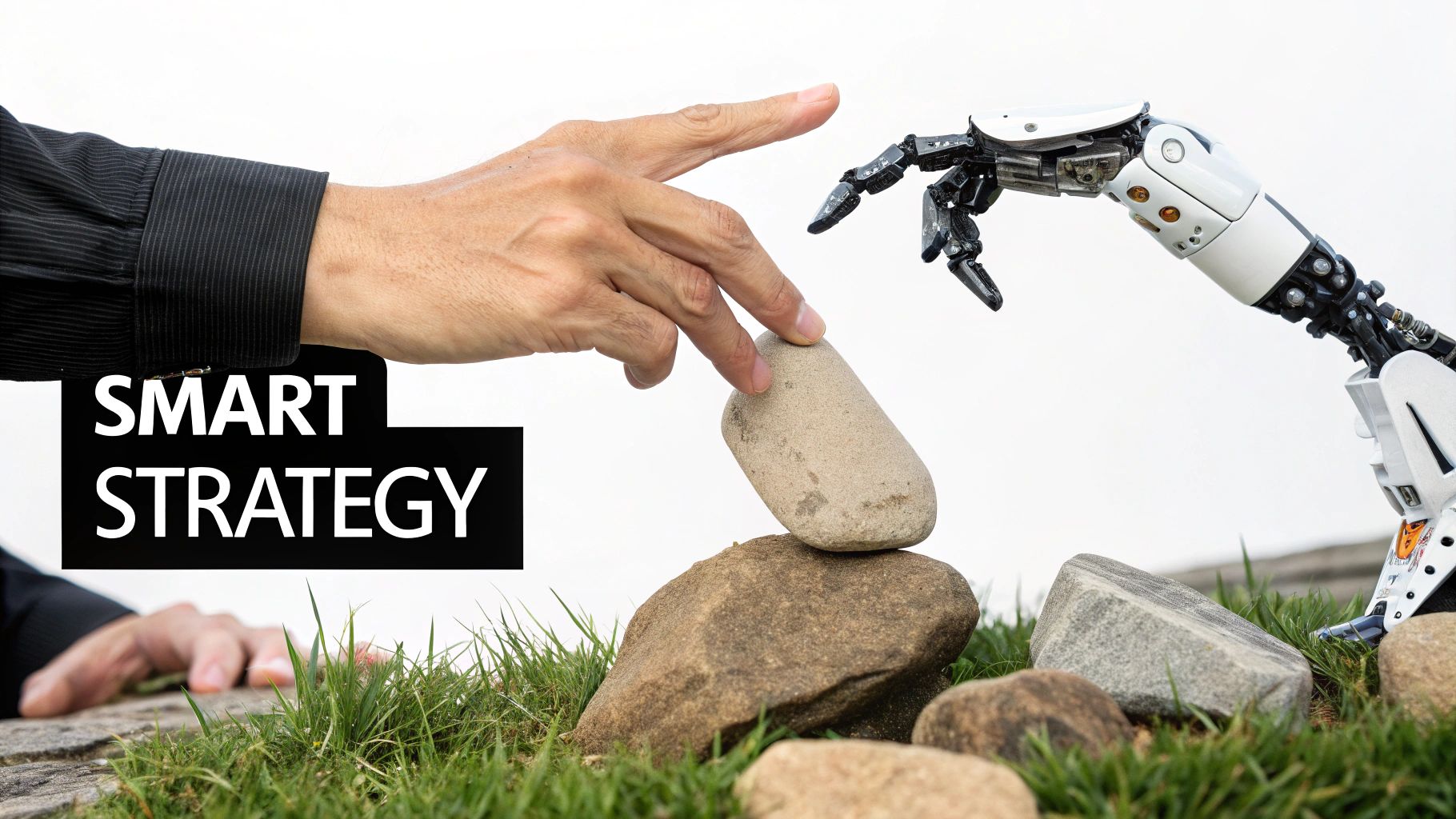
Rock paper scissors, a centuries-old game, has found a new home in the world of artificial intelligence and entertainment. This simple game, easily grasped across diverse cultures, now acts as a testing ground for the intricacies of human-machine interaction. This fascinating blend of classic gameplay and modern technology has captivated both creators and audiences.
Rock Paper Scissors as a Cultural Touchstone
The pervasiveness of rock paper scissors in popular culture highlights its universal appeal. From resolving minor disagreements to featuring as a plot element in movies and television, its influence is far-reaching. This cultural significance makes it a fitting link between human behavior and artificial intelligence.
The introduction of Rock Paper Scissors Lizard Spock in the television series The Big Bang Theory, for instance, injected a fresh level of complexity, further fueling interest. This adaptation illustrates the game's versatility and its ability to stay engaging across different generations. Globally, rock paper scissors is more than just a childhood pastime; it's a cultural phenomenon with a substantial media presence. This evolution of the classic game underscores its enduring popularity and relevance in contemporary society. Discover further insights about the cultural relevance of rock paper scissors.
AI vs. Human: A New Form of Entertainment
The emergence of rock paper scissors AI has introduced a novel dimension to entertainment. The quest to outwit a machine that learns and evolves has created a compelling form of competition. This fusion of human strategy and machine learning offers exciting possibilities for gaming and entertainment experiences.
Virtual Reality and Mobile Gaming: New Frontiers
Integrating AI opponents into virtual reality (VR) and mobile gaming has further amplified the entertainment potential of rock paper scissors. VR provides immersive experiences, heightening the sense of competition. Mobile gaming offers unparalleled accessibility, allowing players to engage with AI adversaries at any time. This synthesis of technology and traditional gameplay provides a captivating interactive experience for players of all skill levels.
Competitive Leagues and AI Integration
The realm of competitive rock paper scissors is also undergoing a transformation through AI. The use of AI for training and performance analysis is gaining traction. This integration elevates the competitive scene, equipping players with new tools and insights to refine their gameplay. Furthermore, AI-powered judging systems are emerging, ensuring impartiality and precision in high-stakes matches. This synergy of conventional competition and technological advancement is shaping the future of the game.
Create Your Own Rock Paper Scissors AI System
Ever wondered how a rock paper scissors AI actually works? Now you can go from playing against one to building your own! This section provides a practical guide for creating a rock paper scissors AI, no matter your coding background.
Choosing the Right Framework: Balancing Power and Accessibility
The first step is choosing the right programming tools. If you're a beginner, Python with libraries like random and collections offers an easy starting point. These libraries allow you to build basic rule-based AI systems without needing advanced coding knowledge.
For more experienced developers, consider exploring machine learning frameworks like TensorFlow or PyTorch. These frameworks allow you to create complex neural networks that learn from gameplay data. The key is finding the right balance between a framework's power and its ease of use.
Implementing Learning Models: From Basic to Advanced
Starting with a statistical approach is a good foundation. This could involve tracking the opponent's move frequencies to predict their next throw based on probabilities. This simple method offers insights into the fundamental logic behind game AI.
From there, you can add more complexity. Markov chains, for example, predict future moves by analyzing sequences of previous throws. This introduces a deeper level of predictive analysis.
Finally, consider exploring neural networks. These offer the greatest potential for a truly adaptive AI. Neural networks can analyze massive amounts of gameplay data, identifying subtle patterns and adjusting their strategies over time. For more information on coding tools, see How to master vibe coding tools.
Step-by-Step Development: A Practical Guide
Building a basic rock paper scissors AI can be broken down into these steps:
-
Data Collection: Gather a dataset of rock paper scissors games. You can find existing datasets or generate your own through simulated gameplay.
-
Pattern Analysis: Analyze the data to find trends in player choices. Look for predictable sequences or biases that your AI can exploit.
-
Algorithm Development: Based on your analysis, create an algorithm. This could be a simple rule-based system or a more complex learning model.
-
Implementation: Code your algorithm into your chosen framework. This is where you bring your AI to life.
-
Testing and Refinement: Test your AI against other AIs and human players. Use the results to refine your algorithm and improve its performance.
Resources and Pitfalls: Navigating the Development Process
To help you on your development journey, we've compiled some helpful resources:
To help you get started, we've compiled some helpful resources into a handy table:
Introducing the "Rock Paper Scissors AI Development Resources" table, a compilation of tools, libraries, and learning resources for building your own RPS AI:
| Resource Type | Name | Difficulty Level | Best Features |
|---|---|---|---|
| Library | Python's random |
Beginner | Easy random number generation |
| Library | Python's collections |
Beginner | Efficient data structures |
| Framework | TensorFlow | Advanced | Powerful for neural networks |
| Framework | PyTorch | Advanced | Flexible deep learning |
This table summarizes the key tools and their features to help guide your development process.
Common development pitfalls include overfitting. This happens when your model learns the training data too well and performs poorly against new opponents. Another challenge is balancing computational complexity with real-time performance. Writing efficient code is essential to avoid these issues.
Benchmarking Your AI: Measuring Success
So, how do you measure the success of your rock paper scissors AI? Benchmarking against existing systems is a great way to gauge its effectiveness. Compare your AI's win rate against publicly available rock paper scissors bots or challenge it against human players. Tracking key metrics like win rate and tie percentage allows you to evaluate and improve your AI over time. This process of development, testing, and refinement is vital for building a competitive and robust rock paper scissors AI.
The Future Battlefield of Rock Paper Scissors AI
The seemingly simple game of rock paper scissors has become a surprisingly complex testing ground for AI research. What does the future hold for this ancient game in our technologically advanced world? Emerging technologies are pushing the boundaries of rock paper scissors AI, creating even more challenging digital opponents.
Multi-Modal Systems: Beyond Basic Algorithms
Future rock paper scissors AI is likely to move beyond simply analyzing past throws. Multi-modal systems incorporating visual recognition and gesture analysis are currently being developed. Imagine an AI opponent analyzing your micro-expressions or hand movements before you even make your throw. Predicting your choice becomes less about historical data and more about reading your body language.
Researchers are also exploring the integration of emotional intelligence into AI. These systems could detect frustration or hesitation, adapting their strategies in response. This adds another layer of complexity, blurring the lines between strategy and psychology. How can a human outsmart a machine that reads emotions? This is the fascinating challenge presented by these developments.
Beyond Gaming: Real-World Applications
The research behind rock paper scissors AI has implications far beyond the game itself. It provides a unique lens for studying decision theory and behavioral psychology. Researchers are using these game mechanics to understand human choices in unpredictable scenarios.
For example, some educational tools use rock paper scissors to teach children about probability and strategic thinking. The game's dynamics also offer valuable insights into conflict resolution and negotiation strategies. Understanding how AI masters this simple game could lead to breakthroughs in fields like economics and political science.
The Future of Human-Machine Interaction
Rock paper scissors AI highlights the evolving dynamic between humans and machines. As AI advances, it challenges our understanding of predictability and strategy, pushing us to develop new tactics and rethink decision-making.
The future of this field lies in exploring new interfaces and gameplay mechanics. Imagine competing against an AI in a virtual reality environment, where physical movements and reactions are integrated into the game. This immersive experience creates unprecedented opportunities to study human-machine interaction. It will change not only how we play, but also what we learn about human decision-making in unpredictable situations.